
Catalogue Search | MBRL


Are you sure you want to remove the book from the shelf?

{{itemTitle}}
5,590
result(s) for
"Horses History."
Sort by:

Decorated horses
Looks at horses and their history with human beings, examining how they have been used in hunting, warfare, performance, competition, ceremony, and celebration, with illustrations that showcase how people decorate them.
Book
Early Riders
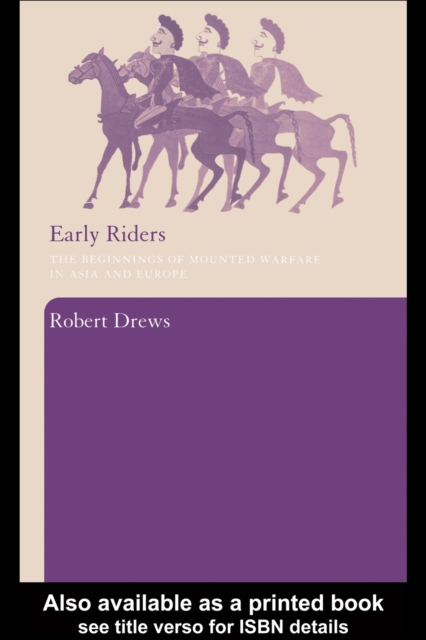
In this wide-ranging and often controversial book, Robert Drews examines the question of the origins of man's relations with the horse.
He questions the belief that on the Eurasian steppes men were riding in battle as early as 4000 BC, and suggests that it was not until around 900 BC that men anywhere - whether in the Near East and the Aegean or on the steppes of Asia - were proficient enough to handle a bow, sword or spear while on horseback. After establishing when, where, and most importantly why good riding began, Drews goes on to show how riding raiders terrorized the civilized world in the seventh century BC, and how central cavalry was to the success of the Median and Persian empires.
Drawing on archaeological, iconographic and textual evidence, this is the first book devoted to the question of when horseback riders became important in combat. Comprehensively illustrated, this book will be essential reading for anyone interested in the origins of civilization in Eurasia, and the development of man's military relationship with the horse.
Robert Drews is Professor of Classics and History at Vanderbilt University, where he has taught since 1961. One of his interests is the military history of the Near Eastern and Greek world during the Bronze Age, and his publications on that subject include Coming of the Greeks and The End of the Bronze Age.
eBook


horse in the city
Honorable mention, 2007 Lewis Mumford Prize, American Society of City and Regional Planning The nineteenth century was the golden age of the horse. In urban America, the indispensable horse provided the power for not only vehicles that moved freight, transported passengers, and fought fires but also equipment in breweries, mills, foundries, and machine shops. Clay McShane and Joel A. Tarr, prominent scholars of American urban life, here explore the critical role that the horse played in the growing nineteenth-century metropolis. Using such diverse sources as veterinary manuals, stable periodicals, teamster magazines, city newspapers, and agricultural yearbooks, they examine how the horses were housed and fed and how workers bred, trained, marketed, and employed their four-legged assets. Not omitting the problems of waste removal and corpse disposal, they touch on the municipal challenges of maintaining a safe and productive living environment for both horses and people and the rise of organizations like the American Society for the Prevention of Cruelty to Animals. In addition to providing an insightful account of life and work in nineteenth-century urban America, The Horse in the City brings us to a richer understanding of how the animal fared in this unnatural and presumably uncomfortable setting.
eBook

Horse Nations
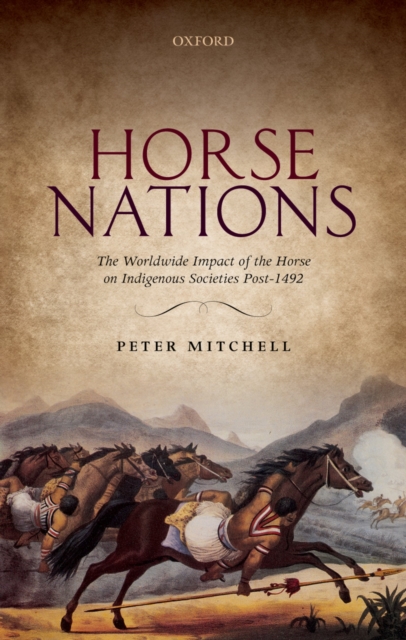
Horse Nations provides the first globally comparative study of the impact of the horse on the Indigenous societies of North and South America, southern Africa, and Australasia following its (re-)introduction as a result of European contacts and settlement after Columbus' first voyage to the Americas in 1492.
eBook

Horses : wild and tame
Since horses were first domesticated thousands of years ago, these iconic animals have been a part of human history - they've plowed our fields, pulled our carts, fought in our wars and been our beloved companions.Journey through the history of human and horse interaction in this beautifully illustrated history from the steady hand of American illustrator Jarom Vogel!
Book

The Horsemen of Israel
Almost every book in the Hebrew Bible mentions horses and chariots in some manner, usually in a military context. However, the importance of horses, chariots, and equestrians in ancient Israel is typically mentioned only in passing, if at all, by historians, hippologists, and biblical scholars. When it is mentioned, the topic engenders a great deal of confusion. Notwithstanding the substantial textual and archaeological evidence of the horse's historic presence, recent scholars seem to be led by a general belief that there were very few horses in Iron Age Israel and that Israel's chariotry was insignificant. The reason for this current sentiment is tied primarily to the academic controversy of the past 50 years over whether the 17 tripartite-pillared buildings excavated at Megiddo in the early 20th century were, in fact, stables. Although the original excavators, archaeologists from the University of Chicago, designated these buildings as stables, a number of scholars (and a few archaeologists) later challenged this view and adopted alternative interpretations. After they \"reassessed\" the Megiddo stables as \"storehouses,\" \"marketplaces,\" or \"barracks,\" the idea developed that there was no place for the horses to be kept and, therefore, there must have been few horses in Israel. The lack of stables, when added to the suggestion that Iron Age Israel could not have afforded to buy expensive horses and maintain an even more expensive chariotry, led to a dearth of horses in ancient Israel; or so the logic goes that has permeated the literature. Cantrell's book attempts to dispel this notion. Too often today, scholars ignore or diminish the role of the horse in battle. It is important to remember that ancient historians took for granted knowledge about horses that modern scholars have now forgotten or never knew. Cantrell's involvement with horses as a rider, competitor, trainer, breeder, and importer includes equine experience ranging from competitive barrel-racing to jumping, and for the past 25 years, dressage. The Horsemen of Israel relies on the author's knowledge of and experience with horses as well as her expertise in the field of ancient Near Eastern languages, literature, and archaeology.
eBook

The Age of the Horse
Man has always been fascinated by Equus caballus, recasting horse power into many forms: a hunk of meat, an industrial and agricultural machine, a luxury good, a cherished dancer, a comrade in arms and a symbol of a mythical past. From the wild tarpans sought by the Nazis to jade-laden treasure steeds in Ancient China, broken-down nags recycled into sausages and furniture stuffing, stallions that face fighting bulls and brewery horses that charmed the founder of the Sikh Empire, The Age of the Horse knits the history of the horse into that of humans, through revolution, war, social change and uneasy peace. It also uncovers new roles for the horse in the twenty-first century as a tool in the fight against climate change and as a therapist for soldiers damaged in unwinnable conflicts. In this captivating book, Susanna Forrest takes a journey through time and around the world, from the Mongolian steppes to a mirrored manège at Versailles, an elegant polo club in Beijing and a farm, a fort and an auction house in America, exploring the horse's crucial role and revealing how our culture and economy were generated, nourished and shaped by horse power and its gifts and limits.
eBook