
Catalogue Search | MBRL


Are you sure you want to remove the book from the shelf?

{{itemTitle}}
24
result(s) for
"Hospitality industry Southeast Asia."
Sort by:

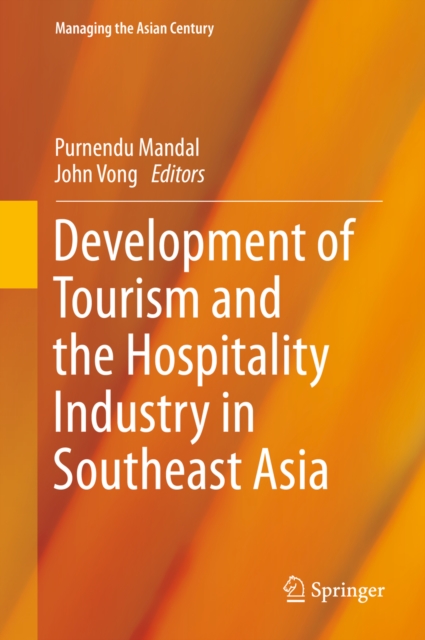
Development of Tourism and the Hospitality Industry in Southeast Asia
This book highlights the state-of-the-art tourism and hospitality industry in Southeast Asian countries, while also presenting future directions for the industry with an emphasis on decision-making models.
eBook

Coping with COVID-19: The Resilience and Transformation of Community-Based Tourism in Brunei Darussalam
The COVID-19 pandemic heavily impacted the travel and tourism industry, economies, livelihoods, public services, and opportunities globally. This is also observed in the small country of Brunei. As one of the few countries that have successfully mitigated COVID-19 transmissions, Brunei is slowly rebuilding its tourism industry through its community-based tourism (CBT). Following Sharma et al.’s resilience-based framework for reviving the tourism industry post-COVID-19 established in 2021, this study incorporates responses from semi-structured interviews with 16 local CBT owners on the challenges, the management, and the CBT initiatives during the height of the pandemic until today. These initiatives include diversifying more tour packages and utilising local resources and products. Despite the lockdown imposed by the government, which suspended businesses and restricted all travelling, local CBT operations flourished, generated more income for the owners, and created job opportunities for the community. Such efforts have caused the public to appreciate local cultures, the environment, and ultimately increase CBT experiences in the country. While shedding light on Brunei’s unique management of its tourism industry during the pandemic, this paper also demonstrates theoretical and conceptual contributions to the recent literature of resilient and transformational tourism and provide suggestions on how to manage CBT operations during these challenging times.
Journal Article

Taste of asean: traditional food images from Southeast Asian countries
Gastronomy tourism and local food have become a powerful tool for tourism advertising because gastronomy often reflects the cultural identity of the destination. Local food images can help showcase the unique flavors of a particular region, making it more attractive to potential visitors. This study aims to analyze how regional tourism authorities share information about the diversity of traditional foods, promote gastronomic tourism, and enhance destinations' competitiveness by utilizing Instagram as a social media platform combining images with textual information. The ASEAN Tourism Online objectives are to promote the region as a single destination, increase tourism arrivals and receipts, and enhance regional connection. In this study, the official account of Southeast Asia Tourism on Instagram @visitsoutheastasiaofficial with keywords Taste of ASEAN marketing campaign. A qualitative approach using content analysis was used in this study. Data for this study were retrieved from 123 traditional food images posted on the official Instagram account from 2016 to 2022. A thematic analysis was used to classify themes. The findings presented categories ranging from the authenticity of traditional food, social media campaigns and promotions, local destination information, and gastronomic tourism activities. The majority of images posted related to the portrait of local cuisines. This analysis portrayed how the ASEAN tourism online wants to promote food as an attraction instead of food as a supporting element of tourism activities. The limitation of this study is only focused on the content of traditional visual food on the Instagram platform. Further research can be done using other social media platforms and comparing these findings with other destinations. It also provides an opportunity to gain insights into what people are saying about each destination, which can be helpful in terms of understanding customer preferences and opinions. The implication of this study will help national tourism organizations, culinary practitioners and academicians about the traditional food images on the social media platform to promote regional and city tourism. Additionally, it can help to identify potential opportunities for improvement or expansion within the region. Finally, researching other destinations through social media platforms can provide valuable information that could be used to create effective marketing strategies and campaigns.
Journal Article

Felder-Silverman Model: International Comparison Application Post COVID
Understanding what learning style preferences exist in international business classrooms is important for the overall design of learning objectives and learning outcomes in business education. This is especially important as 94% of the global learner population moved online in the wake of the COVID-19 pandemic, including the majority of business learners. The study used the Felder-Silverman Model of learning styles to investigate business learners in a hospitality discipline in the United States (n = 365) and in Singapore (n = 154). Findings revealed that two learning styles of business learners were significantly different between the two data sets. The results of this study contribute to the understanding of learning preferences of business students and how learning styles across these two cultures may assist instructors in the overall design of their international business classes.
Journal Article

The Shophouse Hotel: Vernacular Heritage in a Creative City
In creative cities, new enterprises emerge all the time catering to the changing needs and lifestyles of visitors and local communities. Reputable institutions, cultural activities, iconic buildings as well as small, local businesses all play a role in 'branding' the creative city. This study presents one such small enterprise in the form of historical shophouse hotels in Singapore. These shophouse inns are locally owned, housed in architecturally unique buildings and are regarded as emblems of Singaporean identity. It is argued that the urban vernacular, exemplified through the hotels, is a dynamic concept evolving over time, across place and for different groups of people and users. First, the paper explores how the shophouse vernacular provides a platform for the celebration of Singaporean identity by new boutique hoteliers. Secondly, a critique is presented of the commodification of the shophouse as modern hoteliers (business and budget inns) jump onto the heritage bandwagon to create new urban spaces of identity. Finally, contestations are discussed, as different people consider different vernaculars to be worthy of a place in the transforming city. As Singapore evolves as a creative city, the multidimensionality of the vernacular provides a fitting emblem to showcase the creative possibilities of historical buildings, traditional architecture and urban environments.
Journal Article

The “Pearl of the Orient” as a dark tourism destination in Malaysia
PurposeThe purpose of this paper is to examine the potential of Penang in being a dark tourism destination in Malaysia with the influence of urban tourism development.Design/methodology/approachA systematic review was conducted to serve as a foundation by highlighting the number of dark tourism studies conducted in Southeast Asia (SEA).FindingsThe results projected a total of 23 dark tourism studies conducted within the SEA region. These papers revolve around the following key themes that were conducted in these countries: tourists’ behaviour (motivation, satisfaction and experience), nation building and narratives, dark tourism development (management, marketing and implications), theoretical underpinnings and the role of dark tourism. Amongst these, it was found that tourists’ behaviour is the most studied with eight papers while the least is on nation building and theoretical underpinnings of dark tourism with three papers each.Research limitations/implicationsThe lack of dark tourism studies in SEA results in insufficient existing literature which justifies the need of exploring Penang as a potential dark tourism destination.Originality/valueThis paper builds on prior dark tourism studies that are significantly related to urban tourism but takes a step further by exploring the Asian settings. Specifically, into Malaysia which is more than just an SEA country, but a multicultural one which is rich and diverse with its culture and heritage that leads to many unique tourists’ destinations. This paper extends the geographical scope of the dark tourism literature as it focuses on Penang in Malaysia.
Journal Article


CHALLENGE-STRESS AND HINDRANCE-STRESS IN THE SOUTHEAST ASIAN HOTEL SECTOR
The hospitality industry is an entity that is continuously determined by varying new demands and the needs of its customers. This ever-changing and complex working environment has caused and become a source of stress for the hospitality industries' workforce. Workplace stress is increasing from year to year and has become a focus of research interest in recent years. Responding to the demands of management who require a more precise understanding of the issues of workplace stress, researchers have conducted studies on a total of 115 respondents from a 3 star-hotel and a 4 star-hotel. The personnel involved came from the food and beverage departments, room services and the front offices, whose daily routines involved direct face to face serving activities and fulfilling their customers' demands. Using the Statistical Package for Social Science (SPSS) version 19.0 and AMOS version 18.0, the results of Exploratory Data Analysis (EFA) and Confirmatory Data Analysis (CFA) have confirmed that there are two stress factors, namely challenge stress and hindrance stress. Both of these stress factors have a significantly negative relation to one another. Understanding these dimensions in detail can help the hospitality organizations to be well prepared for the task of motivating their employees.
Journal Article

The Use of Urban Built Heritage for Boutique Hotels: Examples from Malaysia and Singapore
This article examines aspects of the adaptive reuse of old buildings in historic urban districts for the purpose of boutique heritage hotels, seeking to illuminate opportunities and problems. A case study approach was employed whereby a selection of properties housed in vernacular architecture
in Melaka, Penang, and Singapore were surveyed. Fieldwork was undertaken that included informal and more structured interviews with hotel owners and operators. Relevant secondary data were also analyzed. There appears to be a growing demand for and supply of boutique heritage hotels, characterized
by smallness of size and distinctiveness expressed in the occupation of converted older buildings. Heritage is a key element, although it may be fused with modern design, and these enterprises have the potential to contribute to urban conservation and sustainability. Insights are afforded
into the boutique heritage hotel trend within a Southeast Asian context, highlighting some of the challenges confronting both hoteliers and authorities.
Journal Article