
Catalogue Search | MBRL


Are you sure you want to remove the book from the shelf?

{{itemTitle}}
2,693,126
result(s) for
"Hotels "
Sort by:


The effects of on-the-job embeddedness and its sub-dimensions on small-sized hotel employees’ organizational commitment, work engagement and turnover intentions
Purpose
This paper aims to examine the impacts of links, fit and sacrifice as the sub-dimensions of on-the-job embeddedness (JE) on turnover intentions through the mediating roles of affective organizational commitment (AOC) and work engagement (WENG) and explore AOC and WENG as the two mediators linking on-the-JE to quitting intentions.
Design/methodology/approach
Data collected from small-sized hotels in three waves in Ghana were used to assess the aforesaid relationships. The hypothesized relationships were tested using structural equation modeling.
Findings
The findings reveal that on-the-JE is negatively related to turnover intentions. Additionally, the relationship between on-the-JE and turnover intentions is partly mediated by AOC and WENG. The findings further demonstrate that AOC and WENG partly mediate the impact of links on turnover intentions.
Practical implications
Management of hotels should enhance formal and informal connections between employees and their coworkers and supervisors through socialization tactics. Establishing and maintaining an environment that fosters social support would increase employees’ sense of belongingness and their proclivity to remain with the organization.
Originality/value
Little is known about the effects of the sub-dimensions of on-the-JE on work-related consequences in the hospitality and tourism literature. The literature is also devoid of evidence concerning affective variables as the potential mediators relating the sub-dimensions of on-the JE to turnover intentions. The study sets out to fill in these gaps.
Journal Article


Contemporary Challenges in Hotel Design and Architecture: Sustainability, Emotional Experience, and Architectural Preferences in Hotel Selection
Architecture and design, understood as artistic disciplines, go beyond the purely functional requirements of a building program and become key factors in creating attractive and recognisable hotel facilities. In the contemporary tourism context, hotels increasingly serve as symbols of destinations, with architecture and design telling unique stories that contribute to the differentiation and success of hotel projects. The aim is to explore the role of architecture and design in creating attractive hotels with an emphasis on contemporary challenges, sustainability, emotional aspects and desirable elements of architecture and design in the hotel selection process. Content analysis was conducted using qualitative data collected through in-depth interviews with hotel architects and designers. The research findings showed that architects emphasise the importance of integrating sustainable solutions, such as ecological materials and energy efficiency, as well as emotional aspects, such as creating spaces that foster a pleasant atmosphere, local identity, and sensory activation. Aesthetics and design, connection to the local context and history, innovative approaches, and functionality and comfort were identified as desirable elements when choosing a hotel. The research provides useful guidelines for creating spaces that are visually appealing, emotionally engaging, sustainable, and tailored to guests’ needs, while respecting local history and culture.
Journal Article


Promotional Reviews: An Empirical Investigation of Online Review Manipulation
Firms'incentives to manufacture biased user reviews impede review usefulness. We examine the differences in reviews for a given hotel between two sites: Expedia. com (only a customer can post a review) and TripAdvisor. com (anyone can post). We argue that the net gains from promotional reviewing are highest for independent hotels with single-unit owners and lowest for branded chain hotels with multiunit owners. We demonstrate that the hotel neighbors of hotels with a high incentive to fake have more negative reviews on TripAdvisor relative to Expedia; hotels with a high incentive to fake have more positive reviews on TripAdvisor relative to Expedia.
Journal Article

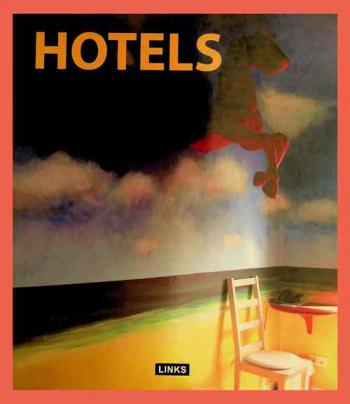
Cool hotels : Europe
The diversity among Europe's cultures is reflected nowhere better than in the way the contingent's top hotels are presented. Whether the glamorous luxury of legendary grand hotels that have been rejuvenated by contemporary interiors or the avant-garde hotels designed by international star architects, they are in themselves worth a sojourn.
Book

Hotel dreams : luxury, technology, and urban ambition in America, 1829-1929
Winner, 2012 Sally Hacker Prize, Society for the History of Technology Hotel Dreams is a deeply researched and entertaining account of how the hotel's material world of machines and marble integrated into and shaped the society it served. Molly W. Berger offers a compelling history of the American hotel and how it captured the public's imagination as it came to represent the complex—and often contentious—relationship among luxury, economic development, and the ideals of a democratic society. Berger profiles the country's most prestigious hotels, including Boston's 1829 Tremont, San Francisco's world-famous Palace, and Chicago's enormous Stevens. The fascinating stories behind their design, construction, and marketing reveal in rich detail how these buildings became cultural symbols that shaped the urban landscape.
eBook

The Rise of the Sharing Economy: Estimating the Impact of Airbnb on the Hotel Industry
Peer-to-peer markets, collectively known as the sharing economy, have emerged as alternative suppliers of goods and services traditionally provided by long-established industries. The authors explore the economic impact of the sharing economy on incumbent firms by studying the case of Airbnb, a prominent platform for short-term accommodations. They analyze Airbnb's entry into the state of Texas and quantify its impact on the Texas hotel industry over the subsequent decade. In Austin, where Airbnb supply is highest, the causal impact on hotel revenue is in the 8%-10% range; moreover, the impact is nonuniform, with lowerpriced hotels and hotels that do not cater to business travelers being the most affected. The impact manifests itself primarily through less aggressive hotel room pricing, benefiting all consumers, not just participants in the sharing economy. The price response is especially pronounced during periods of peak demand, such as during the South by Southwest festival, and is due to a differentiating feature of peerto-peer platforms--enabling instantaneous supply to scale to meet demand.
Journal Article