
Catalogue Search | MBRL


Are you sure you want to remove the book from the shelf?

{{itemTitle}}
467,853
result(s) for
"Housing development."
Sort by:

Development paradigms for urban housing in BRICS countries
This book is a concise treatise of the alternative paradigms used in BRICS countries to tackle urban housing shortages. There are a number of alternative methods for meeting these shortages which BRICS countries have adopted. These alternatives may agree in terms of desired outcome, but when it comes to approach, mechanics and scope, they are entirely divergent. By focusing on the political economy and the international structure of each BRICS country, these perspectives present alternative and often conflicting approaches to the attainment of better housing. Development Paradigms for Urban Housing in BRICS Countries explores the various political, economic, institutional and cultural factors that have shaped the housing outcomes in BRICS countries that we see today. The book uses a framework which allows comparison between Brazil, Russia, India, China and South Africa, whilst recognizing the differences in the development path that each of these countries has taken.
Book

Freedomland
In Freedomland
, Annemarie H. Sammartino tells Co-op City's story from the
perspectives of those who built it and of the ordinary people who
made their homes in this monument to imperfect liberal ideals of
economic and social justice.
Located on the grounds of the former Freedomland
amusement park on the northeastern edge of the Bronx, Co-op City's
35 towers and 236 townhouses have been home to hundreds of
thousands of New Yorkers and is an icon visible to all traveling on
the east coast corridor.
In 1965, Co-op City was planned as the largest middle-class
housing development in the United States. It was intended as a
solution to the problem of affordable housing in America's largest
city. While Co-op City first appeared to be a huge success story
for integrated, middle-class housing, tensions would lead its
residents to organize the largest rent strike in American history.
In 1975, a coalition of shareholders took on New York State and,
against all odds, secured resident control. Much to the dismay of
many denizens of the complex, even this achievement did not halt
either rising costs or white flight. Nevertheless, after the
challenges of the 1970s and 1980s, the cooperative achieved a
hard-won stability as the twentieth century came to a close.
Freedomland chronicles the tumultuous first quarter
century of Co-op City's existence. Sammartino's narrative connects
planning, economic, and political history and the history of race
in America. The result is a new perspective on twentieth-century
New York City.
eBook

Retrofitting the built environment
\"Retrofitting the Built Environment is an extension of this conference. Contained within is a mix of policy, technical and social science papers, presented by both academic and industry authors, giving a multiple perspective of the issue from both a UK and international perspective\"-- Provided by publisher.
Book

Safe as houses
As the tragedy of the Grenfell Tower fire of 14 June 2017 has slowly revealed a shadowy background of outsourcing and deregulation, and a council turning a blind eye to health and safety concerns, many questions need answers. Stuart Hodkinson has those answers. Safe as Houses weaves together Stuart’s research over the last decade with residents’ groups in council regeneration projects across London to provide the first comprehensive account of how Grenfell happened and how it could easily have happened in multiple locations across the country. It draws on examples of unsafe housing either refurbished or built by private companies under the Private Finance Initiative (PFI) to show both the terrible human consequences of outsourcing and deregulation and how the PFI has enabled developers, banks and investors to profiteer from highly lucrative, taxpayer-funded contracts. The book also provides shocking testimonies of how councils and other public bodies have continuously sided with their private partners, doing everything in their power to ignore, deflect and even silence those who speak out. The book concludes that the only way to end the era of unsafe regeneration and housing provision is to end the disastrous regime of self-regulation. This means strengthening safety laws, creating new enforcement agencies independent of government and industry, and replacing PFI and similar models of outsourcing with a new model of public housing that treats the provision of shelter as ‘a social service’ democratically accountable to its residents.
eBook

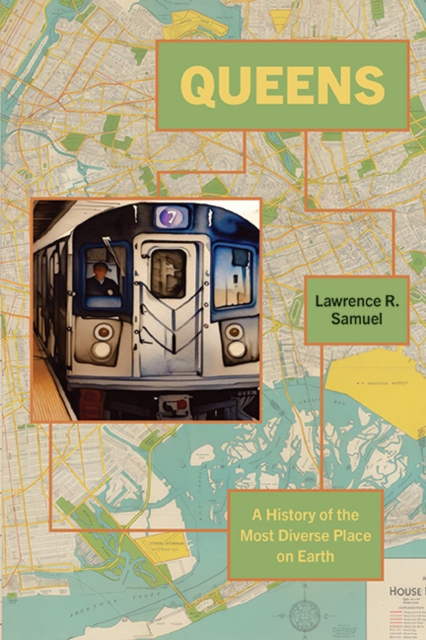
Queens
Charts the historical development of Queens from the
1920s to today, focusing on its profound
diversity.
Queens charts the history of residential development
of the New York City borough from the 1920s to today. The work
focuses on the borough's most remarkable aspect: its profound
diversity as a multiethnic, multiracial, and multireligious
place. The narrative traces the evolution of Queens from a
quasi-suburb of Manhattan for the white middle class into the
most diverse county in the United States and, many contend, the
most diverse place on the planet. Following this trajectory
adds much to our understanding of the borough, the city, the
country, and even the world.
eBook

Building for a changing climate : the challenge for construction, planning and energy
This book is about a scenario for the future that hopefully will not happen, namely a rise in average global temperature of 4 degrees within the century with all which that implies.
Book

Urban density and spatial planning: The unforeseen impacts of Dutch devolution
National spatial planning has strongly influenced urban development and open space preservation in the Netherlands since the 1950s and established the country's reputation as a planner's paradise. The gradual withdrawal from this active and stringent type of planning in favour of decentralisation and deregulation has received less attention and its impacts on urban development patterns remain poorly studied. This study investigates residential development since 2000 in relation to the changing planning context. We focused on residential densification and the redevelopment of greyfields and brownfields as desired outcomes of policies that aim to limit urban development in open landscapes. Using detailed spatial housing and land-use data we quantified the relative importance of different urban development processes over three subsequent six-year periods characterised by slowly decreasing national policy attention to steering residential development. Our results indicate that, while the national policy instruments got weaker, the share of residential development within existing urban areas increased. Our results lend further credence to the suggestion that the abandoned national spatial planning policy targeted at housing construction within urban development zones that were predominantly defined on greenfield near existing cities, limited urban redevelopment. Despite reduced government spending, densities increased within existing urban areas as general, local-level restrictive policies with respect to greenfield development remained in place and demand for urban housing remained unabated.
Journal Article


Regional Governance and the Politics of Housing in the San Francisco Bay Area
The San Francisco Bay Area is generally considered the most expensive regional housing market in the country.Because the region added jobs and residents at a faster rate than housing, rents and home prices escalated. Moreover, small municipalities, common in the most job-rich parts of the Bay Area, have strong political incentives to resist.
eBook