
Catalogue Search | MBRL


Are you sure you want to remove the book from the shelf?

{{itemTitle}}
4
result(s) for
"Hudson River Valley (N.Y. and N.J.) In art."
Sort by:


Sanctified Landscape
The Hudson River Valley was the first iconic American landscape. Beginning as early as the 1820s, artists and writers found new ways of thinking about the human relationship with the natural world along the Hudson. Here, amid the most dramatic river and mountain scenery in the eastern United States, Washington Irving and James Fenimore Cooper created a distinctly American literature, grounded in folklore and history, that contributed to the emergence of a sense of place in the valley. Painters, led by Thomas Cole, founded the Hudson River School, widely recognized as the first truly national style of art. As the century advanced and as landscape and history became increasingly intertwined in the national consciousness, an aesthetic identity took shape in the region through literature, art, memory, and folklore-even gardens and domestic architecture. InSanctified Landscape, David Schuyler recounts this story of America's idealization of the Hudson Valley during the nineteenth and early twentieth centuries.
Schuyler's story unfolds during a time of great change in American history. At the very moment when artists and writers were exploring the aesthetic potential of the Hudson Valley, the transportation revolution and the rise of industrial capitalism were transforming the region. The first generation of American tourists traveled from New York City to Cozzens Hotel and the Catskill Mountain House in search of the picturesque. Those who could afford to live some distance from jobs in the city built suburban homes or country estates. Given these momentous changes, it is not surprising that historic preservation emerged in the Hudson Valley: the first building in the United States preserved for its historic significance is Washington's Headquarters in Newburgh. Schuyler also finds the seeds of the modern environmental movement in the transformation of the Hudson Valley landscape.
Richly illustrated and compellingly written,Sanctified Landscapemakes for rewarding reading. Schuyler expertly ties local history to national developments, revealing why the Hudson River Valley was so important to nineteenth-century Americans-and why it is still beloved today.
eBook
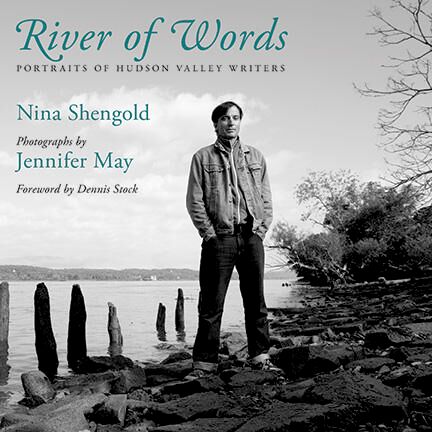
River of Words
Silver Medalist, 2011 Independent Publisher Book Awards in
U.S. North-East - Best Regional Non-Fiction Category \"When
you truly fall in love, whether with a person or a place, you make
everything else fit around it. The last eight years of my life have
been a love affair with this place.\" - Gwendolyn Bounds, author of
The Little Chapel By the River For centuries, writers have
drawn inspiration from the Hudson River and its surroundings. John
Burroughs, James Fenimore Cooper, Washington Irving, Edna St.
Vincent Millay, and Edith Wharton all lived and worked in the
region immortalized by the Hudson River School of painters. In
River of Words , author Nina Shengold and photographer
Jennifer May explore the current crop of Hudson Valley writers,
offering intimate portraits of seventy-six contemporary writers who
live and work in this magnificent and storied region. Included in
this rich collection of emerging and established novelists,
memoirists, poets, journalists, and screenwriters are Pulitzer
Prize-winners John Ashbery and the late Frank McCourt, bestselling
memoirists Julie Powell and Susan Orlean, and distinguished emigres
Chinua Achebe and Da Chen. What draws these writers together is not
only their devotion to their art but their love and affection for
the Hudson Valley. Through words and photographs, River of
Words offers an inside perspective on the literary life, the
craft of writing, and the pull of this distinctive American
landscape.
eBook