
Catalogue Search | MBRL


Are you sure you want to remove the book from the shelf?

{{itemTitle}}
445
result(s) for
"Hughes, W. B"
Sort by:

“Asiatic Black Man”: W. E. B. Du Bois and Langston Hughes in Soviet Asia
This essay seeks to revisit the curious case of the “Asiatic Black Man” by demonstrating how this identity, inherent in the collective unconsciousness and shared by Muhammad Ali, W. E. B. Du Bois, Langston Hughes, and Paul Robeson, could be consolidated as an “imagined community” through the microhistory of African Americans experiencing Soviet Asia. The essay proposes Afro-American Eurasianism as a transcontinental approach to converge the transnational, transatlantic, and transpacific perspectives in the Eurasian landmass, wherein the consilience of the Soviet overarching ambition of becoming the only world power as well as various themes that connected the micro-narrative of African Americans with the big history of Asia rendered Eurasianism as a shared political ideology, to be exploited by each side as a grand strategy in ending global racial politics. By positioning the twin cases of Du Bois and Hughes, this paper aims to show how the Soviet Union’s divergent endeavors of the “world revolution”—with Hungary and China as their primary targets for exporting revolutions in order to control the Eurasian “heartland”—and “socialism in one country”—with Uzbekistan and Turkmenistan as the in-the-making products of the Soviet nation-building experiments so as to convey the raceless image of Potemkin villages through Central Asia’s window to the world—could draw them away from their initial embrace of Black nationalism and shape their radical thoughts toward the Soviet cause. Moreover, this study posits that Soviet Asia functioned as a psychogeographical and geopolitical conduit that facilitated the elaboration of the Afro-American “Asiatic Black Man” fantasy and imagination of the communistic utopia as an alternative international order, while it unexpectedly resulted in a new “double-consciousness,” compelling Du Bois and Hughes to oscillate between Moscow and Beijing/Tashkent.
Journal Article

Arise Africa, Roar China
This book explores the close relationships between three of the most famous twentieth-century African Americans, W. E. B. Du Bois, Paul Robeson, and Langston Hughes, and their little-known Chinese allies during World War II and the Cold War-journalist, musician, and Christian activist Liu Liangmo, and Sino-Caribbean dancer-choreographer Sylvia Si-lan Chen. Charting a new path in the study of Sino-American relations, Gao Yunxiang foregrounds African Americans, combining the study of Black internationalism and the experiences of Chinese Americans with a transpacific narrative and an understanding of the global remaking of China's modern popular culture and politics. Gao reveals earlier and more widespread interactions between Chinese and African American leftists than accounts of the familiar alliance between the Black radicals and the Maoist Chinese would have us believe. The book's multilingual approach draws from massive yet rarely used archival streams in China and in Chinatowns and elsewhere in the United States. These materials allow Gao to retell the well-known stories of Du Bois, Robeson, and Hughes alongside the sagas of Liu and Chen in a work that will transform and redefine Afro-Asia studies.
eBook

Travel with the “giants” of the Harlem Renaissance
PurposeHarlem Renaissance Party by Faith Ringgold follows a young boy and his uncle as they visit the “giants” of the Harlem Renaissance. Lonnie and Uncle Bates travel through Harlem to meet historical figures, such as W.E.B. Du Bois, Langston Hughes, Madam CJ Walker and others. They also visit historical venues where Black artists performed. Such venues included the Cotton Club, the Harlem Opera House and the Schomburg Library.Design/methodology/approachAs students study the end of the Civil War and the early 1900s, they should learn about the causes of the Great Migration that led Black artists to flee from the south to larger cities in the north. In addition, Jim Crow Laws and other discriminatory practices prevented Black artists from performing their crafts. The Harlem Renaissance has had lasting effects on arts, music, literature and dance. In addition, students should use credible sources to gather information and documents about historical events and people.FindingsThese inquiry-based activities also integrate arts education and history to reach diverse student populations as they gain meaningful experiences interacting with authentic documents.Originality/valueAs students study the end of the Civil War and the early 1900s, they should learn about the causes of the Great Migration that led Black artists to flee the south to larger cities in the north. In addition, Jim Crow Laws and other discriminatory practices prevented Black artists from performing their crafts.
Journal Article
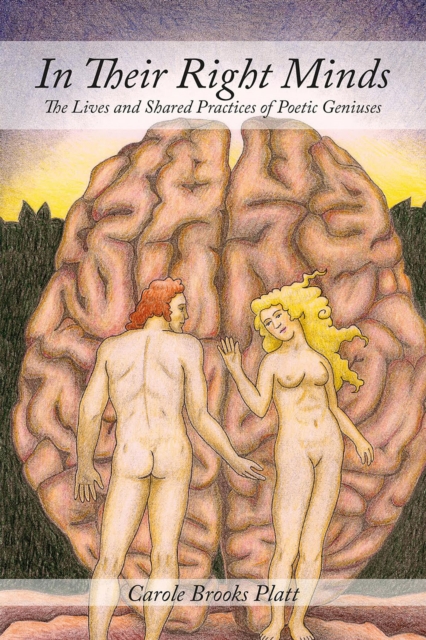
In Their Right Minds
In 1976, Julian Jaynes proposed that the language of poetry and prophecy originated in the right, \"god-side\" of the brain. Current neuroscientific evidence confirms the role of the right hemisphere in poetry, a sensed presence, and paranormal claims as well as in mental imbalance. Left-hemispheric dominance for language is the norm. An atypically enhanced right hemisphere, whether attained through genetic predisposition, left-hemispheric damage, epilepsy, childhood or later traumas, can create hypersensitivities along with special skills. Dissociative \"Others\" may arise unbidden or be coaxed out through occult practices. Based on nearly twenty years of scientific and literary research, this book enters the atypical minds of poetic geniuses - Blake, Keats, Hugo, Rilke, Yeats, Merrill, Plath and Hughes - by way of the visible signs in their lives, beliefs, and shared practices.
eBook

Queer Harlem, Queer Tashkent: Langston Hughes's “Boy Dancers of Uzbekistan”
In Langston Hughes's 1934 essay “Boy Dancers of Uzbekistan,” (published in Travel magazine), the author writes mournfully about the Soviet reforms that put an end to the practice of effeminized male dancers, bachi, performing in the teahouses of Central Asia for exclusively male audiences; in doing so, Hughes expresses an enthusiasm for the queer contours of the bachi tradition. This article connects that enthusiasm with Hughes's earlier involvement in cultural efforts aimed at increasing queer visibility within the black community during the Harlem Renaissance. By situating “Boy Dancers” in this context, the underexplored role of the Russian Revolution in fostering queer solidarity among global communities of color is highlighted.
Journal Article

To Whom Does Wakanda Belong?
The question of who is considered African in African nations goes to the heart of the relationship between residents of African nations and descendents of forced and voluntary migrants from Africa, one of the contentions in the film Black Panther. In her exploration of two generations of Wakandan princes responding to the situation of those in the African diaspora, especially in the United States, Lavan asks, to whom does Wakanda belong? She draws upon the writings of William Edward Burghardt Du Bois, James Baldwin and Malcolm X for a twentieth-century African American perspective as she ponders the utopia/dystopia symbolism of the Wakanda Outreach Center in Oakland as an answer to the princes' dilemma.
Journal Article

'My Most Humiliating Jim Crow Experience': Afro-Modernist Critiques of Eugenics and Medical Segregation
The modernism of black medical protest may be best described as an alienation from the fantasy of citizenship, set into motion by the blatant failures of US democracy to provide care for the ailing. However, the exclusionary nature of health was also driven home by the bodily and mental normativities inherent in the uplift ideologies of race leaders. These tensions manifest in the contradictory yet overlapping discourses of progressivist black health activism, scientific racism and medicalization, and the open desire in Afro-modernist literature and culture for desegregated care and recognition of patient experiences. Rather than vilify W. E. B. Du Bois and his contemporaries for their emphasis on respectability, I highlight first their problematic activism as one possible response among many to the alarming state of racialized medical neglect. I then introduce three works by Langston Hughes, Wallace Thurman, and Zora Neale Hurston—some widely read and some less known—in order to display a complex relationship among eugenic thought, medical segregation, and black disability and illness that extends beyond the more official discussions in 1930s periodicals such as The Crisis or The Birth Control Review. Hughes highlights the experiences of a black teenager who has died of tuberculosis in his tragicomic one-act play Soul Gone Home. Thurman questions the reliability of medical authority and eugenic thought in his novels The Interne and The Blacker the Berry. Finally, Hurston practices a form of noncompliant patienthood against medical segregation by recounting her experiences with white medical supremacy and highlighting alternative means of care.
Journal Article
Liminality and Otherness: Exploring Transcultural Space in Rita Dove's The Yellow House on the Corner
W.E.B. Du Bois, in The Souls of Black Folk, talked of race as a 'social construct', saying that 'the problem of the twentieth century is the problem of the color-line'.2 African American writing traditionally exhibited traits of Du Boisian 'double consciousness', 'two warring souls in one dark body',3 where the linearity of the gaze subscribed to the traditional notion of trapping imagery within the binaries of black/white, us/them, centre/margin, looking out from the white centre, as it were, at the fringes. [...]it 'hermetically sealed off12 black identity into a distant and imaginary past and made the black body the locus of its legacy. Arguing that double consciousness occurs when the white origins of African American identity are repressed to stress ethnocentrism, Dove repudiates the Black nationalist protocols in place when she began writing. [...]stating that the emphasis on Blackness only legitimises the white normative through recognition of ethno-racial blocs and the one-drop rule, Dove seeks to counter the racialisation of memory in her poetry. ('Nigger Song: An Odyssey' 11-15)27 Once the myth about the prominent Civil Rights leader and the legacy of the movement for African Americans has been dismantled, Dove analyses memory as a domain of select images that gain the force of truth over time.
Journal Article