
Catalogue Search | MBRL


Are you sure you want to remove the book from the shelf?

{{itemTitle}}
41,568
result(s) for
"Human Computer Intelligence"
Sort by:

Faking it : artificial intelligence in a human world
In an increasingly AI-driven world, renowned expert Toby Walsh examines what the 'artificial' in artificial intelligence truly means.
BOOK

Guiding principles of generative AI for employability and learning in UK universities
This article explores the implications of Generative AI in higher education institutions, focusing on its impact on academic integrity and educational policy. The study utilises qualitative methods and desk-based research to investigate the adoption of Generative Pre-Trained Transformer and similar programs within academic settings. While some institutions have implemented bans on Generative AI due to concerns about plagiarism and ethical implications, others have embraced its potential to enhance educational practices under ethical guidelines. However, such prohibitions may overlook the advantages of Generative AI and ignore students' inevitable engagement with technology. The article addresses these challenges by proposing guiding principles for the ethical and efficient application of Generative AI in UK universities, particularly in the realms of employability, teaching, and learning. The article is structured into three main sections: a review of existing literature on Generative AI, an exploration of its benefits and challenges, formulation of guiding principles for its implementation, and recommendations for future research and practical implementation. Through this analysis, the article aims to contribute to the ongoing discourse surrounding Generative AI in higher education, providing insights into its implications for educational policy and practice.
Journal Article

Exploring pre-service biology teachers' intention to teach genetics using an AI intelligent tutoring - based system
This study addresses the challenge of teaching genetics effectively to high school students, a topic known to be particularly challenging. Leveraging the growing importance of artificial intelligence (AI) in education, the research explores the perspectives, attitudes, and behavioral intentions of pre-service teachers regarding the integration of AI-based applications in high school genetics education. As these pre-service teachers, commonly denoted as digital natives, are expected to seamlessly integrate technology into their future classrooms in our technology-dependent society, understanding their viewpoints is crucial. The research involved 90 teacher candidates specializing in biology from Nigerian higher education institutions. Employing the Theory of Planned Behavior, survey responses were analyzed using structural equation modeling and independent sample t-test methods. The results indicate that perceived usefulness and subjective norms are significant predictors of AI use, with subjective norms strongly influencing pre-service teachers' behavioral intentions. Notably, perceived behavioral control does not significantly predict intentions, paralleling the observation that perceive usefulness does not guarantee AI adoption. Gender differentially affects subjective norms, particularly among female pre-service teachers, while no significant gender differences are observed in other variables, suggesting comparable attitudes. The study underscores the pivotal role of attitudes and social norms in shaping pre-service teachers' decisions regarding AI technology integration. Detailed discussions on implications, limitations, and potential future research directions are also discussed.
Journal Article

Our final invention : artificial intelligence and the end of the human era
\"The Internet is usually considered a breakthrough in technological--and even social--progress. The promises that it holds for our future are discussed in terms of an utopian vision--intelligent, helpful robots, enhanced brain function, disease-and-famine ridding nanotechnology, and other positive benefits. But there's another, rarely discussed and far darker possibility. As [this book] argues, we may be racing towards our own annihilation, as the military, academia, and corporate advances in artificial intelligence may lead to an uncontrollable new lifeform far smarter and more powerful than we can imagine\"-- Provided by publisher.
BOOK
Exploring the learning effect on serial concept mapping with expert map sharing approach
This study explores the effectiveness of two concept mapping methods - re-composition and scratch-building - within a serial concept mapping framework enhanced by expert map sharing. Serial concept mapping integrates maps from consecutive classes into a cumulative structure, facilitating incremental knowledge development. Expert map sharing involves providing teacher-created maps representing a well-structured understanding of lecture content, shared after students create their own maps to reinforce comprehension. A comparative experiment was conducted over three weeks in six human-computer interaction (HCI) classes, involving 158 participants: three classes using the re-composition method (
n
=
56
) and three using the scratch-building method (
n
=
102
). The re-composition method provided predefined concepts and links extracted from the expert map, supporting alignment with learning objectives and reducing cognitive load. In contrast, the scratch-building method allowed for free map creation, fostering creativity but risking conceptual misalignment. While both groups showed comparable progress during weekly activities, result suggest that the re-composition method may enable better knowledge organization, as evidenced by statistically significant improvements in both overall scores (
p
=
0.03
) and higher-order thinking (HOT) performance (
p
=
0.001
) on summative tests, particularly for map-based content. These findings highlight the potential of re-composition method, combined with expert map sharing, as a promising approach for enhancing learning outcomes in serial concept mapping.
This research demonstrates that integrating re-composition methods with expert map sharing has the potential to significantly improve knowledge organization in human-computer interaction courses. The findings suggest practical applications for instructional design, where structured concept mapping strategies can foster deep learning. By highlighting the effectiveness of this approach, the study provides educators with evidence-based tools to enhance learning outcomes, and inform broader pedagogical practices.
Journal Article


Empowering rural revitalization in China with GAI: the application value, challenges, and optimization paths
In the context of China's path to modernization, rural revitalization is facing a new landscape of \"technology empowerment.\" Generative artificial intelligence (GAI), with its powerful text generation capabilities, continuous human-machine interaction mode, and versatility across multiple scenarios, can not only drive the comprehensive digital transformation of cities but also make significant contributions to rural revitalization. Although the application of GAI in rural revitalization has not yet become widespread, it is foreseeable that it will play a crucial role in rural revitalization across five dimensions: organizational revitalization, industrial revitalization, cultural revitalization, ecological revitalization, and talent revitalization. However, it should also be anticipated that the smooth operation of technology is influenced by external environments. Currently, the large digital divide between urban and rural areas, the insufficient integration of GAI with rural governance, and potential risks constitute practical obstacles that hinder GAI's empowerment of rural revitalization. Therefore, it is necessary to make preparations for its role in empowering rural revitalization by advancing the construction of software and hardware infrastructure, transforming the governance approach of grassroots governments, creating a favorable application atmosphere, and strengthening institutional guarantees.
Journal Article

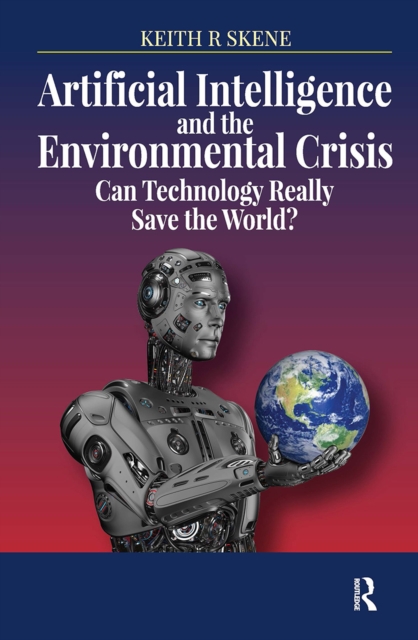
Artificial Intelligence and The Environmental Crisis
A radical and challenging book which argues that artificial intelligence needs a completely different set of foundations, based on ecological intelligence rather than human intelligence, if it is to deliver on the promise of a better world. This can usher in the greatest transformation in human history, an age of re-integration. Our very existence is dependent upon our context within the Earth System, and so, surely, artificial intelligence must also be grounded within this context, embracing emergence, interconnectedness and real-time feedback. We discover many positive outcomes across the societal, economic and environmental arenas and discuss how this transformation can be delivered.
Key Features:
Identifies a key weakness in current AI thinking, that threatens any hope of a better world.
Highlights the importance of realizing that systems theory is an essential foundation for any technology that hopes to positively transform our world.
Emphasizes the need for a radical new approach to AI, based on ecological systems.
Explains why ecosystem intelligence, not human intelligence, offers the best framework for AI.
Examines how this new approach will impact on the three arenas of society, environment and economics, ushering in a new age of re-integration.
eBook