
Catalogue Search | MBRL


Are you sure you want to remove the book from the shelf?

{{itemTitle}}
379
result(s) for
"Human body Folklore."
Sort by:


Bodies
Because they are so often told as news, contemporary legends force us to reevaluate life as we know it. They confront us with macabre, fantastic, horrific, or hilarious characters and events that seem to come straight out of myths and folktales, but are presented as present day events. The difficulty is that it is not at all easy to decide whether these often disturbing stories should be treated as reliable or dismissed as fantasy.
The legends explored in this book are some of the most bizarre, gruesome, and politically sensitive stories in the contemporary legend canon. At any moment a body may be invaded by noxious creatures, deliberately infected with deadly disease, or raided to provide donor organs for sick foreigners. These are \"winter's tales,\" the stuff of nightmares.
In this book Gillian Bennett traces the cultural history of six legends, well-known in Europe and America from medieval times to the present day. Appearing in broadsides, ballads, myths, ancient and modern legends, novels, plays, films, television shows, and stories told in the oral tradition, these legends are not just silly tales which can be dismissed as trivial and untrue. They reveal much about the concerns and fears of everyday life and demonstrate the limits of knowledge and power in the modern world.
Gillian Bennett is the author of\"Alas, Poor Ghost!\": Traditions of Belief in Story and DiscourseandTraditions of Belief: Women and the Supernaturaland coauthor of the standard legend bibliography and reader. She lives in Stockport, United Kingdom.
eBook
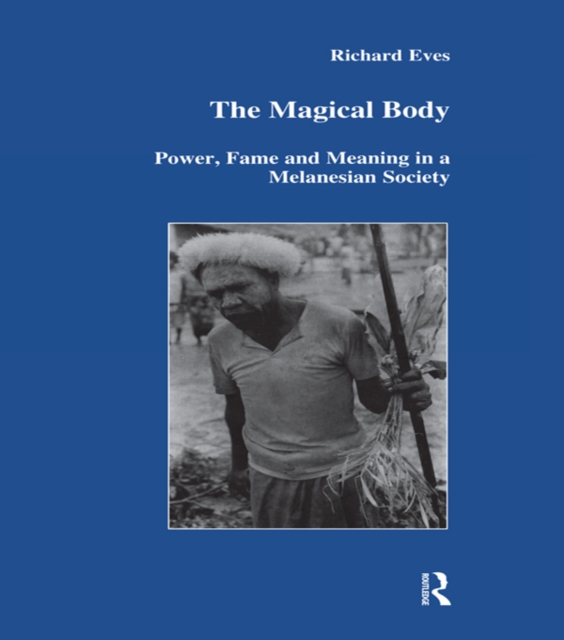
The Magical Body
An intriguing exploration of the role and significance of the body in the world of a Pacific Islands People, the Lelet of New Ireland (Papua New Guinea). In vivid ethnographic detail, the monograph captures the fluidity and complexity of Lelet conceptions of corporeality and their significance to identity as they encounter the influences of modernity, in the form of colonialism, Christianity and cash-cropping. The author examines the importance of the body to constructions of identity and difference, and its role in the constitution of place and space. The book provides a richly detailed ethnographic study of magical belief and the body whilst paying particular attention to the polyvalent meanings of bodily images and metaphors as they are used in numerous contexts of magic.
eBook
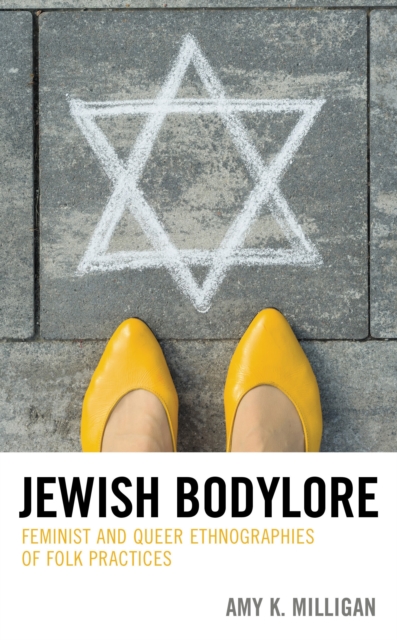
Jewish Bodylore
Jewish Bodylore: Feminist and Queer Ethnographies of Folk Practices explores the Jewish body and its symbology as a space for identity communication, applying the tools of bodylore (the folkloric study of the body) to the Jewish body in ways that are in line both with feminist and queer theory.
eBook

Manliness in Britain, 1760–1900
This book offers an innovative account of manliness in Britain between 1760 and 1900. Using diverse textual, visual and material culture sources, it shows that masculinities were produced and disseminated through men’s bodies –often working-class ones – and the emotions and material culture associated with them. The book analyses idealised men who stimulated desire and admiration, including virile boxers, soldiers, sailors and blacksmiths, brave firemen and noble industrial workers. It also investigates unmanly men, such as drunkards, wife-beaters and masturbators, who elicited disgust and aversion. Unusually, Manliness in Britain runs from the eras of feeling, revolution and reform to those of militarism, imperialism, representative democracy and mass media, periods often dealt with separately by historians of masculinities.
eBook

Unshrouding Narratives, Beliefs, and Practices Related to the Aye-aye (Daubentonia madagascariensis) in Eastern Madagascar
Ethnoprimatology emphasizes the complex sociocultural dimensions of human-alloprimate interactions, often overlooked in conservation practices and narratives shaped by ecological perspectives alone. In Madagascar, lemurs are deeply embedded in local traditions structured around taboos, legends, and kinship beliefs. Among them, the aye-aye (
Daubentonia madagascariensis
) is frequently subject to a narrative portraying it as an evil animal, an omen, or a harbinger of misfortune. Yet, cultural representations of the aye-aye across Madagascar are far more diverse. While some reports describe ritual killings, others recount respectful mortuary practices bestowed upon these primates. We explored the beliefs, narratives, and practices associated with the aye-aye in three regions of eastern Madagascar. Drawing on a mixed-methods approach, we combined quantitative and qualitative data from 219 semistructured interviews with grounded theory methodology and developed an interpretive framework for understanding the species’ cultural representations. Our results revealed a wide variety of traditions, including magical and therapeutic uses of aye-aye body parts and three legends underpinning these belief systems. We propose that these traditions stem from the belief that the aye-aye is inhabited by a spirit, whether evil or ancestral. Responses to its perceived nefarious powers vary from ritual display of the killed animal to mortuary practices comparable to human funerals. These findings urge a shift away from reductive narratives long popularized in recent decades, recognizing complexity and site-specificity. Similar to other contemporary ethnoprimatologists, we advocate for a cautious, context-sensitive approach to both reporting lemur-related traditions and designing conservation programs, emphasizing the need for carefully considering the religious systems that underlie practices involving threatened species.
Journal Article
Natural symbols: explorations in cosmology
Every natural symbol - derived from blood, breath or excrement - carries a social meaning and this work focuses on the ways in which any one culture makes its selections from body symbolism. Each person treats their body as an image of society and the author examines the varieties of ritual and symbolic expression and the patterns of social ritual in which they are embodied.Natural Symbols is a book about religion and it concerns our own society at least as much as any other. It has stimulated new insights into religious and political movements and has provoked re-appraisals of current progressive orthodoxies in many fields. As a classic, it represents a work of anthropology in its widest sense, exploring themes such as the social meaning of natural symbols and the image of the body in society which are now very much in vogue in anthropology, sociology and cultural studies.In this reissue and with a new Introduction, Natural Symbols will continue to appeal to all students of anthropology, sociology and religion.
eBook

Soul Hunters
This is an insightful, highly original ethnographic interpretation of the hunting life of the Yukaghirs, a little-known group of indigenous people in the Upper Kolyma region of northeastern Siberia. Basing his study on firsthand experience with Yukaghir hunters, Rane Willerslev focuses on the practical implications of living in a \"hall-of-mirrors\" world—one inhabited by humans, animals, and spirits, all of whom are understood to be endless mimetic doubles of one another. In this world human beings inhabit a betwixt-and-between state in which their souls are both substance and nonsubstance, both body and soul, both their own individual selves and reincarnated others. Hunters are thus both human and the animals they imitate, which forces them to steer a complicated course between the ability to transcend difference and the necessity of maintaining identity.
eBook

Witching Culture
Taking the reader into the heart of one of the fastest-growing religious movements in North America, Sabina Magliocco reveals how the disciplines of anthropology and folklore were fundamental to the early development of Neo-Paganism and the revival of witchcraft. Magliocco examines the roots that this religious movement has in a Western spiritual tradition of mysticism disavowed by the Enlightenment. She explores, too, how modern Pagans and Witches are imaginatively reclaiming discarded practices and beliefs to create religions more in keeping with their personal experience of the world as sacred and filled with meaning. Neo-Pagan religions focus on experience, rather than belief, and many contemporary practitioners have had mystical experiences. They seek a context that normalizes them and creates in them new spiritual dimensions that involve change in ordinary consciousness. Magliocco analyzes magical practices and rituals of Neo-Paganism as art forms that reanimate the cosmos and stimulate the imagination of its practitioners. She discusses rituals that are put together using materials from a variety of cultural and historical sources, and examines the cultural politics surrounding the movement-how the Neo-Pagan movement creates identity by contrasting itself against the dominant culture and how it can be understood in the context of early twenty-first-century identity politics.Witching Cultureis the first ethnography of this religious movement to focus specifically on the role of anthropology and folklore in its formation, on experiences that are central to its practice, and on what it reveals about identity and belief in twenty-first-century North America.
eBook