
Catalogue Search | MBRL


Are you sure you want to remove the book from the shelf?

{{itemTitle}}
1,004
result(s) for
"Human body Poetry."
Sort by:

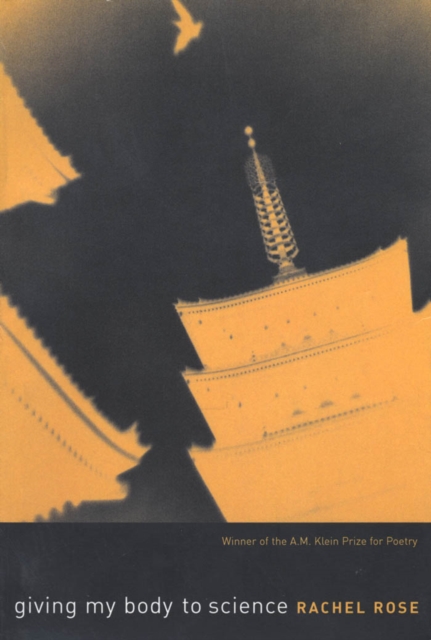
Giving My Body to Science
I bow and hand Sensei her arrows. All but one that I can't find, though I combed the long grass with my fingers. One arrow gone. Perhaps underground you hold it in your hand against the broken dawn. You are the wandering arrow, the bow unstrung. Your sudden absence has startled the partridges from the plums. --from Haiku of the Lost Arrow
eBook

Give me back my bones!
\"A stormy night at sea has uncovered some long-buried secrets and surprises. Is that the mast of a shipwreck? A faded pirate hat? And what's that hiding in the sand? A mandible and a clavicle, phalanges and femurs, a tibia and a fibula -- could there be a set of bones scattered across the ocean floor? And who might they belong to? A jaunty rhyme takes readers on an underwater scavenger hunt as a comical skeleton tries to put itself back together piece by piece. Make no bones about it: this rollicking read-aloud will have young ones learning anatomy without even realizing it.\"--Publisher.
Book

Furious Lullaby
Furious Lullaby is both a celebration of and a eulogy to the body in the twenty-first century. The collection, which examines the larger concepts of salvation and temptation in a world of blossoming strife, includes a series of aubades – dramatic poems culminating with the separation of lovers at dawn. The lovers suffer a metaphysical crisis, seeking to know what is good, what is evil, and how to truly know the difference. Knowing, however, invites the terrible into their world. The Devil, a seductive trickster, haunts the landscape as a voice who dares each inquisitor to learn about mortality, morality, the beautiful, and the unspeakable through direct experience. Furious Lullaby offers a departure from the lighter prose poetry of de la Paz’s Names above Houses and preserves the author’s concern with the nature of human grace.  
eBook

Difficult Gifts
Forty-two poems by Dawn Garisch, a doctor who writes, a poet who walks, a researcher who dances. She lives in Cape Town near the mountain and the sea and has two grown sons. Her last novel, Trespass, was nominated for the Commonwealth Prize in Africa.
eBook

Strange Valentine
A. Loudermilk utilizes confessional, persona, and third-person poems throughout this intimate yet socially conscious first collection. Strange Valentine is an indictment of love, fixating on the paranoid relationship between body and state, on the dangerous relationship between family history and sexual history, and on the elusive relationship between gender and sexuality—specifically as experienced in the working-class towns of the southernmost Midwest. Riding highly crafted rhythms in sound, line, and invented form, Loudermilk’s multivoiced storytelling resounds with the characters and heartbreaks of the heartland.
eBook

Victorian poetry and the culture of the heart
This book considers why and how the heart became a vital image in Victorian poetry, and argues that the intense focus on heart imagery in many major Victorian poems highlights anxieties in this period about the ability of poetry to create affect. In the course of the nineteenth century, new medical investigations into the heart, along with the development of instruments such as the stethoscope, gave the pathological heart a strong presence in popular culture. As poets feared for their own hearts, their poetry embodied concerns about heartsickness in form as well as content. Concerns about the heart's status and its actions fed into the broader discourses of religion, gender, and nationalism, as well as medicine. These discourses are examined through close readings of works by Arnold, Barrett Browning, Tennyson, and others.
eBook


The Symptom and the Subject
The Symptom and the Subject takes an in-depth look at how the physical body first emerged in the West as both an object of knowledge and a mysterious part of the self. Beginning with Homer, moving through classical-era medical treatises, and closing with studies of early ethical philosophy and Euripidean tragedy, this book rewrites the traditional story of the rise of body-soul dualism in ancient Greece. Brooke Holmes demonstrates that as the body (sma) became a subject of physical inquiry, it decisively changed ancient Greek ideas about the meaning of suffering, the soul, and human nature.
eBook

The End of Conduct
Grobianus et Grobiana, a little-known but key Renaissance text, is the starting point for this examination of indecency, conduct, and subject formation in the early modern period. First published in 1549, Friedrich Dedekind's ironic poem recommends the most disgusting behavior-indecency-as a means of instilling decency. The poem, Barbara Correll maintains, not only supplements prior conduct literature but offers a reading of it as well; her analysis of the Grobianus texts (the neo-Latin original, the German vernacular adaptation, the 1605 English translation, and Thomas Dekker'sGuls Horne-booke) also provides a historical account of conduct during the shift from a medieval to a Renaissance sensibility. According to Correll, the effect of Dedekind's text is to establish normative masculine identity through the labor of aversion. The gross, material body must be subjugated and reconstituted in order to attain its status as the bearer of civil manhood. Correll shows how the virtual subject of civil conduct emerges in dominant yet necessarily beleaguered relation to colonized Others, whether in feminine, animal, or peasant guise. Referring to Renaissance courtesy literature from Castiglione to Erasmus, she identifies this double drama of early modern subject formation as central to conduct books as well as to their grobian extensions. Her work places Grobianus in the civilizing process that marked emerging bourgeois society in early modern Europe.
Grobianus et Grobiana, a little-known but key Renaissance text, is the starting point for this examination of indecency, conduct, and subject formation in the early modern period.
First published in 1549, Friedrich Dedekind's ironic poem recommends the most disgusting behavior-indecency-as a means of instilling decency. The poem, Barbara Correll maintains, not only supplements prior conduct literature but offers a reading of it as well; her analysis of the Grobianus texts (the neo-Latin original, the German vernacular adaptation, the 1605 English translation, and Thomas Dekker'sGuls Horne-booke) also provides a historical account of conduct during the shift from a medieval to a Renaissance sensibility.
According to Correll, the effect of Dedekind's text is to establish normative masculine identity through the labor of aversion. The gross, material body must be subjugated and reconstituted in order to attain its status as the bearer of civil manhood. Correll shows how the virtual subject of civil conduct emerges in dominant yet necessarily beleaguered relation to colonized Others, whether in feminine, animal, or peasant guise. Referring to Renaissance courtesy literature from Castiglione to Erasmus, she identifies this double drama of early modern subject formation as central to conduct books as well as to their grobian extensions. Her work places Grobianus in the civilizing process that marked emerging bourgeois society in early modern Europe.
eBook