
Catalogue Search | MBRL


Are you sure you want to remove the book from the shelf?

{{itemTitle}}
7,956
result(s) for
"Human ecology Case studies."
Sort by:

Science and sensibility : negotiating an ecology of place
\"If humans are to understand and discover ways of addressing complex social and ecological problems, we first need to find intimacy with our particular places and communities. Cultivating a relationship to place often includes a negotiating process that involves both science and sensibility. While science is one key part of an adaptive and resilient society, the cultivation of a renewed sense of place and community is essential as well. Science and Sensibility argues for the need for ecology to engage with philosophical values and economic motivations in a political process of negotiation, with the goal of shaping humans' treatment of the natural world. Michael McGinnis aims to reframe ecology so it might have greater \"trans-scientific\" awareness of the roles and interactions among multiple stakeholders in socioecological systems, and he also maintains that deep ecological knowledge of specific places will be crucial to supporting a sustainable society. He uses numerous specific case studies from watershed, coastal, and marine habitats to illustrate how place-based ecological negotiation can occur, and how reframing our negotiation process can influence conservation, restoration, and environmental policy in effective ways.\"--Provided by publisher.
Book
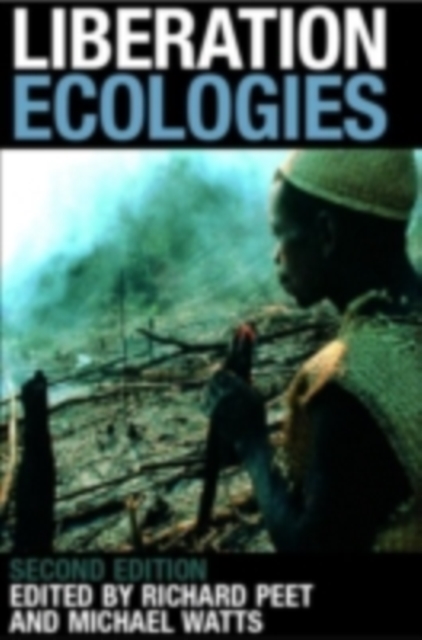
Liberation ecologies: environment, development, social movements
Liberation Ecologies brings together some of the most exciting theorists in the field to explore the impact of political ecology in today's developing world. The book casts new light on the crucial interrelations of development, social movements and the environment in the South - the 'bigger' half of our planet - and raises questions and hopes about change on the global scale. The in-depth case material is drawn from across the Developing World, from Latin America, Africa and Asia. The issues raised in contemporary political, economic and social theory are illustrated through these case studies. Ultimately, Liberation Ecologies questions what we understand by 'development', be it mainstream or alternative, and seeks to renew our sense of nature's range of possibilities.
eBook


Environments of Empire
The age of European high imperialism was characterized by the movement of plants and animals on a historically unprecedented scale. The human migrants who colonized territories around the world brought a variety of other species with them, from the crops and livestock they hoped to propagate, to the parasites, invasive plants, and pests they carried unawares, producing a host of unintended consequences that reshaped landscapes around the world. While the majority of histories about the dynamics of these transfers have concentrated on the British Empire, these nine case studies--focused on the Ottoman, French, Dutch, German, and British empires--seek to advance a historical analysis that is comparative, transnational, and interdisciplinary to understand the causes, consequences, and networks of biological exchange and ecological change resulting from imperialism. Contributors: Brett M. Bennett, Semih Celik, Nicole Chalmer, Jodi Frawley, Ulrike Kirchberger, Carey McCormack, Idir Ouahes, Florian Wagner, Samuel Eleazar Wendt, Alexander van Wickeren, Stephanie Zehnle
eBook

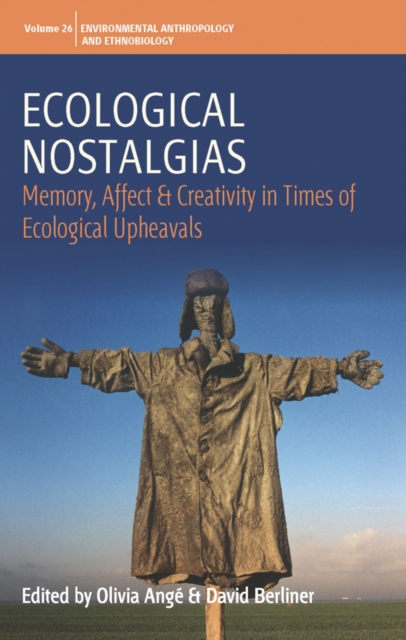
Ecological Nostalgias
Introducing the study of econostalgias through a variety of rich
ethnographic cases, this volume argues that a strictly human
centered approach does not account for contemporary longings
triggered by ecosystem upheavals. In this time of climate change,
this book explores how nostalgia for fading ecologies unfolds into
the interstitial spaces between the biological, the political and
the social, regret and hope, the past, the present and the
future.
eBook

Indigenous knowledge for climate change assessment and adaptation
\"This unique transdisciplinary publication is the result of collaboration between UNESCO's Local and Indigenous Knowledge Systems (LINKS) programme, the United Nations University's Traditional Knowledge Initiative, the IPCC, and other organisations. Chapters, written by indigenous peoples, scientists and development experts, provide insight into how diverse societies observe and adapt to changing environments. A broad range of case studies illustrate how these societies, building upon traditional knowledge handed down through generations, are already developing their own solutions for dealing with a rapidly changing climate and how this might be useful on a global scale. Of interest to policy-makers, social and natural scientists, and indigenous peoples and experts, this book provides an indispensable reference for those interested in climate science, policy and adaptation\"-- Provided by publisher.
Book

Anasazi America
At the height of their power in the late eleventh century, the Chaco Anasazi dominated a territory in the American Southwest larger than any European principality of the time. Developed over the course of centuries and thriving for over two hundred years, the Chacoans’ society collapsed dramatically in the twelfth century in a mere forty years.
David E. Stuart incorporates extensive new research findings through groundbreaking archaeology to explore the rise and fall of the Chaco Anasazi and how it parallels patterns throughout modern societies in this new edition. Adding new research findings on caloric flows in prehistoric times and investigating the evolutionary dynamics induced by these forces as well as exploring the consequences of an increasingly detached central Chacoan decision-making structure, Stuart argues that Chaco’s failure was a failure to adapt to the consequences of rapid growth—including problems with the misuse of farmland, malnutrition, loss of community, and inability to deal with climatic catastrophe.
Have modern societies learned from the experience and fate of the Chaco Anasazi, or are we risking a similar cultural collapse?
eBook

Working on earth : class and environmental justice
\"Working on Earth: Class and Environmental Justice is a collection of scholarly essays that examine the relationship between the exploitation of the working-class and environment injustices in the US and Canada. These scholars, from the fields of environmental humanities and environmental social sciences, seek to assess the current unprecedented rates of environmental degradation, expanding economic inequality, and wide-spread social injustice. Without dividing worker from wilderness, or labor from landscape, they present solutions to the global climate crisis. Ultimately, this book advances the idea of a working-class ecology that must be an integral part of achieving just and sustainable human development\"-- Provided by publisher.
Book

Liberation Ecologies
Liberation Ecologies brings together some of the most exciting theorists in the field to explore the impact of political ecology in today's developing world. The book casts new light on the crucial interrelations of development, social movements and the environment in the South - the 'bigger' half of our planet - and raises questions and hopes about change on the global scale. The in-depth case material is drawn from across the Developing World, from Latin America, Africa and Asia. The issues raised in contemporary political, economic and social theory are illustrated through these case studies. Ultimately, Liberation Ecologies questions what we understand by 'development', be it mainstream or alternative, and seeks to renew our sense of nature's range of possibilities.
eBook