
Catalogue Search | MBRL


Are you sure you want to remove the book from the shelf?

{{itemTitle}}
4,931
result(s) for
"Human ecology Tropics."
Sort by:


Time and Complexity in Historical Ecology
This collection of studies by anthropologists, botanists, ecologists, and biologists is an important contribution to the emerging field of historical ecology. The book combines cutting-edge research with new perspectives to emphasize the close relationship between humans and their natural environment. Contributors examine how alterations in the natural world mirror human cultures, societies, and languages. Treating the landscape like a text, these researchers decipher patterns and meaning in the Ecuadorian Andes, Amazonia, the desert coast of Peru, and other regions in the neotropics. They show how local peoples have changed the landscape over time to fit their needs by managing and modifying species diversity, enhancing landscape heterogeneity, and controlling ecological disturbance. In turn, the environment itself becomes a form of architecture rich with historical and archaeological significance. Time and Complexity in Historical Ecology explores thousands of years of ecological history while also addressing important contemporary issues, such as biodiversity and genetic variation and change. Engagingly written and expertly researched, this book introduces and exemplifies a unique method for better understanding the link between humans and the biosphere.
eBook
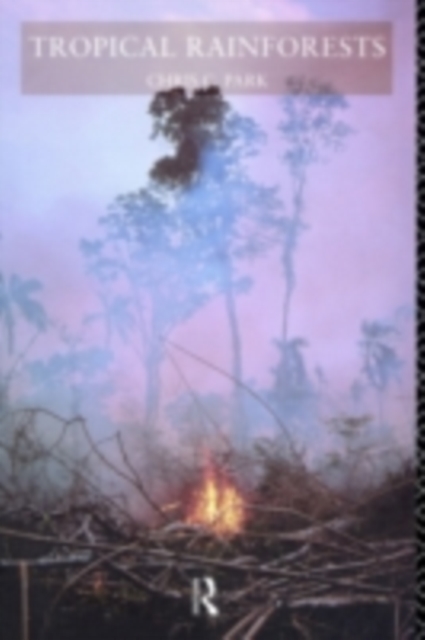
Tropical rainforests
First published in 1992. Routledge is an imprint of Taylor & Francis, an informa company.
1. The Tropical Rainforest: History and Environment 2. Destruction of the Rainforest: Rates of Loss 3. Causes and Processes of Clearance 4. Impacts and Costs of Destruction 5. Forest Peoples 6. Possible Solutions
eBook

Tropical rainforests / Chris C. Park. Tropical rain forests.
\"Presents an up-to-date and wide-ranging review of the problems and prospects of the world's tropical forests.\"--NHBS Environement Bookstore.
eBook


Testing predictions of the Janzen–Connell hypothesis: a meta‐analysis of experimental evidence for distance‐ and density‐dependent seed and seedling survival
The Janzen–Connell hypothesis proposes that specialist natural enemies, such as herbivores and pathogens, maintain diversity in plant communities by reducing survival rates of conspecific seeds and seedlings located close to reproductive adults or in areas of high conspecific density. Variation in the strength of distance‐ and density‐dependent effects is hypothesized to explain variation in plant species richness along climatic gradients, with effects predicted to be stronger in the tropics than the temperate zone and in wetter habitats compared to drier habitats. We conducted a comprehensive literature search to identify peer‐reviewed experimental studies published in the 40+ years since the hypothesis was first proposed. Using data from these studies, we conducted a meta‐analysis to assess the current weight of evidence for the distance and density predictions of the Janzen–Connell hypothesis. Overall, we found significant support for both the distance‐ and density‐dependent predictions. For all studies combined, survival rates were significantly reduced near conspecifics compared to far from conspecifics, and in areas with high densities of conspecifics compared to areas with low conspecific densities. There was no indication that these results were due to publication bias. The strength of distance and density effects varied widely among studies. Contrary to expectations, this variation was unrelated to latitude, and there was no significant effect of study region. However, we did find a trend for stronger distance and density dependence in wetter sites compared to sites with lower annual precipitation. In addition, effects were significantly stronger at the seedling stage compared to the seed stage. Synthesis. Our study provides support for the idea that distance‐ and density‐dependent mortality occurs in plant communities world‐wide. Available evidence suggests that natural enemies are frequently the cause of such patterns, consistent with the Janzen–Connell hypothesis, but additional studies are needed to rule out other mechanisms (e.g. intraspecific competition). With the widespread existence of density and distance dependence clearly established, future research should focus on assessing the degree to which these effects permit species coexistence and contribute to the maintenance of diversity in plant communities.
Journal Article

The importance of biodiversity and dominance for multiple ecosystem functions in a human-modified tropical landscape
Many studies suggest that biodiversity may be particularly important for ecosystem multifunctionality, because different species with different traits can contribute to different functions. Support, however, comes mostly from experimental studies conducted at small spatial scales in low-diversity systems. Here, we test whether different species contribute to different ecosystem functions that are important for carbon cycling in a high-diversity human-modified tropical forest landscape in Southern Mexico. We quantified aboveground standing biomass, primary productivity, litter production, and wood decomposition at the landscape level, and evaluated the extent to which tree species contribute to these ecosystem functions. We used simulations to tease apart the effects of species richness, species dominance and species functional traits on ecosystem functions. We found that dominance was more important than species traits in determining a species' contribution to ecosystem functions. As a consequence of the high dominance in human-modified landscapes, the same small subset of species mattered across different functions. In human-modified landscapes in the tropics, biodiversity may play a limited role for ecosystem multifunctionality due to the potentially large effect of species dominance on biogeochemical functions. However, given the spatial and temporal turnover in species dominance, biodiversity may be critically important for the maintenance and resilience of ecosystem functions.
Journal Article

Changing Drivers of Deforestation and New Opportunities for Conservation
Over the past 50 years, human agents of deforestation have changed in ways that have potentially important implications for conservation efforts. We characterized these changes through a meta-analysis of case studies of land-cover change in the tropics. From the 1960s to the 1980s, small-scale farmers, with state assistance, deforested large areas of tropical forest in Southeast Asia and Latin America. As globalization and urbanization increased during the 1980s, the agents of deforestation changed in two important parts of the tropical biome, the lowland rainforests in Brazil and Indonesia. Well-capitalized ranchers, farmers, and loggers producing for consumers in distant markets became more prominent in these places and this globalization weakened the historically strong relationship between local population growth and forest cover. At the same time, forests have begun to regrow in some tropical uplands. These changing circumstances, we believe, suggest two new and differing strategies for biodiversity conservation in the tropics, one focused on conserving uplands and the other on promoting environmental stewardship in lowlands and other areas conducive to industrial agriculture.
Journal Article

Assessing the evidence for latitudinal gradients in plant defence and herbivory
1. The idea that biotic interactions, including herbivory, predation and competition are more intense at lower latitudes is widely accepted and underpins several dominant theories on the latitudinal gradient in biodiversity. Current theory also predicts that the intense biotic interactions at low latitudes will select plants for greater defence against herbivores. We reviewed the literature to provide an assessment of the evidence for and against the hypothesis that herbivory is more intense at lower latitudes, and that plants from low latitudes are better defended than are plants from high latitudes. 2. Only 37% of the 38 latitudinal comparisons of herbivory showed higher herbivory at lower latitudes, and the average effect size in a meta-analysis was not significantly different from zero. Thus, the available data do not support the idea that herbivory is generally more intense in the tropics. 3. Only nine of 56 comparisons found higher chemical defences at lower latitudes, and a meta-analysis showed that overall, chemical defences were significantly higher in plants from higher latitudes. This result is counter to the predictions of much of the literature. 4. A meta-analysis showed no significant effect of latitude on physical defence. 5. A review of the literature on feeding trials and common garden experiments showed that herbivores tend to prefer tissue from high latitudes. This trend could stem from differences in overall defence that were not captured by the metrics used in the literature, but could also result from differences in nutritional quality. 6. The empirical data do not support the widespread view that herbivory is generally more intense at lower latitudes, or that plants from low latitudes are generally better defended than are plants from higher latitudes. These results are counter to the prevailing thought on this topic, and suggest that this field may be ripe for the development of new theory.
Journal Article