
Catalogue Search | MBRL


Are you sure you want to remove the book from the shelf?

{{itemTitle}}
100
result(s) for
"Human evolution Textbooks."
Sort by:

An interactive three-dimensional digital atlas and quantitative database of human development
The detailed morphology of human development has intrigued scientists and the medical field alike. However, the scarcity of specimens hampers detailed mapping of tissue architecture. Furthermore, inaccuracies in the description of human development have crept into textbooks from observations of animal models that are extrapolated to humans. By mapping normal developmental processes and patterns, such as the growth and relative placement of organs, congenital anomalies can be better understood. de Bakker et al. generated interactive three-dimensional digital reconstructions based on the Carnegie collection of histologically sectioned human embryos spanning the first 2 months of gestation. These interactive models will serve as educational and scientific resources for normal and abnormal human development. Science , this issue p. 10.1126/science.aag0053 Interactive three-dimensional models unveil early human development. Current knowledge about human development is based on the description of a limited number of embryonic specimens published in original articles and textbooks, often more than 100 years ago. It is exceedingly difficult to verify this knowledge, given the restricted availability of human embryos. We created a three-dimensional digital atlas and database spanning the first 2 months of human development, based on analysis of nearly 15,000 histological sections of the renowned Carnegie Collection of human embryonic specimens. We identified and labeled up to 150 organs and structures per specimen and made three-dimensional models to quantify growth, establish changes in the position of organs, and clarify current ambiguities. The atlas provides an educational and reference resource for studies on early human development, growth, and congenital malformations.
Journal Article

Processes in human evolution : the journey from early hominins to Neanderthals and modern humans
The discoveries of the last decade have brought about a completely revised understanding of human evolution, due to the recent advances in genetics, palaeontology, ecology, archaeology, geography, and climate science. Written by two leading authorities in the fields of physical anthropology and molecular evolution, Processes in Human Evolution presents a reconsidered overview of hominid evolution, synthesising data and approaches from a range of inter-disciplinary fields. The authors pay particular attention to population migrations, since these are crucial in understanding the origin and dispersion of the different genera and species in each continent, and to the emergence of the lithic cultures and their impact on the evolution of the cognitive capacities. Processes in Human Evolution is intended as a primary textbook for university courses on human evolution, and may also be used as supplementary reading in advanced undergraduate and graduate courses. It is also suitable for interested lay-readers seeking a readable but up-to-date and inclusive treatment of human origins and evolution.-- Publisher's website.
Book

What is epidemiology? Changing definitions of epidemiology 1978-2017
Epidemiology is a discipline which has evolved with the changes taking place in society and the emergence of new diseases and new discipline related to epidemiology. With these evolutions, it is important to understand epidemiology and to analyse the evolution of content of definitions of epidemiology.
The main objective of this paper was to identify new definitions of epidemiology available since 1978. Secondary objectives were to analyse the content of these definitions, to compare them with those used by Lilienfeld and to determine whether changes have taken place over the last forty years.
A review of grey literature and published literature was conducted to find the definitions of epidemiology written between 1978 and 2017.
102 definitions of epidemiology were retained. They helped to highlight 20 terms and concepts related to epidemiology. Most of them were already used in the definitions used by Lilienfeld. Five terms were present in more than 50% of definitions from the period 1978 to 2017: \"population\", \"study\", \"disease\", \"health\" and \"distribution\". Several developments have occurred: strengthening of the terms \"control\" and \"health\" already used, the concept of \"disease\" was less frequently encountered whereas the concepts \"infectious diseases\", \"mass phenomenon\" are no longer used in definitions from 1978 to 2017.
This evolution of content of definition of epidemiology is absent from books on epidemiology. A thematic analysis of definitions of epidemiology could be conducted in order to improve our understanding of changes observed.
Journal Article

Examining Biology Curricular Resources’ Scientific Depictions of Evolution, Race, Sexuality, and Identity
Teaching and learning relies on age-appropriate, credible formal (e.g., textbooks, textbook supplements) and informal (e.g., trade-books) curricular texts. Previous research traced American publishers’ self-censorship about human evolution within twentieth-century textbooks. This study, informed by the latest scientific understandings, engaged in content analysis of scientific depictions of evolution, race, (homo)sexuality, and intersex identity. The data pool contained American biology textbooks, trade-books, and curricular supplements published after 1990 (
n
= 153). Findings revealed age-appropriate, comprehensive evolutionary depictions, yet stark omissions of scientific evidence and arguments challenging white supremacy, cisheteronormativity, and pathologization of racialized, queer, and intersex identities. Most modern biology curricular texts, in other words, disregard scientific examination of the tenets grounding racism, homophobia, and transphobia. Why do most biology curricular resources omit the science controverting prominent pseudoscientific fears? Who determines what is taught? The consequences of curricular omissions are particularly alarming considering the violence and violent threats targeting already-marginalized people.
Journal Article

Give one species the task to come up with a theory that spans them all: what good can come out of that?
Does the progress in understanding evolutionary theory depend on the species that is doing the investigation? This question is difficult to answer scientifically, as we are dealing with an n = 1 scenario: every individual who has ever written about evolution is a human being. I will discuss, first, whether we get the correct answer to questions if we begin with ourselves and expand outwards, and second, whether we might fail to ask all the interesting questions unless we combat our tendencies to favour taxa that are close to us. As a whole, the human tendency to understand general biological phenomena via ‘putting oneself in another organism's shoes’ has upsides and downsides. As an upside, our intuitive ability to rethink strategies if the situation changes can lead to ready generation of adaptive hypotheses. Downsides occur if we trust this intuition too much, and particular danger zones exist for traits where humans are an unusual species. I argue that the levels of selection debate might have proceeded differently if human cooperation patterns were not so unique, as this brings about unique challenges in biology teaching; and that theoretical insights regarding inbreeding avoidance versus tolerance could have spread faster if we were not extrapolating our emotional reactions to incest disproportionately depending on whether we study animals or plants. I also discuss patterns such as taxonomic chauvinism, i.e. less attention being paid to species that differ more from human-like life histories. Textbooks on evolution reinforce such biases insofar as they present, as a default case, systems that resemble ours in terms of life cycles and other features (e.g. gonochorism). Additionally, societal norms may have led to incorrect null hypotheses such as females not mating multiply.
Journal Article
The extended self
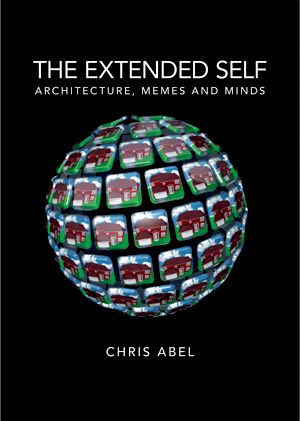
In this wide-ranging study of architecture and cultural evolution, the author argues that underlying the global environmental crisis is a general resistance to changing personal and social identities shaped by a technology-based culture and its energy-hungry products. The book traces the roots of that culture to the coevolution of Homo sapiens and technology, from the first use of tools as artificial extensions of the human body, to the motorised cities spreading around the world, whose uncontrolled effects are changing the planet itself. Advancing a new concept of the meme, called the ‘technical meme’, as the primary agent of cognitive extension and technical embodiment, the author proposes a theory of the ‘extended self’ encompassing material and spatial as well as psychological and social elements. Drawing upon research from philosophy, psychology and the neurosciences, the book presents a new approach to environmental and cultural studies that will appeal to a broad readership searching for insights into the crisis.
eBook

Biological concepts in recurrent Plasmodium vivax malaria
A curious aspect of the evolution of the hypnozoite theory of malarial relapse is its transmogrification from theory into ‘fact’, this being of historical, linguistic, scientific and sociological interest. As far as it goes, the hypnozoite explanation for relapse is almost certainly correct. I contend, however, that many of the genotypically homologous, non-reinfection, relapse-like Plasmodium vivax recurrences that researchers ascribe to hypnozoite activation are probably hypnozoite-independent. Indeed, some malariologists are starting to recognize that homologous P. vivax recurrences have most likely been overattributed to activation of hypnozoites. Hitherto identified, non-hypnozoite, possible plasmodial sources of recurrence that must be considered, besides circulating erythrocytic stages, include parasites in splenic dendritic cells, other cells in the spleen (in addition to infected erythrocytes there), bone marrow (importantly) and the skin. I argue that we need to take into account the possibility of a dual or multiple extra-vascular origin of P. vivax non-reinfection recurrences, not arbitrarily discount it. The existence of a P. vivax reservoir(s) is a topical subject and one of practical importance for malaria eradication. Pertinent drug-associated matters are also discussed, as is the dormancy-related significance of clues provided by blood-stage-induced malarial infection.
Journal Article

From law to folklore: work stress and the Yerkes-Dodson Law
Purpose
– The purpose of this paper is to examine how a speculative animal behaviour modification experiment conducted over 100 years ago evolved into a scientific law of human behaviour that is now widely cited in managerial psychology texts and journals. The paper considers the implications of this evolution for the theory and practice of work stress management in particular, and managerial psychology in general.
Design/methodology/approach
– Using insights from social constructivist studies of science the empirical evidence supporting the Yerkes-Dodson Law (YDL) is examined and found wanting. The role played by the simple graphical representation of the YDL in its popularisation is considered.
Findings
– Analysis reveals that the YDL has no basis in empirical fact but continues to inform managerial practices which seek to increase or maintain, rather than minimise, levels of stress in the workplace as a means to enhance employee performance.
Practical implications
– Practitioners should not seek to increase performance through the manipulation of employee stress levels.
Originality/value
– The paper brings attention to the potentially harmful ways the publication of long-discredited models of stress and performance can influence management practice.
Journal Article

Reconstructing Race in Science and Society: Biology Textbooks, 1952–2002
How has growing knowledge about human genetics affected how American textbooks present race? This article analyzes 80 biology textbooks published from 1952 to 2002 to reveal that U.S. biology texts have pursued the topic of race with renewed vigor in recent years. Moreover, textbooks have redefined race as genetic without furnishing empirical evidence for this framing. The textbooks' transformation sheds light on the broader relationship between race and science in the United States, where claims about racial difference have not only drawn instrumentally and selectively from empirical research, but at times forgo scientific grounding altogether. As the textbooks show, both the tight and the loose linkage of race to science can preserve the cultural authority of the race concept. The texts also make clear that race is not a one-time construct or a relic of centuries past. Instead, it is continually remade -- and is being reworked today -- suggesting its dynamic adaptation for ongoing use as a fundamental tool of social stratification.
Journal Article