
Catalogue Search | MBRL


Are you sure you want to remove the book from the shelf?

{{itemTitle}}
2,927
result(s) for
"Human evolution in art"
Sort by:

Erect men/undulating women : the visual imagery of gender, \race\ and progress in reconstructive illustrations of human evolution
Based on intensive study of human origin illustrations, responses from students and colleagues and research into reconstructive illustration and feminist criticism of Western art, this ground-breaking book traces the subtle ways in which paleoanthropological conventions have influenced and have shifted in the creation of these illustrations. Wiber reveals that embedded meanings in these illustrations go beyond gender to include two other ubiquitous themes—racial superiority and upward cultural progress. Underlying all these themes, she found a basic conservatism in the paleoanthropological approach to evolutionary theory.
Erect Men/Undulating Women provides a deeper understanding of popularized illustrations of human origins, but, more importantly, it encourages readers to gain a sensitivity to the ways in which Western culture constructs \"scientific\" findings that are compatible with its deeply held beliefs and values.
eBook
Aesthetics after Darwin
The book reveals a strong humanist heritage which renders Darwin's theory of song and poetic language far more nuanced and interesting than a monolithic \"singing for sex\" hypothesis.
eBook
Aesthetics after Darwin: the multiple origins and functions of art
Darwin famously proposed that sexual competition and courtship is (or at least was) the driving force of \"art\" production not only in animals, but also in humans. The present book is the first to reveal that Darwin's hypothesis, rather than amounting to a full-blown antidote to the humanist tradition, is actually strongly informed both by classical rhetoric and by English and German philosophical aesthetics, thereby Darwin's theory far richer and more interesting for the understanding of poetry and song.The book also discusses how the three most discussed hypothetical functions of the human arts--competition for attention and (loving) acceptance, social cooperation, and self-enhancement--are not mutually exclusive, but can well be conceived of as different aspects of the same processes of producing and responding to the arts.Finally, reviewing the current state of archeological findings, the book advocates a new hypothesis on the multiple origins of the human arts, posing that they arose as new variants of human behavior, when three ancient and largely independent adaptions--sensory and sexual selection-driven biases regarding visual and auditory beauty, play behavior, and technology--joined forces with, and were transformed by, the human capacities for symbolic cognition and language.
eBook

The Evolved Apprentice
Over the last three million years or so, our lineage has diverged sharply from those of our great ape relatives. Change has been rapid (in evolutionary terms) and pervasive. Morphology, life history, social life, sexual behavior, and foraging patterns have all shifted sharply away from those of the other great apes. InThe Evolved Apprentice, Kim Sterelny argues that the divergence stems from the fact that humans gradually came to enrich the learning environment of the next generation. Humans came to cooperate in sharing information, and to cooperate ecologically and reproductively as well, and these changes initiated positive feedback loops that drove us further from other great apes. Sterelny develops a new theory of the evolution of human cognition and human social life that emphasizes the gradual evolution of information-sharing practices across generations and how these practices transformed human minds and social lives. Sterelny proposes that humans developed a new form of ecological interaction with their environment, cooperative foraging. The ability to cope with the immense variety of human ancestral environments and social forms, he argues, depended not just on adapted minds but also on adapted developmental environments.
eBook

Human socio-technical evolution through the lens of an abstracted-wheel experiment: A critical look at a micro-society laboratory study
Micro-society experimental setups are increasingly used to infer aspects of human behavioural evolution. A key part of human society today is our dependence on, and use of, technology–whether simple (such as a knife) or complex (such as the technology that underpins AI). Previously, two groups of researchers used an abstracted-wheel experiment to explore the evolution of human technical behaviour, reaching fundamentally different outcomes. Whereas one group saw their results as indicating social learning only (void of causal understanding), the other inferred non-social technical reasoning as part of human technical behaviour. Here we report on the third generation of the micro-society abstracted-wheel experiment. We argue that causal reasoning is inseparable from both social learning and technical reasoning, and that these traits probably co-evolved into the current human socio-technical niche. Based on our outcomes, we present a critical assessment of what this experiment may (or may not) reveal about the evolution of human technical behaviour. We show that the abstracted-wheel experiment reflects behavioural output only, instead of testing for cognition. It is therefore limited in its ability to inform on aspects of human cognitive evolution, but it can provide useful insights into the interrelatedness of social learning, technical reasoning, and causal reasoning. Such a co-evolutionary insight has the potential to inform on aspects of human socio-technical evolution throughout the Pleistocene.
Journal Article

Dynamics of mammalian chromosome evolution inferred from multispecies comparative maps
The genome organizations of eight phylogenetically distinct species from five mammalian orders were compared in order to address fundamental questions relating to mammalian chromosomal evolution. Rates of chromosome evolution within mammalian orders were found to increase since the Cretaceous-Tertiary boundary. Nearly 20% of chromosome breakpoint regions were reused during mammalian evolution; these reuse sites are also enriched for centromeres. Analysis of gene content in and around evolutionary breakpoint regions revealed increased gene density relative to the genome-wide average. We found that segmental duplications populate the majority of primate-specific breakpoints and often flank inverted chromosome segments, implicating their role in chromosomal rearrangement.
Journal Article

Population genomics of post-glacial western Eurasia
Western Eurasia witnessed several large-scale human migrations during the Holocene
1
–
5
. Here, to investigate the cross-continental effects of these migrations, we shotgun-sequenced 317 genomes—mainly from the Mesolithic and Neolithic periods—from across northern and western Eurasia. These were imputed alongside published data to obtain diploid genotypes from more than 1,600 ancient humans. Our analyses revealed a ‘great divide’ genomic boundary extending from the Black Sea to the Baltic. Mesolithic hunter-gatherers were highly genetically differentiated east and west of this zone, and the effect of the neolithization was equally disparate. Large-scale ancestry shifts occurred in the west as farming was introduced, including near-total replacement of hunter-gatherers in many areas, whereas no substantial ancestry shifts happened east of the zone during the same period. Similarly, relatedness decreased in the west from the Neolithic transition onwards, whereas, east of the Urals, relatedness remained high until around 4,000
bp
, consistent with the persistence of localized groups of hunter-gatherers. The boundary dissolved when Yamnaya-related ancestry spread across western Eurasia around 5,000
bp
, resulting in a second major turnover that reached most parts of Europe within a 1,000-year span. The genetic origin and fate of the Yamnaya have remained elusive, but we show that hunter-gatherers from the Middle Don region contributed ancestry to them. Yamnaya groups later admixed with individuals associated with the Globular Amphora culture before expanding into Europe. Similar turnovers occurred in western Siberia, where we report new genomic data from a ‘Neolithic steppe’ cline spanning the Siberian forest steppe to Lake Baikal. These prehistoric migrations had profound and lasting effects on the genetic diversity of Eurasian populations.
An analysis involving the shotgun sequencing of more than 300 ancient genomes from Eurasia reveals a deep east–west genetic divide from the Black Sea to the Baltic, and provides insight into the distinct effects of the Neolithic transition on either side of this boundary.
Journal Article
The genetic history of Ice Age Europe
Modern humans arrived in Europe ~45,000 years ago, but little is known about their genetic composition before the start of farming ~8,500 years ago. Here we analyse genome-wide data from 51 Eurasians from ~45,000–7,000 years ago. Over this time, the proportion of Neanderthal DNA decreased from 3–6% to around 2%, consistent with natural selection against Neanderthal variants in modern humans. Whereas there is no evidence of the earliest modern humans in Europe contributing to the genetic composition of present-day Europeans, all individuals between ~37,000 and ~14,000 years ago descended from a single founder population which forms part of the ancestry of present-day Europeans. An ~35,000-year-old individual from northwest Europe represents an early branch of this founder population which was then displaced across a broad region, before reappearing in southwest Europe at the height of the last Ice Age ~19,000 years ago. During the major warming period after ~14,000 years ago, a genetic component related to present-day Near Easterners became widespread in Europe. These results document how population turnover and migration have been recurring themes of European prehistory.
Analysis of ancient genomic data of 51 humans from Eurasia dating from 45,000 to 7,000 years ago provides insight into the population history of pre-Neolithic Europe and support for recurring migration and population turnover in Europe during this period.
Eurasian humans of the Upper Paleolithic
David Reich, Svante Pääbo and colleagues analyse ancient genomic data from 51 Eurasian humans who lived between 45,000 and 7,000 years ago. The data provide the most comprehensive view to date of the population history of pre-Neolithic Europe, and provide support for recurring migration and population turnover in European populations during this period. Neanderthal ancestry has reduced during the past 45,000 years from 3–6% to the present day value of around 2%.
Journal Article
Shaping Humanity
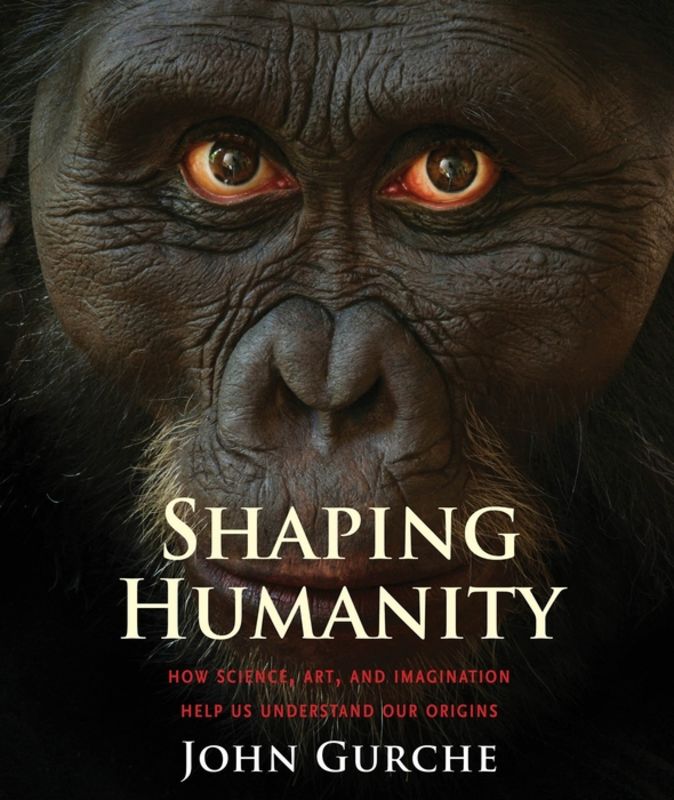
What did earlier humans really look like? What was life like for them, millions of years ago? How do we know? In this book, internationally renowned paleoartist John Gurche describes the extraordinary process by which he creates forensically accurate and hauntingly realistic representations of our ancient human ancestors.
Inspired by a lifelong fascination with all things prehistoric, and gifted with a unique artistic vision, Gurche has studied fossil remains, comparative ape and human anatomy, and forensic reconstruction for over three decades. His artworks appear in world-class museums and publications ranging fromNational Geographicto the journalScience,and he is widely known for his contributions to Steven Spielberg'sJurassic Parkand a number of acclaimed television specials. For the Smithsonian Institution's groundbreaking David H. Koch Hall of Human Origins, opened in 2010, Gurche created fifteen sculptures representing six million years of human history. InShaping Humanityhe relates how he worked with a team of scientists to depict human evolution in sculpture for the new hall. He reveals the debates and brainstorming that surround these often controversial depictions, and along the way he enriches our awareness of the various paths of human evolution and humanity's stunning uniqueness in the history of life on Earth.
eBook
Population genomics of the Viking world
The maritime expansion of Scandinavian populations during the Viking Age (about
ad
750–1050) was a far-flung transformation in world history
1
,
2
. Here we sequenced the genomes of 442 humans from archaeological sites across Europe and Greenland (to a median depth of about 1×) to understand the global influence of this expansion. We find the Viking period involved gene flow into Scandinavia from the south and east. We observe genetic structure within Scandinavia, with diversity hotspots in the south and restricted gene flow within Scandinavia. We find evidence for a major influx of Danish ancestry into England; a Swedish influx into the Baltic; and Norwegian influx into Ireland, Iceland and Greenland. Additionally, we see substantial ancestry from elsewhere in Europe entering Scandinavia during the Viking Age. Our ancient DNA analysis also revealed that a Viking expedition included close family members. By comparing with modern populations, we find that pigmentation-associated loci have undergone strong population differentiation during the past millennium, and trace positively selected loci—including the lactase-persistence allele of
LCT
and alleles of
ANKA
that are associated with the immune response—in detail. We conclude that the Viking diaspora was characterized by substantial transregional engagement: distinct populations influenced the genomic makeup of different regions of Europe, and Scandinavia experienced increased contact with the rest of the continent.
Ancient DNA analyses reveal that Viking Age migrations from Scandinavia resulted in differential influxes of ancestry to different parts of Europe, and the increased presence of non-local ancestry within Scandinavia.
Journal Article