
Catalogue Search | MBRL


Are you sure you want to remove the book from the shelf?

{{itemTitle}}
138
result(s) for
"Human evolution-Social aspects"
Sort by:

The philosophy of human evolution
\"This book provides a unique discussion of human evolution from a philosophical viewpoint, looking at the facts and interpretations since Charles Darwin's The Descent of Man. Michael Ruse explores such topics as the nature of scientific theories, the relationships between culture and biology, the problem of progress and the extent to which evolutionary issues pose problems for religious beliefs. He identifies these issues, highlighting the problems for morality in a world governed by natural selection. By taking a philosophical viewpoint, the full ethical and moral dimensions of human evolution are examined. This book engages the reader in a thorough discussion of the issues, appealing to students in philosophy, biology and anthropology\"-- Provided by publisher.
Book

Like ants: civilization and eusocial development
Turnbull challenges conventional wisdom about how human civilization developed. Most species survive for half a million years, while humanity is already about one million years old. We survive because we cooperate, he says. However, ants have been around for at least 100 times as long. Should we act more like them, or have we gone too far already?
eBook
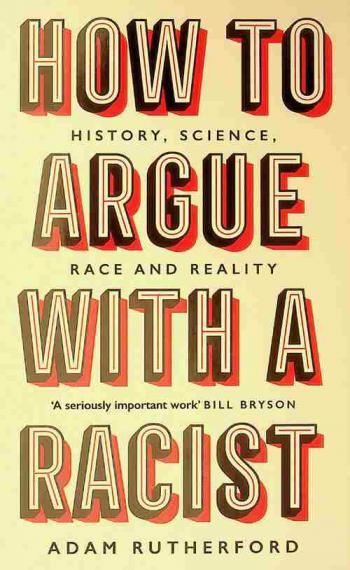
How to argue with a racist : history, science, race and reality
Race is real because we perceive it. Racism is real because we enact it. But the appeal to science to strengthen racist ideologies is on the rise - and increasingly part of the public discourse on politics, migration, education, sport and intelligence. Stereotypes and myths about race are expressed not just by overt racists, but also by well-intentioned people whose experience and cultural baggage steer them towards views that are not supported by the modern study of human genetics. Even some scientists are uncomfortable expressing opinions deriving from their research where it relates to race. Yet, if understood correctly, science and history can be powerful allies against racism, granting the clearest view of how people actually are, rather than how we judge them to be.

Like Ants
Turnbull challenges conventional wisdom about how human civilization developed. Most species survive for half a million years, while humanity is already about one million years old. We survive because we cooperate, he says. However, ants have been around for at least 100 times as long. Should we act more like them, or have we gone too far already?.
eBook


Social and solidarity economy
As economic crises, growing inequality and climate change prompt a global debate on the meaning and trajectory of development, increasing attention is focusing on 'social and solidarity economy' as a distinctive approach to sustainable and rights-based development. While we are beginning to understand what social and solidarity economy is, what it promises and how it differs from 'business as usual', we know far less about whether it can really move beyond its fringe status in many countries and regions. Under what conditions can social and solidarity economy scale up and scale out - that is, expand in terms of the growth of social and solidarity economy organizations and enterprises, or spread horizontally within given territories? Bringing together leading researchers, blending theoretical and empirical analysis, and drawing on experiences and case studies from multiple countries and regions, this volume addresses these questions. In so doing, it aims to inform a broad constituency of development actors, including scholars, practitioners, activists and policy makers.
eBook

The punisher's brain : the evolution of judge and jury
\"Evolution built us to punish cheaters. Without that punishment instinct, we would never have been able to live in small groups, and would never have realized all the significant benefits that small-group living conferred, including mutual defense, cooperative hunting, property, divisions of labor and economies of scale. In fact, to a large extent our notions of right and wrong, of empathy and compassion, of fairness and justice, all come from the tensions of group living, and thus indirectly owe their very existence to punishment. It may sound strange that one key to civilization is our willingness to punish each other, but every parent knows it's true. Every parent also feels the irresistible pull not to punish too much, and in fact maybe not to punish at all - to forgive - and this, too, is a remnant of evolution. Our punishment instinct is not so much a sword ready to fall as it is a finely tuned balance, sometimes susceptible to the gentlest of breezes\"-- Provided by publisher.
Book

Music, language, and the brain
In the first comprehensive study of the relationship between music and language from the standpoint of cognitive neuroscience, Aniruddh D. Patel challenges the widespread belief that music and language are processed independently. This volume argues that music and language share deep and critical connections, and that comparative research provides a powerful way to study the cognitive and neural mechanisms underlying these uniquely human abilities.
eBook

War, peace, and human nature : the convergence of evolutionary and cultural views
\"The chapters in this book [posit] that humans clearly have the capacity to make war, but since war is absent in some cultures, it cannot be viewed as a human universal. And counter to frequent presumption, the actual archaeological record reveals the recent emergence of war. It does not typify the ancestral type of human society, the nomadic forager band, and contrary to widespread assumptions, there is little support for the idea that war is ancient or an evolved adaptation. Views of human nature as inherently warlike stem not from the facts but from cultural views embedded in Western thinking\"--Amazon.com.
Book

The transhumanist reader
The first authoritative and comprehensive survey of the origins and current state of transhumanist thinking
The rapid pace of emerging technologies is playing an increasingly important role in overcoming fundamental human limitations. Featuring core writings by seminal thinkers in the speculative possibilities of the posthuman condition, essays address key philosophical arguments for and against human enhancement, explore the inevitability of life extension, and consider possible solutions to the growing issues of social and ethical implications and concerns. Edited by the internationally acclaimed founders of the philosophy and social movement of transhumanism, The Transhumanist Reader is an indispensable guide to our current state of knowledge of the quest to expand the frontiers of human nature.
eBook