
Catalogue Search | MBRL


Are you sure you want to remove the book from the shelf?

{{itemTitle}}
140,783
result(s) for
"Human genomics"
Sort by:
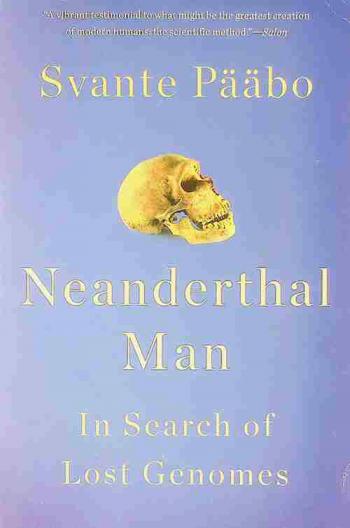
Neanderthal man : in search of lost genomes
\"What can we learn from the genes of our closest evolutionary relatives? Neanderthal Man tells the story of geneticist Svante P�a�abo's mission to answer that question, beginning with the study of DNA in Egyptian mummies in the early 1980s and culminating in his sequencing of the Neanderthal genome in 2009. From P�a�abo, we learn how Neanderthal genes offer a unique window into the lives of our hominin relatives and may hold the key to unlocking the mystery of why humans survived while Neanderthals went extinct. Drawing on genetic and fossil clues, P�a�abo explores what is known about the origin of modern humans and their relationship to the Neanderthals and describes the fierce debate surrounding the nature of the two species' interactions. A riveting story about a visionary researcher and the nature of scientific inquiry, Neanderthal Man offers rich insight into the fundamental question of who we are\"-- Provided by publisher.
Book

Genomics of 1 million parent lifespans implicates novel pathways and common diseases and distinguishes survival chances
We use a genome-wide association of 1 million parental lifespans of genotyped subjects and data on mortality risk factors to validate previously unreplicated findings near CDKN2B-AS1, ATXN2/BRAP, FURIN/FES, ZW10, PSORS1C3, and 13q21.31, and identify and replicate novel findings near ABO, ZC3HC1, and IGF2R. We also validate previous findings near 5q33.3/EBF1 and FOXO3, whilst finding contradictory evidence at other loci. Gene set and cell-specific analyses show that expression in foetal brain cells and adult dorsolateral prefrontal cortex is enriched for lifespan variation, as are gene pathways involving lipid proteins and homeostasis, vesicle-mediated transport, and synaptic function. Individual genetic variants that increase dementia, cardiovascular disease, and lung cancer – but not other cancers – explain the most variance. Resulting polygenic scores show a mean lifespan difference of around five years of life across the deciles. Editorial note: This article has been through an editorial process in which the authors decide how to respond to the issues raised during peer review. The Reviewing Editor's assessment is that all the issues have been addressed (see decision letter ). Ageing happens to us all, and as the cabaret singer Maurice Chevalier pointed out, \"old age is not that bad when you consider the alternative\". Yet, the growing ageing population of most developed countries presents challenges to healthcare systems and government finances. For many older people, long periods of ill health are part of the end of life, and so a better understanding of ageing could offer the opportunity to prolong healthy living into old age. Ageing is complex and takes a long time to study – a lifetime in fact. This makes it difficult to discern its causes, among the countless possibilities based on an individual’s genes, behaviour or environment. While thousands of regions in an individual’s genetic makeup are known to influence their risk of different diseases, those that affect how long they will live have proved harder to disentangle. Timmers et al. sought to pinpoint such regions, and then use this information to predict, based on their DNA, whether someone had a better or worse chance of living longer than average. The DNA of over 500,000 people was read to reveal the specific ‘genetic fingerprints’ of each participant. Then, after asking each of the participants how long both of their parents had lived, Timmers et al. pinpointed 12 DNA regions that affect lifespan. Five of these regions were new and had not been linked to lifespan before. Across the twelve as a whole several were known to be involved in Alzheimer’s disease, smoking-related cancer or heart disease. Looking at the entire genome, Timmers et al. could then predict a lifespan score for each individual, and when they sorted participants into ten groups based on these scores they found that top group lived five years longer than the bottom, on average. Many factors beside genetics influence how long a person will live and our lifespan cannot be read from our DNA alone. Nevertheless, Timmers et al. had hoped to narrow down their search and discover specific genes that directly influence how quickly people age, beyond diseases. If such genes exist, their effects were too small to be detected in this study. The next step will be to expand the study to include more participants, which will hopefully pinpoint further genomic regions and help disentangle the biology of ageing and disease.
Journal Article


Human genetic variants and age are the strongest predictors of humoral immune responses to common pathogens and vaccines
Background
Humoral immune responses to infectious agents or vaccination vary substantially among individuals, and many of the factors responsible for this variability remain to be defined. Current evidence suggests that human genetic variation influences (i) serum immunoglobulin levels, (ii) seroconversion rates, and (iii) intensity of antigen-specific immune responses. Here, we evaluated the impact of intrinsic (age and sex), environmental, and genetic factors on the variability of humoral response to common pathogens and vaccines.
Methods
We characterized the serological response to 15 antigens from common human pathogens or vaccines, in an age- and sex-stratified cohort of 1000 healthy individuals (
Milieu Intérieur
cohort). Using clinical-grade serological assays, we measured total IgA, IgE, IgG, and IgM levels, as well as qualitative (serostatus) and quantitative IgG responses to cytomegalovirus, Epstein-Barr virus, herpes simplex virus 1 and 2, varicella zoster virus,
Helicobacter pylori
,
Toxoplasma gondii
, influenza A virus, measles, mumps, rubella, and hepatitis B virus. Following genome-wide genotyping of single nucleotide polymorphisms and imputation, we examined associations between ~ 5 million genetic variants and antibody responses using single marker and gene burden tests.
Results
We identified age and sex as important determinants of humoral immunity, with older individuals and women having higher rates of seropositivity for most antigens. Genome-wide association studies revealed significant associations between variants in the human leukocyte antigen (HLA) class II region on chromosome 6 and anti-EBV and anti-rubella IgG levels. We used HLA imputation to fine map these associations to amino acid variants in the peptide-binding groove of HLA-DRβ1 and HLA-DPβ1, respectively. We also observed significant associations for total IgA levels with two loci on chromosome 2 and with specific KIR-HLA combinations.
Conclusions
Using extensive serological testing and genome-wide association analyses in a well-characterized cohort of healthy individuals, we demonstrated that age, sex, and specific human genetic variants contribute to inter-individual variability in humoral immunity. By highlighting genes and pathways implicated in the normal antibody response to frequently encountered antigens, these findings provide a basis to better understand disease pathogenesis.
Trials registration
ClinicalTrials.gov
, NCT01699893
Journal Article


Lineage-Specific Biology Revealed by a Finished Genome Assembly of the Mouse
The mouse (Mus musculus) is the premier animal model for understanding human disease and development. Here we show that a comprehensive understanding of mouse biology is only possible with the availability of a finished, high-quality genome assembly. The finished clone-based assembly of the mouse strain C57BL/6J reported here has over 175,000 fewer gaps and over 139 Mb more of novel sequence, compared with the earlier MGSCv3 draft genome assembly. In a comprehensive analysis of this revised genome sequence, we are now able to define 20,210 protein-coding genes, over a thousand more than predicted in the human genome (19,042 genes). In addition, we identified 439 long, non-protein-coding RNAs with evidence for transcribed orthologs in human. We analyzed the complex and repetitive landscape of 267 Mb of sequence that was missing or misassembled in the previously published assembly, and we provide insights into the reasons for its resistance to sequencing and assembly by whole-genome shotgun approaches. Duplicated regions within newly assembled sequence tend to be of more recent ancestry than duplicates in the published draft, correcting our initial understanding of recent evolution on the mouse lineage. These duplicates appear to be largely composed of sequence regions containing transposable elements and duplicated protein-coding genes; of these, some may be fixed in the mouse population, but at least 40% of segmentally duplicated sequences are copy number variable even among laboratory mouse strains. Mouse lineage-specific regions contain 3,767 genes drawn mainly from rapidly-changing gene families associated with reproductive functions. The finished mouse genome assembly, therefore, greatly improves our understanding of rodent-specific biology and allows the delineation of ancestral biological functions that are shared with human from derived functions that are not.
Journal Article


A review of deep learning applications in human genomics using next-generation sequencing data
Genomics is advancing towards data-driven science. Through the advent of high-throughput data generating technologies in human genomics, we are overwhelmed with the heap of genomic data. To extract knowledge and pattern out of this genomic data, artificial intelligence especially deep learning methods has been instrumental. In the current review, we address development and application of deep learning methods/models in different subarea of human genomics. We assessed over- and under-charted area of genomics by deep learning techniques. Deep learning algorithms underlying the genomic tools have been discussed briefly in later part of this review. Finally, we discussed briefly about the late application of deep learning tools in genomic. Conclusively, this review is timely for biotechnology or genomic scientists in order to guide them why, when and how to use deep learning methods to analyse human genomic data.
Journal Article


START: a system for flexible analysis of hundreds of genomic signal tracks in few lines of SQL-like queries
Background
A genomic signal track is a set of genomic intervals associated with values of various types, such as measurements from high-throughput experiments. Analysis of signal tracks requires complex computational methods, which often make the analysts focus too much on the detailed computational steps rather than on their biological questions.
Results
Here we propose Signal Track Query Language (STQL) for simple analysis of signal tracks. It is a Structured Query Language (SQL)-like declarative language, which means one only specifies
what
computations need to be done but not
how
these computations are to be carried out. STQL provides a rich set of constructs for manipulating genomic intervals and their values. To run STQL queries, we have developed the Signal Track Analytical Research Tool (START,
http://yiplab.cse.cuhk.edu.hk/start/
), a system that includes a Web-based user interface and a back-end execution system. The user interface helps users select data from our database of around 10,000 commonly-used public signal tracks, manage their own tracks, and construct, store and share STQL queries. The back-end system automatically translates STQL queries into optimized low-level programs and runs them on a computer cluster in parallel. We use STQL to perform 14 representative analytical tasks. By repeating these analyses using bedtools, Galaxy and custom Python scripts, we show that the STQL solution is usually the simplest, and the parallel execution achieves significant speed-up with large data files. Finally, we describe how a biologist with minimal formal training in computer programming self-learned STQL to analyze DNA methylation data we produced from 60 pairs of hepatocellular carcinoma (HCC) samples.
Conclusions
Overall, STQL and START provide a generic way for analyzing a large number of genomic signal tracks in parallel easily.
Journal Article