
Catalogue Search | MBRL


Are you sure you want to remove the book from the shelf?

{{itemTitle}}
314
result(s) for
"Human rights Azerbaijan."
Sort by:

Compliance with judgments of the European Court of Human Rights : states on a spectrum of democratisation
\"What does compliance with judgments of the European Court of Human Rights (ECtHR) look like in states on the spectrum of democratisation? This work provides an in-depth investigation of three such states-Armenia, Azerbaijan and Georgia- in the wider context of the growing 'implementation crisis' in Europe, and does so through a combined lens of theoretical insights and rich empirical data. The book offers a detailed analysis of the domestic contexts varying from democratising to increasingly authoritarian tendencies, which shape the states' compliance behaviour, and discusses why and how such states comply with human rights judgments. It puts particular focus on 'contested' compliance as a new form of compliance behaviour involving states' acting in 'bad faith' and argues for a revival of the concept of partial compliance. The wider impact that ECtHR judgments have in states on the spectrum of democratisation is also explored\"-- Provided by publisher.
BOOK
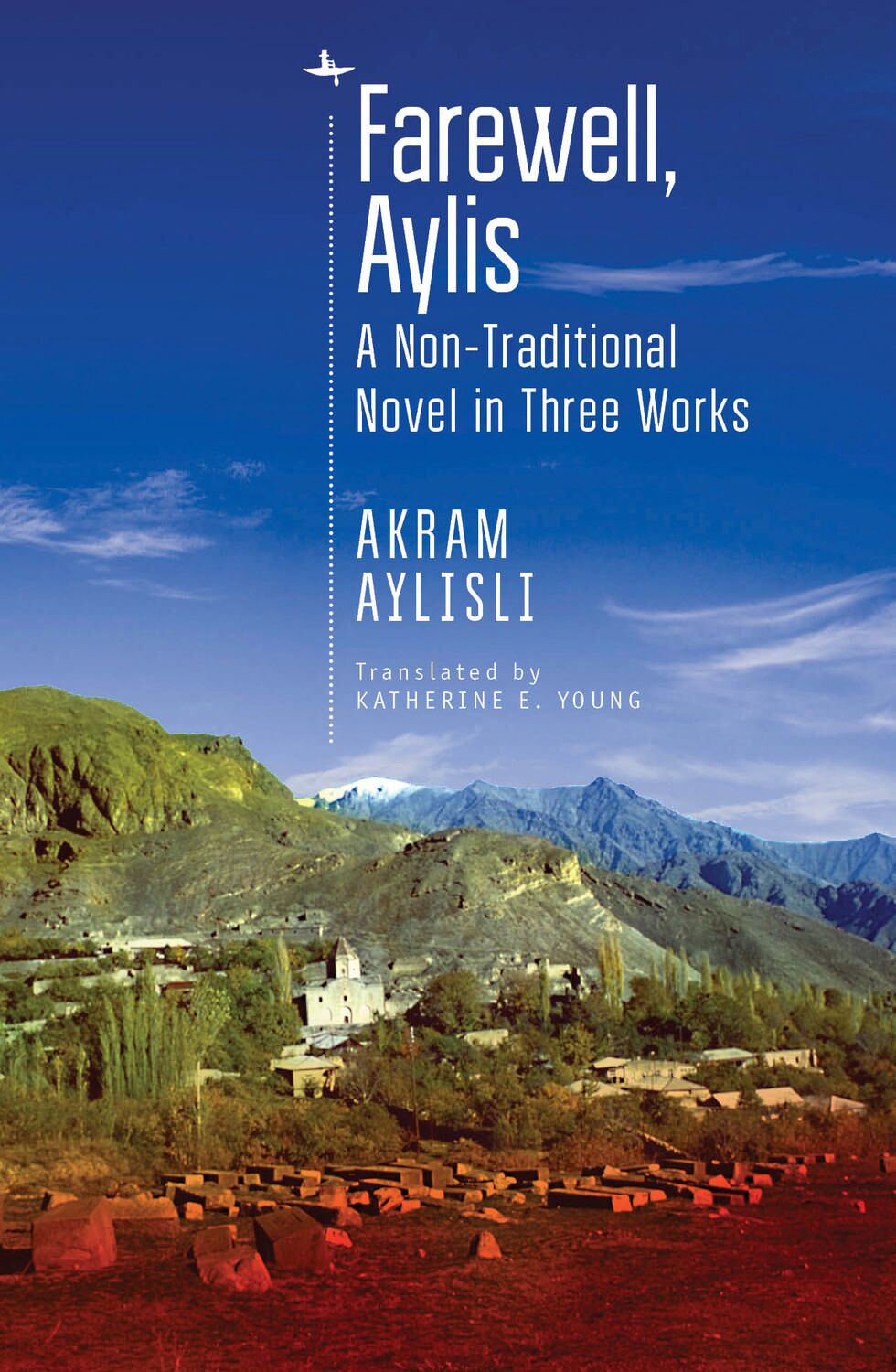
Farewell, Aylis
The three novellas of Farewell, Aylis explore a society in transition: a traveler is suspected of defecting to America, an actor undergoes an existential crisis, and the inhabitants of a corrupt country scheme to survive. A new essay by the author reflects on his experience as a prisoner of conscience in today's Azerbaijan.
eBook

Farewell, Aylis
The three novellas of Farewell, Aylis take place over
decades of transition in a country that rather resembles modern-day
Azerbaijan. In Yemen , a Soviet traveler takes an afternoon
stroll and finds himself suspected of defecting to America. In
Stone Dreams , an actor explores the limits of one man's
ability to live a moral life amid conditions of sociopolitical
upheaval, ethnic cleansing, and petty professional intrigue. In
A Fantastical Traffic Jam , those who serve the aging
leader of a corrupt, oil-rich country scheme to stay alive.
Farewell, Aylis , a new essay by the author that reflects
on the political firestorm surrounding these novellas and his
current situation as a prisoner of conscience in Azerbaijan, was
commissioned especially for this Academic Studies Press edition.
eBook

Resisting the Irresistible: ‘Failed Opposition’ in Azerbaijan and Belarus Revisited
In recent literature on post-Soviet electoral revolutions in places where attempts at regime change through popular protest did not succeed, opposition groups are often simply regarded as ‘failed’. And yet, opposition actors exist and participate in the political life of their country. Building on the Belarusian and Azerbaijani cases, we argue that opposition actors are maintained in a ‘ghetto’, often virtual, tightly managed by the ruling authorities who exert monopolistic control over civic activities. Opposition actors adapt to the restricted conditions – accepting a certain level of dependency. They thus develop various tactics to engage with the outside, striving to reduce the ghetto walls. To this end this article proposes a typology of what we call oppositional ‘resistance models’: electoral, in the media, lobbying and through education. The models highlight what makes ‘opposition’ in authoritarian states and are a step towards a more comprehensive understanding of the phenomenon in this context.
Journal Article

The Casualties of War: An Excess Mortality Estimate of Lives Lost in the 2020 Nagorno-Karabakh Conflict
Who and how many died in the 2020 Karabakh War? With limited evidence provided by authorities, media outlets, and human rights organizations, still little is known about the death toll caused by the 44-day conflict in and around Nagorno-Karabakh. This paper provides a first assessment of the human cost of the war. Using age–sex vital registration data from Armenia, Azerbaijan, and the de facto Republic of Artsakh/Nagorno-Karabakh, we difference the 2020 observed mortality values from expected deaths based on trends in mortality between 2015 and 2019 to offer sensible estimates of excess mortality resulting from the conflict. We compare and contrast our findings with neighboring peaceful countries with similar mortality patterns and socio-cultural background and discuss them against the backdrop of the concurrent first wave of Covid-19. We estimate that the war led to almost 6,500 excess deaths among people aged 15–49. Nearly 2,800 excess losses occurred in Armenia, 3,400 in Azerbaijan, and 310 in de facto Artsakh. Deaths were highly concentrated among late adolescent and young adult males, suggesting that most excess mortality was directly related to combat. Beyond the human tragedy, for small countries like Armenia and Azerbaijan, such loss of young men represents a considerable long-term cost for future demographic, economic, and social development.
Journal Article

Towards a New Role for the European Union in the South Caucasus?
It has often been argued that the European Union lacks a common long-term strategy for the South Caucasus and instead follows an adhoc, reactive approach to regional developments. While other geopolitical players such as Türkiye, Russia, and Iran remain dominant in the region, the European Union has limited options for engagement that align with its interests. Much will depend on how, when, and if the war against Ukraine ends, yet the European Union should already pursue a credible, realistic, and honest approach toward the three South Caucasus states. Avoiding black-and-white thinking about these countries-viewing them as either proor anti-Russian-is essential for the European Union, as is a clear understanding of what the European Union can realistically deliver. By applying a \"do no harm\" approach and focusing on mutually beneficial opportunities, such as supporting the diversification of foreign and economic policies, investing in regional infrastructure and trade projects, or aiding conflict resolution, the European Union can make a meaningful contribution to the region that also aligns with its own interests.
Journal Article

Housing Status in Post-Soviet Contexts
This study draws on a novel survey in Azerbaijan, Kyrgyzstan, Russia, and Ukraine to develop a framework for conceptualizing and measuring housing status, a multi-dimensional construct reflecting positions in a housing stratification order. We employ structural equation modeling to confirm whether our measures reflect distinct dimensions of housing status. We validate our measurement approach by testing for distinct dimensional effects on subjective housing wellbeing. Our novel measures of housing tenure, quantity, quality, and wellbeing reflect post-Soviet intra-household differences in property rights; the cultural premium placed on having a room of one's own; constellations of amenities and comforts comprising quality; and the significance of a sense of autonomy for subjective housing wellbeing. Results demonstrate that the three dimensions of housing status—tenure, quality, and quantity—exert independent effects on subjective housing wellbeing, with consistent effects across the four study countries. Our systematic attention to measurement of housing status in post-Soviet conditions models an approach that scholars could adapt for other contexts, including but not limited to other post-communist societies.
Journal Article