
Catalogue Search | MBRL


Are you sure you want to remove the book from the shelf?

{{itemTitle}}
3,042
result(s) for
"Human rights India"
Sort by:


Human Rights under State-Enforced Religious Family Laws in Israel, Egypt and India
About one-third of the world's population currently lives under pluri-legal systems where governments hold individuals subject to the purview of ethno-religious rather than national norms in respect to family law. How does the state-enforcement of these religious family laws impact fundamental rights and liberties? What resistance strategies do people employ in order to overcome the disabilities and limitations these religious laws impose upon their rights? Based on archival research, court observations and interviews with individuals from three countries, Yüksel Sezgin shows that governments have often intervened in order to impress a particular image of subjectivity upon a society, while people have constantly challenged the interpretive monopoly of courts and state-sanctioned religious institutions, re-negotiated their rights and duties under the law, and changed the system from within. He also identifies key lessons and best practices for the integration of universal human rights principles into religious legal systems.
eBook


Fighting for Faith and Nation: Dialogues with Sikh Militants
The ethnic and religious violence that characterized the late twentieth century calls for new ways of thinking and writing about politics. Listening to the voices of people who experience political violence—either as victims or as perpetrators—gives new insights into both the sources of violent conflict and the potential for its resolution.
Drawing on her extensive interviews and conversations with Sikh militants, Cynthia Keppley Mahmood presents their accounts of the human rights abuses inflicted on them by the state of India as well as their explanations of the philosophical tradition of martyrdom and meaningful death in the Sikh faith. While demonstrating how divergent the world views of participants in a conflict can be, Fighting for Faith and Nation gives reason to hope that our essential common humanity may provide grounds for a pragmatic resolution of conflicts such as the one in Punjab which has claimed tens of thousands of lives in the past fifteen years.
eBook

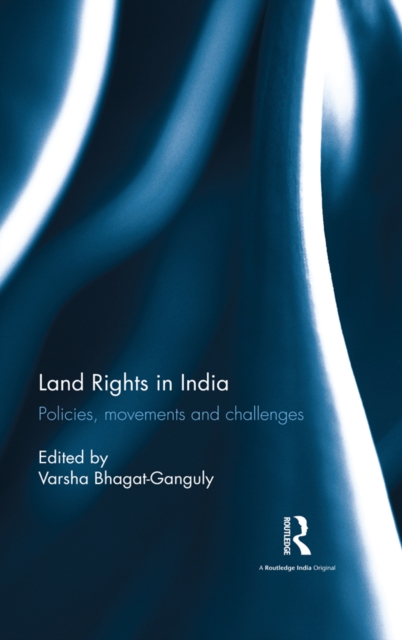
Land Rights in India
This volume engages with the topical issue of land rights in neoliberal India. It examines government policies, laws, land governance and land reforms from the perspective of social justice and people's response to dispossession of land.
Looking beyond the dominant discourse of land acquisition and the conception of land as a commodity for economic growth, the book explores critical themes including issues of social identity, culture, livelihood and food security through a study of land reform; reviews existing land policies and legal dimensions; and discusses issues and challenges of land governance and land dependents as well as perspectives from people's movements.
Lucidly written, based on empirical research, and comprehensive in its treatment of a contentious concern, this volume will be useful to scholars and researchers of economics and public policy, development studies, political science, and political economy. It will also interest scholars of South Asian studies and sociology.
eBook

Writing wrongs : the cultural construction of human rights in india
\"This book examines the 'cultural apparatus' of human rights in India today. It unravels discourses of victimhood, oppression, suffering and witnessing through a study of autobiographies, memoirs, literature, reportage and media coverage, and documentaries.\"--Back cover.
Book
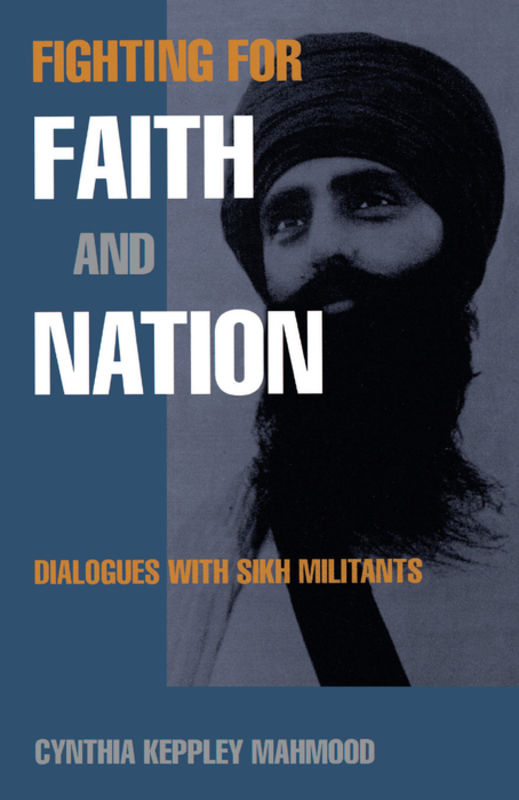
Fighting for Faith and Nation
The ethnic and religious violence that characterized the late twentieth century calls for new ways of thinking and writing about politics. Listening to the voices of people who experience political violence-either as victims or as perpetrators-gives new insights into both the sources of violent conflict and the potential for its resolution. Drawing on her extensive interviews and conversations with Sikh militants, Cynthia Keppley Mahmood presents their accounts of the human rights abuses inflicted on them by the state of India as well as their explanations of the philosophical tradition of martyrdom and meaningful death in the Sikh faith. While demonstrating how divergent the world views of participants in a conflict can be,Fighting for Faith and Nationgives reason to hope that our essential common humanity may provide grounds for a pragmatic resolution of conflicts such as the one in Punjab which has claimed tens of thousands of lives in the past fifteen years.
eBook
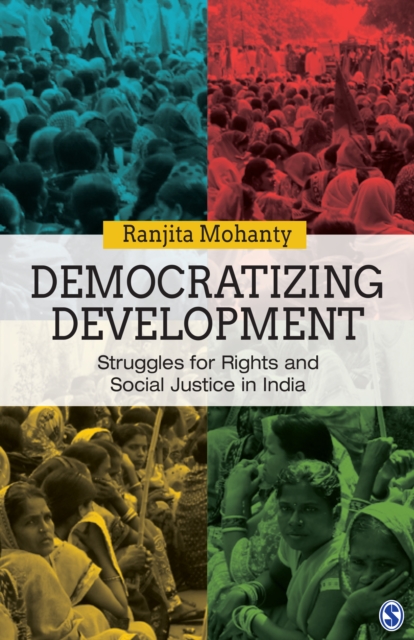
Democratizing development : struggles for rights and social justice in India
Since its inception, the Indian model of development has the twin objectives of economic development and social justice woven together. This has shaped both policy and popular aspiration in post-Independence India. In this context, Democratizing Development: Struggles for Rights and Social Justice in India explores and analyses how development gets vitiated by multiple powers and subverts the democratic ideals of participation, equality, inclusion, redistribution and equity, and how the poor and socially marginalized struggle to make development democratic. Examining development through the lens of the most marginalized, the book shows the democratic potential of development as well as the result of its absence.
eBook