
Catalogue Search | MBRL


Are you sure you want to remove the book from the shelf?

{{itemTitle}}
3,776
result(s) for
"Human rights South Africa."
Sort by:

South Africa and the UN Human Rights Council : the fate of the liberal order
\"This book provides a detailed analysis of South Africa's actions on the UN Human Rights Council, examining the country's positions on civil and political rights, economic rights and development, social groups whose rights are frequently violated as well as abuses in specific countries. The most detailed and comprehensive study of any country's record on the UN Human Rights Council to date, it demonstrates that despite occasional support for human rights, South Africa's overall record ranged from opposing to failing to support human rights. This is compounded by an anti-Western or 'anti-imperial' edge to South Africa's positions on the HRC. Using South Africa as a study case of a liberal country consistently behaving illiberally, it therefore challenges the widespread belief in international relations theory, typically found in liberal and constructivist thought, that there is an alignment of domestic political society and foreign policy values. Addressing ongoing debates since the presidency of Nelson Mandela about the place of human rights in South Africa's foreign policy, South Africa and the UN Human Rights Council will be useful to students and scholars of international relations, human rights, international law and African politics\"-- Provided by publisher.
Book
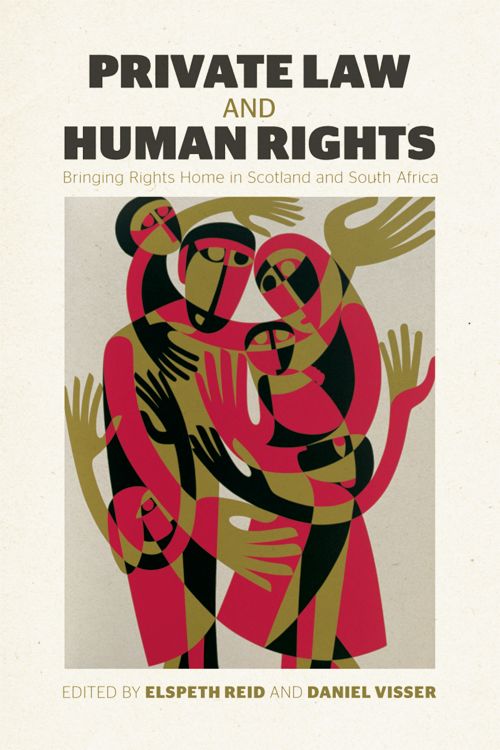
Private law and human rights
A comparative investigation into the revolution in private law in the era of human rights
Scotland and South Africa are mixed jurisdictions, combining features of common law and civil law traditions. Over the last decade, a shared feature in both Scotland and South Africa has been a new and intense focus on human rights.
In Scotland, the European Convention on Human Rights now constitutes an important element in the foundation of all domestic law. Similarly, the Constitution of the Republic of South Africa, adopted in 1996, has a Bill of Rights as its cornerstone. This binds the legislature, the executive, the judiciary and all organs of state - and also private parties.
In some ways, the Scottish and South African experience could not be more dissimilar, and the 'constitutional moments' from which these documents sprang were very different. At the same time, the parallels are close and compelling. This book, written by experts from both jurisdictions, examines exactly how human-rights provisions influence private law, looking at all branches of the subject. Moreover, it gives a unique perspective by comparing the approach in these kindred legal systems, providing a benchmark for both.
eBook

The Truth and Reconciliation Commission
\"15 April 2016 marked 20 years since the Truth and Reconciliation Commission (TRC) hearings began. The TRC was set up to give an opportunity for perpetrators of human rights transgressions to come clean about the atrocities that happened during those evil days of apartheid. Sadly, only half of the truth came to the fore. Many families still do not know what happened to their loved ones. There are few people better placed than Mary Burton to write about the TRC, having been one of its Commissioners. Burton's pocket book provides an informed account from the inside of the process and workings of the TRC and a measured and balanced assessment of its outcomes and significance. Even at the time of its existence, the TRC came in for criticism from a variety of quarters: both the African National Congress and ex-President F.W. de Klerk took legal action to challenge or prevent the publication of the Commission's report; however, the Commission also fulfilled a vital and important role in the transition from apartheid to democracy, and it has become a model for other countries wishing to undertake similar journeys to deal with past atrocities and come to some kind of national resolution, reconciliation or closure.\"--Publisher's website.
Book

Socio-Economic Rights in South Africa
The embrace of socio-economic rights in South Africa has featured prominently in scholarship on constitution making, legal jurisprudence and social mobilisation. But the development has attracted critics who claim that this turn to rights has not generated social transformation in practice. This book sets out to assess one part of the puzzle and asks what has been the role and impact of socio-economic strategies used by civil society actors. Focusing on a range of socio-economic rights and national trends in law and political economy, the book's authors show how socio-economic rights have influenced the development of civil society discourse and action. The evidence suggests that some strategies have achieved material and political impact but this is conditional on the nature of the claim, degree of mobilisation and alliance building, and underlying constraints.
eBook

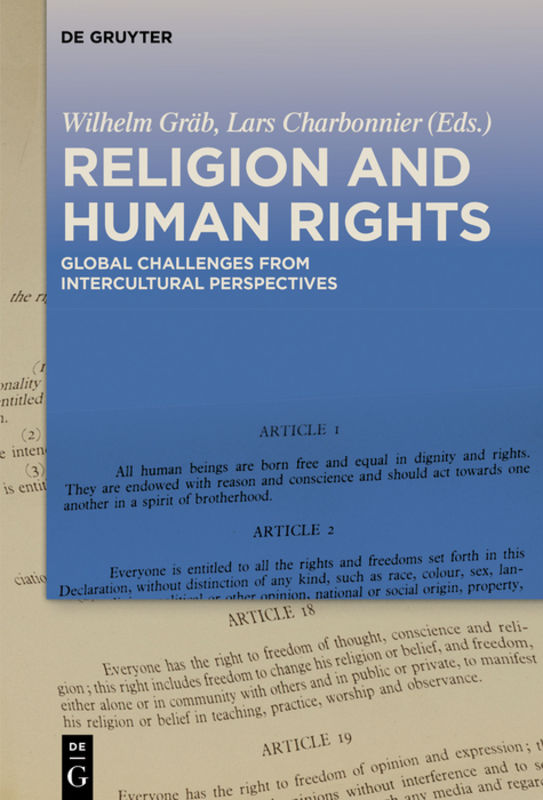
Religion and Human Rights
Current processes of globalization are challenging Human Rights and the attempts to institutionalize them in many ways.The question of the connection between religion and human rights is a crucial point here.The genealogy of the Human Rights is still a point of controversies in the academic discussion.
eBook


The Forgotten People
This is the first book that investigates political banishment in South Africa as well as with a global, historical and comparative focus. It advances understanding of banishment as an old and common practice.
eBook

