
Catalogue Search | MBRL


Are you sure you want to remove the book from the shelf?

{{itemTitle}}
146,695
result(s) for
"Human services Management."
Sort by:

Under new public management : institutional ethnographies of changing front-line work
\"The institutional ethnographies collected in Under New Public Management explore how new managerial governance practices coordinate the work of people doing front-line work in public sectors such as health, education, social services, and international development, and people management in the private sector.
Book

Under new public management
The institutional ethnographies collected in Under New Public Management explore how new managerial governance practices coordinate the work of people doing front-line work in public sectors such as health, education, social services, and international development, and people management in the private sector. In these fields, organizations have increasingly adopted private-sector management techniques, such as standardized and quantitative measures of performance and an obsession with cost reductions and efficiency. These practices of 'new public management' are changing the ways in which front-line workers engage with their clients, students, or patients. Using research drawn from Canada, the United States, Australia, and Denmark, the contributors expose how standardized managerial requirements are created and applied, and how they affect the practicalities of working with people whose lives and experiences are complex and unique. Contents: - Literacy Work and the Adult Literacy Regime (Richard Darville); - Learning Global Governance: OECD's Aid Effectiveness and 'Results' Management in a Kyrgyzstani Development Project (Marie Campbell); - E-governance and Data-driven Accountability: OnSIS in Ontario Schools (Lindsay Kerr); - Digital Era Governance: Connecting Nursing Education and the Industrial Complex of Health Care (Janet Rankin and Betty Tate); - What Counts? Managing Professionals on the Front Line of Emergency Services (Michael K. Corman and Karen Melon); - 'Let's Be Friends': Working Within an Accountability Circuit (Marjorie DeVault, Murali Venkatesh, and Frank Ridzi); - A Workshop Dialogue: Outcome Measures and Front-line Social Service Work; - For-profit Contractors, Accreditation and Accountability (Shauna Janz); - Research and Development Work at an Ontario Youth Shelter (Naomi Nichols); - The Neighbourhood Computer Lab, Funding and Accountability (Frank Ridzi); - 'If Our Statistics Are Bad We Don't Get Paid': Outcome Measures in the Settlement Sector (Liza McCoy); - A Workshop Dialogue: Institutional Circuits and the Front-line Work of Self-Governance; - Accountability Circuits in Vocational Education and Training (Lauri Grace); - The Circuit of Accountability for Lifelong Learning (Cheryl Zurawski); - Institutional Circuits in Cancer Care (Christina Sinding); - Knowledge that Counts: Points Systems and the Governance of Danish Universities (Susan Wright) (Author's abstract, IAB-Doku).
eBook



Holding Fast
How can caregivers remain both caring and strong enough to withstand the stress of their work? How can caregiving organizations effectively improve their management and practice? Increasing pressure on caregiving organizations to serve more people with fewer resources means that epidemics of burnout, high staff turnover, dissatisfaction and internal conflict often appear inevitable. Holding Fast focuses on the particular stress of caregiving work, its influences on the people and organizations who do that work, and what they can do about it. Illustrated by case studies based on extensive research in schools, hospitals, social work agencies, health care centres and religious institutions, Holding Fast identifies the problems faced by caregiving organizations, and outlines appropriate strategies for tackling these to create a resilient, effective organization. The book is divided into clear sections covering: * an introduction to the nature of caregiving organizations * the disturbances that can occur within them *the skills required to effectively lead them. Holding Fast offers a portrait of how organizations become, or are prevented from becoming, systems of caregiving. It will help leaders of caregiving organizations and their staff gain a better understanding of the difficulties encountered by their organizations, leading to improved management and practice.
Part 1: The Nature of Caregiving Organisations. Caregiving Organisations Defined. The Stress of Caregiving Work. Resilience Under Stress. System Breakdowns. Part 2: Disturbances in Caregiving Organisations. Caregivers and Casualties. Authority at Work. Divided They Fall. Teams, Real and Imaginary. Politics. Running in Place. Part 3: Leading Caregiving Organisations. The Leadership Task. Negotiating Dependency. Leadership and Change. Final Reflections.
William A. Kahn is Associate Professor and Chairman of the Department of Organizational Behaviour at Boston University's School of Management.
eBook

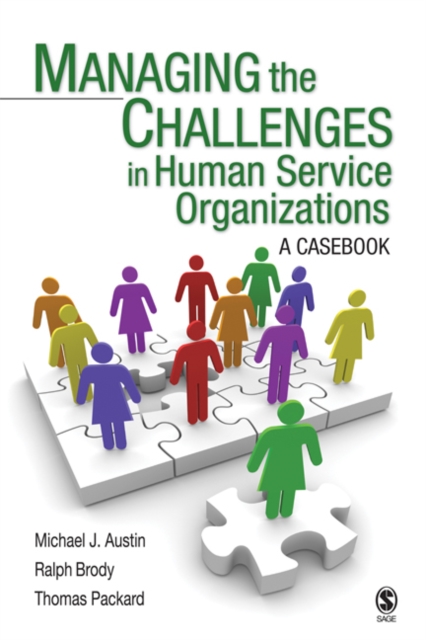
Managing the challenges in human service organizations : a casebook
Managing the Challenges in Human Service Organizations: A Casebook offers current and aspiring human service managers a view into the kinds of experiences they will likely encounter to better prepare them for the world they are about to enter. The cases are inspired by real situations and are designed to encourage students to determine how they would act and work towards a resolution of the dilemmas presented.Key FeaturesIntended AudienceThis book is ideally suited as a supplemental text for advanced undergraduate and graduate courses in social work and counseling, as well as a much-needed reference for human services supervisors and practitioners.
eBook

Dynamic quality management for cloud labor services : methods and applications for gaining reliable work results with an on-demand workforce
How can a scalable and efficient quality management mechanism for cloud labor services be designed in a way that it delivers results with a well-defined level of quality to the requester? Cloud labor services are a specific form of crowdsourcing: A coordination platform serves as an interface between requesters who need to get work done and a large crowd of workers who want to perform work. An early example of such a platform is Amazon's Web marketplace Mturk, on which service requesters can publish open calls for so-called human intelligence tasks (HITs). Robert Kern's work makes a considerable contribution toward solving the quality problem for scalable human work. On the basis of a comprehensive framework of cloud labor, he develops a set of methods to conceptually measure and aggregate the quality of human work results, implements a platform to put those methods to work, and evaluates their application in a number of very compelling, real-world scenarios successfully combining concepts from statistics, information technology, and management. Reading this book will be beneficial to novices in cloud labor services looking for orientation in this new field as well as to advanced researchers and practitioners developing cloud quality concepts.--Back cover.
Book
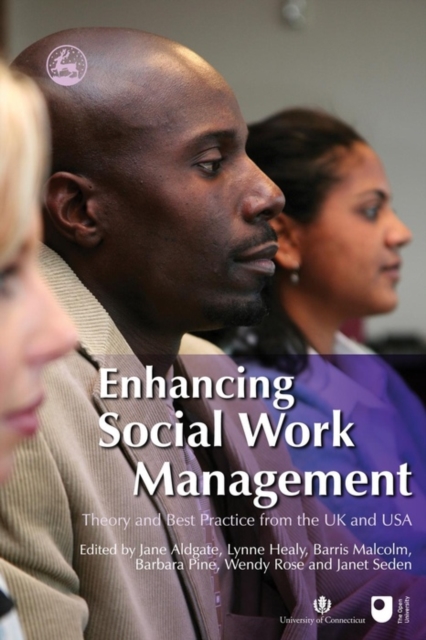
Enhancing social work management : theory and best practice from the UK and USA
This book looks at the nature of management in the human services sector and examines the prevailing issues affecting both the UK and USA.
Contradictory forces affect the act of management, such as the imperatives driving the introduction of new control systems which exist alongside the requirement to cut resources. In this book, contributors present both the problems and opportunities associated with the growth of management in the social care sector. They cover key topics including the implementation of change in the childcare sector; diversity - looking at the ways in which care managers can more effectively serve a growing multicultural and global society; performance measurement; the impact of electronic technologies and telecommunications; risk and safety in the workplace; and ethics in making personnel decisions, managing finances, planning and maintaining key relationships.
This will be essential reading for social workers and human services managers, and students in health and social welfare internationally.
eBook