
Catalogue Search | MBRL


Are you sure you want to remove the book from the shelf?

{{itemTitle}}
2,281
result(s) for
"Human settlements History."
Sort by:


Complex Communities
Complex Communitiesexplores how sedentary settlements developed and flourished in the Middle East during the Early Iron Age nearly four thousand years ago. Using archaeological evidence, Benjamin Porter reconstructs how residents maintained their communities despite environmental uncertainties. Living in a semi-arid area in the present-day country of Jordan, villagers faced a harsh and unpredictable ecosystem. Communities fostered resilience by creating flexible production routines and leadership strategies. Settlements developed what archaeologists call \"communal complexity,\" a condition through which small-scale societies shift between egalitarian and hierarchical arrangements.Complex Communitiesprovides detailed, scientifically grounded reconstructions of how this communal complexity functioned in the region.These settlements emerged during a period of recovery following the political and economic collapse of Bronze Age Mediterranean societies. Scholars have characterized west-central Jordan's political organization during this time as an incipient Moabite state.Complex Communitiesargues instead that the settlements were a collection of independent, self-organizing entities. Each community constructed substantial villages with fortifications, practiced both agriculture and pastoralism, and built and stocked storage facilities. From these efforts to produce and store resources, especially food, wealth was generated and wealthier households gained power over their neighbors. However, power was limited by the fact that residents could-and did-leave communities and establish new ones.Complex Communitiesreveals that these settlements moved through adaptive cycles as they adjusted to a changing socionatural system. These sustainability-seeking communities have lessons to offer not only the archaeologists studying similar struggles in other locales, but also to contemporary communities facing negative climate change. Readers interested in resilience studies, Near Eastern archaeology, historical ecology, and the archaeology of communities will welcome this volume.
eBook


A History of Settlement in Ireland
A History of Settlement in Ireland provides a stimulating and thought-provoking overview of the settlement history of Ireland from prehistory to the present day. Particular attention is paid to the issues of settlement change and distribution within the contexts of: * environment * demography * culture. The collection goes further by setting the agenda for future research in this rapidly expanding area of academic interest. This volume will be essential reading for all those with an interest in the archaeology, history and social geography of Ireland.
eBook

People and culture in Ice Age Americas : new dimensions in Paleoamerican archaeology
\"This edited volume, which emerged from a symposium organized at the 2014 SAA meeting in Austin, Texas, covers recent Paleoamerican research and site excavations from Patagonia to Canada. Contributors discuss the peopling of the Americas, early American assemblages, lifeways, and regional differences. Many scholars present current data previously unavailable in English. Chapters are organized south to north in an attempt to shake the usual north-centric focus of Pleistocene - Early Holocene archaeological studies and to bring to the forefront the many fascinating discoveries being made in southern latitudes. The diversity of approaches over a large geographic expanse generates discussion that prompts a re-evaluation of predominant paradigms about how the expansion of Homo sapiens in the Western Hemisphere took place. Those who work in Paleoamerican studies will embrace this book for its new data and for its comparative look at the Americas.\"--Provided by publisher.
Book

Egalitarian Revolution in the Savanna
Many West African societies have egalitarian political systems, with non-centralised distributions of power. 'Egalitarian Revolution in the Savanna' analyses a wide range of archaeological data to explore the development of such societies. The volume offers a detailed case study of the village settlement of Kirikongo in western Burkina Faso. Over the course of the first millennium, this single homestead extended control over a growing community. The book argues that the decentralization of power in the twelfth century BCE radically transformed this society, changing gender roles, public activities, pottery making and iron-working. 'Egalitarian Revolution in the Savanna' will be of interest to students of political science, anthropology, archaeology and the history of West Africa.
CHAPTER 1: DECENTRALIZATION AND THE EVOLUTION OF EGALITARIAN BEHAVIORS IN SEDENTARY SOCIETIES CHAPTER 2: ANCIENT VILLAGES IN THE NIGER BEND: CONTEXT AND METHODS FOR EXPLORING THE VOLTAIC REGION CHAPTER 3: ETHNOGRAPHIC PERSPECTIVES ON WESTERN BURKINA FASO- A SURVEY CHAPTER 4: KIRIKONGO- AN INTRODUCTION TO THE SITE, THE SETTING, AND RESEARCH DESIGN CHAPTER 5: THE WEST AFRICAN ENVIRONMENTAL SETTING- KIRIKONGO IN ECOLOGICAL CONTEXT CHAPTER 6: STRATIGRAPHIC AND DEPOSITIONAL EPISODES- THE EXCAVATIONS CHAPTER 7: RELATIVE CHRONOLOGY- CERAMICS CHAPTER 8: COMMUNITY GROWTH AT KIRIKONGO- THE SPATIAL AND TEMPORAL SETTING CHAPTER 9: EARLY SEDENTARY LIFE IN THE VOLTAIC REGION- DEFINING A VOLTAIC TRADITIONA\" CHAPTER 10: CRAFT PRODUCTION AT KIRIKONGO: THE ORIGINS, DEVELOPMENT, AND REINTERPRETATION OF SPECIALIZATION CHAPTER 11: HERDING, FARMING, AND RITUAL SACRIFICE- THE ECONOMY FROM KIRIKONGO CHAPTER 12: DEATH AND RITUAL OBJECTS AT KIRIKONGO- HOUSE-BASED SOCIAL DIFFERENTIATION CHAPTER 13: ARCHAEOLOGICAL PATTERNS AND SOCIAL PROCESS: RECONSTRUCTING CHANGING LIFE AT KIRIKONGO CHAPTER 14: LAND, SPIRITUAL POWER, AND GERONTOCRACY: AN EXPLORATION OF THE ROOTS OF EGALITARIAN REVOLUTION IN THE WESTERN VOLTAIC REGION CHAPTER 15:HIERARCHY AND EGALITARIANISM WITHIN THE NIGER BEND- REVOLUTION AND THE TRIUMPH OF COMMUNALISM
Stephen A. Dueppen is ACLS New Faculty Fellow in the Department of Anthropology at the University of Oregon.
eBook


Fortified Settlements in Early Medieval Europe
Twenty-three contributions by leading archaeologists from across Europe explore the varied forms, functions and significances of fortified settlements in the 8th to 10th centuries AD. These could be sites of strongly martial nature, upland retreats, monastic enclosures, rural seats, island bases, or urban nuclei. But they were all expressions of control - of states, frontiers, lands, materials, communities - and ones defined by walls, ramparts or enclosing banks. Papers run from Irish cashels to Welsh and Pictish strongholds, Saxon burhs, Viking fortresses, Byzantine castra, Carolingian creations, Venetian barricades, Slavic strongholds, and Bulgarian central places, and coverage extends fully from northwest Europe, to central Europe, the northern Mediterranean and the Black Sea. Strongly informed by recent fieldwork and excavations, but drawing also where available on the documentary record, this important collection provides fully up-to-date reviews and analyses of the archaeology of the distinctive settlement forms that characterized Europe in the Early Middle Ages.
eBook

The archaeology of Egypt in the Third Intermediate Period
\"The Third Intermediate Period in Egypt (1076-664 BCE) has been characterised previously by political and social changes based upon the introduction of Libyan social and cultural influences. In this book, James Bennett analyses the concepts of 'transition' and 'continuity' within the cultural and societal environment of Egypt during the Third Intermediate Period and provides an up-to-date synthesis of current research on the settlement archaeology of the period. This is done through the assessment of settlement patterns and their development, the built environment of the settlements, and their associated material culture. Through this analysis, Bennett identifies several interconnected themes within the culture and society of the Twenty-First to Twenty-Fifth Dynasties. They are closely related to the political and economic powers of different regions, the nucleation of settlements and people, self-sufficiency at a collective and individual level, defence, both physical and spiritual, regionality in terms of settlement development and material culture, and elite emulation through everyday objects\"-- Provided by publisher.
Book
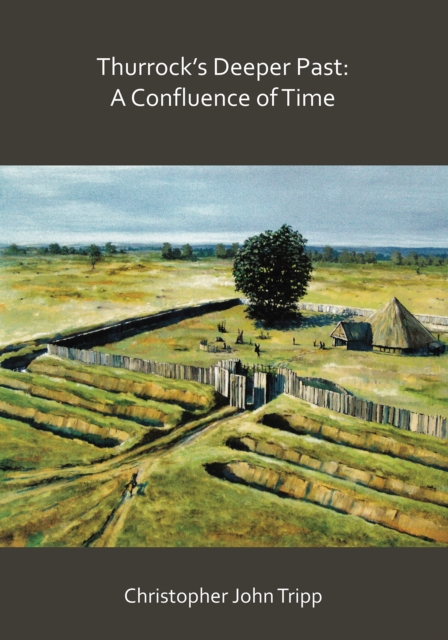
Thurrock's Deeper Past
Thurrock’s Deeper Past: A Confluence of Time' looks at the evidence for human activity in Thurrock and this part of the Thames estuary since the last Ice Age, and how the river crossing point here has been of great importance to the development of human settlement and trade in the British Isles. It is a book about the archaeology of Thurrock. It takes in all periods and most of the sites which have been excavated in the borough of Thurrock over the last sixty or more years. The account opens at a time when Britain is still joined to the continent and the inhabitants are using flint tools and weapons. The author follows through the impact of the succeeding ages on the locality: the melting of the ice, the Neolithic period bringing the farming of crops and stockholding, the first appearance of worked metal in the Bronze Age, through the widespread use of iron in the Iron Age; and then the dramatic impact of Rome and its gradual dissolution to the English kingdoms whose traces are still recognisable today. All is set in the context of the author’s lasting interest in the subject, first nurtured at his Tilbury school.
eBook