
Catalogue Search | MBRL


Are you sure you want to remove the book from the shelf?

{{itemTitle}}
21,120
result(s) for
"Human settlements."
Sort by:


Complex Communities
Complex Communitiesexplores how sedentary settlements developed and flourished in the Middle East during the Early Iron Age nearly four thousand years ago. Using archaeological evidence, Benjamin Porter reconstructs how residents maintained their communities despite environmental uncertainties. Living in a semi-arid area in the present-day country of Jordan, villagers faced a harsh and unpredictable ecosystem. Communities fostered resilience by creating flexible production routines and leadership strategies. Settlements developed what archaeologists call \"communal complexity,\" a condition through which small-scale societies shift between egalitarian and hierarchical arrangements.Complex Communitiesprovides detailed, scientifically grounded reconstructions of how this communal complexity functioned in the region.These settlements emerged during a period of recovery following the political and economic collapse of Bronze Age Mediterranean societies. Scholars have characterized west-central Jordan's political organization during this time as an incipient Moabite state.Complex Communitiesargues instead that the settlements were a collection of independent, self-organizing entities. Each community constructed substantial villages with fortifications, practiced both agriculture and pastoralism, and built and stocked storage facilities. From these efforts to produce and store resources, especially food, wealth was generated and wealthier households gained power over their neighbors. However, power was limited by the fact that residents could-and did-leave communities and establish new ones.Complex Communitiesreveals that these settlements moved through adaptive cycles as they adjusted to a changing socionatural system. These sustainability-seeking communities have lessons to offer not only the archaeologists studying similar struggles in other locales, but also to contemporary communities facing negative climate change. Readers interested in resilience studies, Near Eastern archaeology, historical ecology, and the archaeology of communities will welcome this volume.
eBook

Population and settlement geo facts
Learn about population in countries around the world, and how changes in the number, age, and gender of people living in a place affect life there. Explore different settlements, from ancient towns to sprawling, modern cities. Find out why and where people migrate, and discover how we can protect our planet from the risks of overpopulation.
Book

Archaeological Research in the Canary Islands: Island Archaeology off Africa’s Atlantic Coast
Island archaeology is a well-established field within the wider discipline, but African contributions to it remain scarce. The Canary Islands are unusual in the broader African context for their relatively long history of occupation (~2000 years) and the intensity with which archaeological research has been, and is, undertaken there. Much of that research, however, has focused on specifically Canarian issues, including efforts to demonstrate connections between the islands’ initial settlement and the Classical Mediterranean world. Relatively little of it has been conducted within the broader comparative framework that an island archaeology perspective provides. Additionally, much of the Canarian literature is not directly accessible to non-Hispanophones. In response, I synthesize what is currently known about the archaeology of the Canary Islands, focusing on determining when, how, and by whom they were first settled; the impacts of human settlement on their environments; inter-island variability in precolonial subsistence, social, and political trajectories; and the record left by European contact and subsequent colonization, which began in the 14th century AD. As well as pointing to further opportunities for research within the archipelago, I simultaneously map out several areas where archaeological work there could contribute to wider debates in island archaeology as a whole.
Journal Article
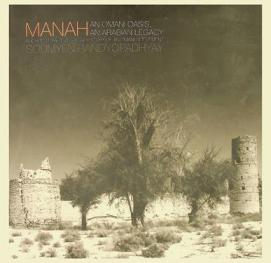
Manah : an Omani Oasis, an Arabian legacy architecture and social history of an Omani Oasis settlement
\"This beautifully illustrated volume explores the architectural features and urban character of Harat al-Bilad, the principal settlement of Manah, an important oasis of central Oman. Originally a frontier settlement, Harat al-Bilad straddles the boundary between the foothills of the Green Mountains and the desert foreland and has long played an important role in the historical and cultural development of the region. Like its geographical namesake, 'Manah: An Omani Oasis, an Arabian Legacy' crosses and defies boundaries. This book will be of interest to a wide range of readers, including historians, architects, archaeologists, conservationists, and policy makers\"--Publisher's description, back cover.
Book

Internal Migration and Development: Comparing Migration Intensities Around the World
Migration is the principal demographic process shaping patterns of human settlement, and it serves an essential role in human development. While progress has been made in measuring international migration, internal migration statistics are as yet poorly developed in many countries. This article draws on a repository of data established under the IMAGE (Internal Migration Around the GlobE) project to address this deficit by constructing the first comprehensive league table of internal migration intensities for countries around the world. We review previous work, outline the major impediments to making reliable comparisons, and set out a methodology that combines a novel estimation procedure with a flexible spatial aggregation facility. We present the results in the form of league tables of aggregate crude migration intensities that capture all changes of address over one-year or five-year intervals for 96 countries, representing four-fifths of the global population. Explanation for the observed differences has been sought, inter alia, in historical, structural, cultural, and economic forces. We examine the links between development and migration intensity through simple correlations using a range of demographic, economic, and social variables. Results reveal clear associations between internal migration intensities and selected indicators of national development.
Journal Article

Migration in the 21st century : how will globalization and climate change affect migration and settlement?
This book examines how globaliztion and climate change may effect migration in the 21st century.
Book

From Arabia to the Pacific
Drawing upon invasion biology and the latest archaeological, skeletal and environment evidence, From Arabia to the Pacific documents the migration of humans into Asia, and explains why we were so successful as a colonising species.
The colonisation of Asia by our species was one of the most momentous events in human evolution. Starting around or before 100,000 years ago, humans began to disperse out of Africa and into the Arabian Peninsula, and then across southern Asia through India, Southeast Asia and south China. They learnt to build boats and sail to the islands of Southeast Asia, from which they reached Australia by 50,000 years ago. Around that time, humans also dispersed from the Levant through Iran, Central Asia, southern Siberia, Mongolia, the Tibetan Plateau, north China and the Japanese islands, and they also colonised Siberia as far north as the Arctic Ocean. By 30,000 years ago, humans had colonised the whole of Asia from Arabia to the Pacific, and from the Arctic to the Indian Ocean as well as the European Peninsula. In doing so, we replaced all other types of humans such as Neandertals and ended five million years of human diversity.
Using interdisciplinary source material, From Arabia to the Pacific charts this process and draws conclusions as to the factors that made it possible. It will be invaluable to scholars of prehistory, and archaeologists and anthropologists interested in how the human species moved out of Africa and spread throughout Asia.
eBook


Disentangling the ecosystem service ‘flood regulation’: Mechanisms and relevant ecosystem condition characteristics
Riverine floods cause increasingly severe damages to human settlements and infrastructure. Ecosystems have a natural capacity to decrease both severity and frequency of floods. Natural flood regulation processes along freshwaters can be attributed to two different mechanisms: flood prevention that takes place in the whole catchment and flood mitigation once the water has accumulated in the stream. These flood regulating mechanisms are not consistently recognized in major ecosystem service (ES) classifications. For a balanced landscape management, it is important to assess the ES flood regulation so that it can account for the different processes at the relevant sites. We reviewed literature, classified them according to these mechanisms, and analysed the influencing ecosystem characteristics. For prevention, vegetation biomass and forest extent were predominant, while for mitigation, the available space for water was decisive. We add some aspects on assessing flood regulation as ES, and suggest also to include flood hazard into calculations.
Journal Article