
Catalogue Search | MBRL


Are you sure you want to remove the book from the shelf?

{{itemTitle}}
57,347
result(s) for
"Human sounds."
Sort by:

Beyond words : sobs, hums, stutters and other vocalizations
In Beyond Words, Steven Connor seeks to understand spoken human language outside words, a realm that encompasses the sounds we make that bring depth, meaning, and confusion to communication. Plunging into the connotations and uses associated with particular groups of vocal utterances - the guttural, the dental, the fricative, and the sibilant - he reveals the beliefs, the myths, and the responses that surround the growls, stutters, ums, ers, and ahs of everyday language.
Book

Basic ultrasound head-to-toe skills for intensivists in the general and neuro intensive care unit population: consensus and expert recommendations of the European Society of Intensive Care Medicine
Purpose
To provide consensus, and a list of experts’ recommendations regarding the basic skills for head-to-toe ultrasonography in the intensive care setting.
Methods
The Executive Committee of the European Society of Intensive Care (ESICM) commissioned the project and supervised the methodology and structure of the consensus. We selected an international panel of 19 expert clinicians–researchers in intensive care unit (ICU) with expertise in critical care ultrasonography (US), plus a non-voting methodologist. The panel was divided into five subgroups (brain, lung, heart, abdomen and vascular ultrasound) which identified the domains and generated a list of questions to be addressed by the panel. A Delphi process based on an iterative approach was used to obtain the final consensus statements. Statements were classified as a strong recommendation (84% of agreement), weak recommendation (74% of agreement), and no recommendation (less than 74%), in favor or against.
Results
This consensus produced a total of 74 statements (7 for brain, 20 for lung, 20 for heart, 20 for abdomen, 7 for vascular Ultrasound). We obtained strong agreement in favor for 49 statements (66.2%), 8 weak in favor (10.8%), 3 weak against (4.1%), and no consensus in 14 cases (19.9%). In most cases when consensus was not obtained, it was felt that the skills were considered as too advanced. A research agenda and discussion on training programs were implemented from the results of the consensus.
Conclusions
This consensus provides guidance for the basic use of critical care US and paves the way for the development of training and research projects.
Journal Article

The effect of motorboat sound on Australian snapper Pagrus auratus inside and outside a marine reserve
Human‐generated sound affects hearing, movement, and communication in both aquatic and terrestrial animals, but direct natural underwater behavioral observations are lacking. Baited underwater video (BUV) were deployed in near shore waters adjacent to Goat Island in the Cape Rodney–Okakari Point Marine Reserve (protected) or outside the reserve approximately four km south in Mathesons Bay (open), New Zealand to determine the natural behavior of Australian snapper Pagrus auratus exposed to motorboat sound. BUVs worked effectively at bringing fish into video range to assess the effects of sound. The snapper inhabiting the protected area showed no behavioral response to motorboat transits; however, fish in the open zones either scattered from the video frame or decreased feeding activity during boat presence. Our study suggests that motorboat sound, a common source of anthropogenic activity in the marine environment can affect fish behavior differently depending on the status of their habitat (protected versus open). Anthropogenic noise continues to increase in the marine environment, however, its effects on aquatic animals remain poorly understood. We report that fish in a protected environment reacted differently to transient boat noise than fish located outside the reserve. This is the first paper to demonstrate conservation status can alter fish behavior to transient sound.
Journal Article

Heart Beats
Heart Beats is a step-by-step guide which equips music therapists with foundational components necessary to apply Amplified Cardiopulmonary Recordings (ACPR) to their practice. This manual includes the theoretical underpinnings of clinical approaches, legal and logistic considerations, and two complete technology photo user-guides for music recording software and equipment basics. With a growing demand for one of the newest, formally established interventions in music therapy, this clinical resource is a timely, accessible tool for students and interdisciplinary team members alike across a variety of healthcare settings. Heart Beats inspires clinicians to think deeply about how to harness the rhythm of the heart in music and for healing across the lifespan.
eBook

Nocturnal sleep sounds classification with artificial neural network for sleep monitoring
Due to improper lifestyle, sleep disorders are becoming increasingly common worldwide. Early detection may help in preventing diseases arising due to sleep disorders, such as insomnia, muscle loss, breathing, and cardiac disorders. In this paper, nocturnal human sounds are analysed to develop a personal sleep monitoring system. Multiple audio-related features are extracted from the spectrograms of sleep sounds and analysed for discriminatory ability. The selected features are given as input to a fully-connected Artificial Neural Network (ANN) to classify the sleep sounds. The proposed approach classifies the considered seven categories of sleep sounds, including coughing, laughing, screaming, sneezing, snoring, sniffling, and farting, with an average accuracy of 97.4%. This is significantly higher than the classification accuracy obtained by applying conventional machine learning models on the selected features. This indicates that the ANN learns new features to enhance the classification accuracy of the sleep sounds. Moreover, the computational requirement of the system is kept low by reducing the number of features given as input to the ANN classifier. The proposed approach may be integrated with a smartphone or a cloud platform to develop a device for sleep monitoring or diagnosis of sleep disorders.
Journal Article

Effect of Audio–Visual Factors in the Evaluation of Crowd Noise
A crowd can be both a sound source and an absorber. The sound of human voices significantly impacts evaluations of acoustic indicators in urban public spaces. This study aimed to investigate whether human sound impacts evaluations of the overall environment from both visual and auditory aspects. Primary sound sources and scenes in Harbin, China urban public space served as the research object. Four sets of sound sources and six sets of images were collected in situ in urban public spaces. A subjective evaluation of both visual and auditory aspects was then performed in the laboratory. The results showed that when different types of sounds in urban public spaces are superimposed with human sound, the volume of human sound (45.6 dBA, 55.6 dBA, and 65.6 dBA) significantly affects the acoustic evaluation of the environment. When the superimposed sounds were birds and music, the evaluation of the environment decreased with the human voice increasing in volume. Crowd density and the surrounding visual environment also influence evaluations of the overall sound environment. In this study, the sound preference and acoustic comfort of birdsong and music decreased as the human sound volume increased. The effect of human sound combined with traffic sounds significantly decreased the scores for sound preference and acoustic comfort at higher volumes. The results of the experiments on audio–visual interactions in which people evaluated visual scenes showed that the influence of the visual density of a crowd on assessments of the sound environment is negatively related to the magnitude of the sound of the crowd. When human voices are at 45.6 dBA and 65.6dBA, there is a significant effect on the evaluation of visual scenes for high-density people. When the sound pressure level of human voices is the same, changes in the visual environment are more likely to affect people’s evaluation of the overall sound environment.
Journal Article

The Use of Voice in Music Therapy
Use of Voice in Music Therapy provides hands-on methods for how to sing with clients. With step-by-step instructions for working with any population (verbal or non-verbal), it includes scripts for introducing techniques, original music to give creative direction, as well as a large list of song material. Mini case examples throughout will further inspire therapists to introduce various singing methods with clients.The methods are organized under goal areas such as: Stress Reduction, Self-expression, Social Interaction, Cognitive Behavior Therapy, Cognitive Skills, Support for Emotional and Physical Pain, etc. It includes a Toolbox section describing each technique so they can be shifted and used under any goal. There is also research to legitimize and support the therapist's understanding of the effectiveness of therapeutic singing as well as bolster confidence when utilizing methods. Basic vocal exercises, improvisation exercises, exercises to develop one's vocal identity, and exercises which encourage self-awareness are provided in the Therapist Training section as well as ethical considerations of singing with clients.An excellent resource for educators to use in teaching music therapy methodology, and music therapy voice, Use of Voice in Music Therapy is also useful for clinicians of all levels who wish to re-connect with singing and who are looking to renew creativity in clinical practice. Voice teachers and vocalists may find helpful ideas.
eBook
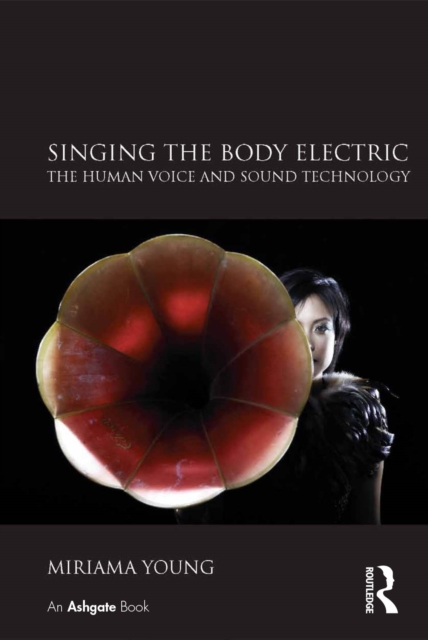
Singing the Body Electric
Singing the Body Electric explores the relationship between the human voice and technology, offering startling insights into the ways in which technological mediation affects our understanding of the voice, and more generally, the human body. From the phonautograph to magnetic tape and now to digital sampling, Miriama Young visits particular musical and literary works that define a century-and-a-half of recorded sound. She discusses the way in which the human voice is captured, transformed or synthesised through technology. This includes the sampled voice, the mechanical voice, the technologically modified voice, the pliable voice of the digital era, and the phenomenon by which humans mimic the sounding traits of the machine. The book draws from key electro-vocal works spanning a range of genres - from Luciano Berio's Thema: Omaggio a Joyce to Radiohead, from Alvin Lucier's I Am Sitting in a Room, to Björk, and from Pierre Henry's Variations on a Door and a Sigh to Christian Marclay's Maria Callas. In essence, this book transcends time and musical style to reflect on the way in which the machine transforms our experience of the voice. The chapters are interpolated by conversations with five composers who work creatively with the voice and technology: Trevor Wishart, Katharine Norman, Paul Lansky, Eduardo Miranda and Bora Yoon. This book is an interdisciplinary enterprise that combines music aesthetics and musical analysis with literature and philosophy.
eBook
Voice Work
Voice Work: Art and Science in Changing Voices is a key work that addresses the theoretical and experiential aspects common to the practical vocal work of the three major voice practitioner professions - voice training, singing teaching, and speech and language pathology.
eBook

Vocal Tracks
This entertaining and innovative book focuses on vocal performance styles that developed in tandem with the sound technologies of the phonograph, radio, and sound film. Writing in a clear and lively style, Jacob Smith looks at these media technologies and industries through the lens of performance, bringing to light a fascinating nexus of performer, technology, and audience. Combining theories of film sound, cultural histories of sound technologies and industries, and theories of performance, Smith convincingly connects disparate and largely neglected performance niches to explore the development of a modern vocal performance. Vocal Tracks: Performance and Sound Media demonstrates the voice to be a vehicle of performance, identity, and culture and illustrates both the interconnection of all these categories and their relation to the media technologies of the past century.
eBook