
Catalogue Search | MBRL


Are you sure you want to remove the book from the shelf?

{{itemTitle}}
30
result(s) for
"Humanism-Italy"
Sort by:


Humanism, Universities, and Jesuit Education in Late Renaissance Italy
\"This book contains twenty essays on Italian Renaissance humanism, universities, and Jesuit education in three equal parts. The book defines Renaissance humanism, then studies biblical humanism, humanistic education in Venice, the pioneering historian of humanism Georg Voigt, and Paul Oskar Kristeller. The middle section discusses Italian universities, the sports played by university students, a famous law professor, and the controversy over the immortality of the soul. The last section analyses Jesuit education: the culture of the Jesuit teacher, the philosophy curriculum, attitudes toward Erasmus and Juan Luis Vives, and the education of a cardinal. This volume collects Paul Grendler's most recent research (published and unpublished), offering to the reader a broad fresco on a complex and crucial age in the history of education\"--.
eBook

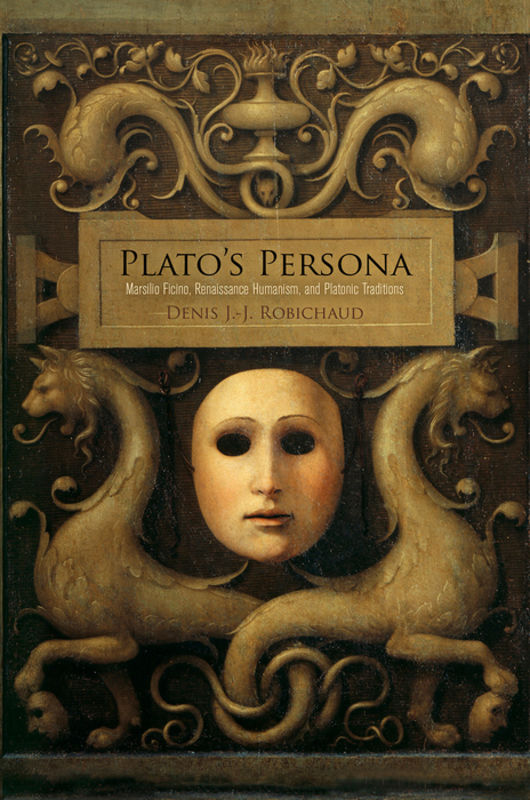
Plato's Persona
In 1484, humanist philosopher and theologian Marsilio Ficino
published the first complete Latin translation of Plato's extant
works. Students of Plato now had access to the entire range of the
dialogues, which revealed to Renaissance audiences the rich ancient
landscape of myths, allegories, philosophical arguments,
etymologies, fragments of poetry, other works of philosophy,
aspects of ancient pagan religious practices, concepts of
mathematics and natural philosophy, and the dialogic nature of the
Platonic corpus's interlocutors. By and large, Renaissance readers
in the Latin West encountered Plato's text through Ficino's
translations and interpretation.
In Plato's Persona , Denis J.-J. Robichaud provides the
first synthetic study of Ficino's interpretation of the Platonic
corpus. Robichaud analyzes Plato's works in their original Greek
and in Ficino's Latin translations, as well as Ficino's
non-Platonic writings and correspondence, in the process uncovering
new aspects of Ficino's intellectual work habits. In his letters
and works, Ficino self-consciously imitated a Platonic style of
prose, in effect devising a persona for himself as a Platonic
philosopher. Plato's dialogues are populated with a wealth of
literary characters with whom Plato interacts and against whom
Plato refines his own philosophies. Reading through Ficino's
translations, Robichaud finds that the Renaissance philosopher
seeks an understanding of Plato's persona(e) among all the
dialogues' interlocutors. In effect, Ficino assumed the role of
Plato's Latin spokesperson in the Renaissance.
Plato's Persona is grounded in an extensive study of
scholarship in Renaissance humanism, classics, philosophy, and
intellectual history, and contextualizes Ficino's intellectual
achievements within the contemporary Christian orthodox view of
Platonism. Ficino was an influential figure in the early Italian
Renaissance: the key intermediary between Greek and Latin, and
between manuscript and print, giving voice to Plato and access to
the ancient frameworks needed to interpret his dialogues.
eBook


A Sudden Frenzy
In Renaissance Italy there existed a rich interplay between two cultural practices frequently regarded as entirely separate and mutually antagonistic: the humanistic study of the ancient world and ancient literature, and the oral and improvisational performance of poetry, which constituted one of the most popular forms of entertainment.
A Sudden Frenzy explores the development and impact of these Renaissance practices of improvisation and oral poetry. James K. Coleman shows how the confluence of humanist culture and the art of oral poetry resulted in an extraordinary turn toward improvisation and spontaneity that profoundly influenced poetry, music, and politics. By examining the culture of improvisation, this book reveals the ways in which Renaissance thinkers transcended cultural dichotomies, both in theory and in practice. Drawing on a wide range of sources, including letters, poetry, visual art, and philosophical texts, A Sudden Frenzy reveals the far-reaching and sometimes surprising ways that these phenomena shaped cultural developments in the Italian Renaissance and beyond.
eBook

Architectural invention in Renaissance Rome : artists, humanists, and the planning of Raphael's Villa Madama
\"Humanist collaborators also contributed to the development of visual projects in many ways. That they served as advisors and propagandists is well known, but we have scant knowledge of exactly how they worked with artists, and especially with architects. How did their ideas make their way into form? The role of the humanist advisor has been studied primarily in respect to the representational media of painting and sculpture, focusing on so-called iconographic programs or inventions; but their role in architectural projects is much less understood\"-- Provided by publisher.
Book
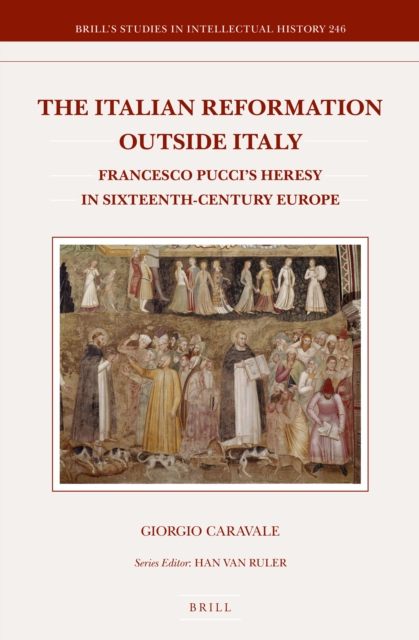
The Italian reformation outside Italy : Francesco Pucci's heresy in sixteenth-century Europe
In The Italian Reformation outside Italy, Giorgio Caravale reconstructs the life and intellectual career of Francesco Pucci (1543-1597), presenting a rich chapter of sixteenth-century European intellectual history.
eBook
The Humanist World of Renaissance Florence
This book offers a major contribution for understanding the spread of the humanist movement in Renaissance Florence. Investigating the connections between individuals who were part of the humanist movement, Maxson reconstructs the networks that bound them together. Overturning the problematic categorization of humanists as either professional or amateurs, a distinction based on economics and the production of original works in Latin, he offers a new way of understanding how the humanist movement could incorporate so many who were illiterate in Latin, but who nonetheless were responsible for an intellectual and cultural paradigm shift. The book demonstrates the massive appeal of the humanist movement across socio-economic and political groups and argues that the movement became so successful and widespread because by the 1420s–30s the demands of common rituals began requiring humanist speeches. Over time, humanist learning became more valuable as social capital, which raised the status of the most learned humanists and helped disseminate humanist ideas beyond Florence.
eBook

Humanism, Theology, and Spiritual Crisis in Renaissance Florence
This volume offers a unique glimpse into the mind of Giovanni Caroli's powerful personal reaction to the institutional crisis regarding the required reform in the Dominican Order in the mid-fifteenth century, through a critical edition of his The Book of My Days in Lucca.
eBook