
Catalogue Search | MBRL


Are you sure you want to remove the book from the shelf?

{{itemTitle}}
38,463
result(s) for
"Humanism."
Sort by:


Hortus medicus wrocławskiego lekarza, humanisty oraz kolekcjonera Laurentiusa Scholza (1552–1598) i jego padewskie parantele
The most famous garden in Wrocław, belonging to the doctor, humanist and collector Laurentius Scholz, has so far been described as divided functionally and formally into two, almost independent parts: a recreational and representative part (also serving as a place to pursue collecting passions and at the same time decorative) and a utilitarian part. – medicinal. The vast majority of flowering plants, especially rare ones at that time, were attributed to the former, while about 100 belonging to the group of herbs were attributed to the latter. Recent analyzes led to the conclusion that almost all (except seven of the total group of 240 species cultivated in Scholz’s garden) had medicinal properties. Therefore, the entire garden, also in its part perceived as flowery, served as hortus medicus. The research also confirmed numerous connections between the Wrocław site and one of the oldest botanical gardens in Europe – Hortus medicus Pataviani (i.e. the Botanical Garden in Padua).
Journal Article


Re-Thinking Management: Insights from Western Classical Humanism
A variety of theories of management and organizational studies have failed to consider the human being in his or her integrity and, thus, fall short of being humanistic. This article seeks to contribute to the recovery of a more complete view of the human being in management, learning from classical humanism developed throughout Western Civilization, from the Greek and Roman Philosophers and the Judeo-Christian legacy to the Renaissance. More specifically, it discusses several relevant aspects of this Classical humanism, which can aid in re-thinking management. These include a realistic epistemology and metaphysics, and the human being as a whole (endowed with intrinsic dignity and called to growth). Classical humanism also entails the consideration of the human action as a unity with both internal and external dimensions, ethics understood as a guide for good life, society viewed as a community of people, and being open to beauty and transcendence.
Journal Article


Man is the Measure of All Things
The term Man, and the humanist tradition which followed from it, have been challenged in feminist, queer, poststructuralist, and postcolonial critiques, which questioned its nature, or even pondered if we are actually human. What we seek in this issue of Footprint is to add to these perspectives cases of what we call radical conditioning, in which some architectures bypass assumed values of humanism and operate under a wholly different set of values, emanating from industrial and post-industrial economies and its technological developments. These architectures dictate the creation of spaces in which the human body has to operate, and to which it needs to adapt in order to survive. The research articles and visual essays included in this issue shed light on the many ways architects, advertently or inadvertently, coalesce with forces intending to condition humans. Unfolding in the study of histories, architectural types, aesthetics, atmospheres, systems, and users, authors propose inquiries along two main directions: the first trajectory highlights the prolific use in spatial design of concepts borrowed from cybernetics and information technology for the conditioning of human behavior through the built environment; the second deals with architecture conditioning the creation of new subjectivities, placing the body as the territory of intervention. Understanding these spaces, in which humans and their artifacts interact in unprecedented ways, could provide architecture with the timely opportunity to challenge our anticipated redundancy, and reconsider its own humanism in order to charge it with new meanings.
Journal Article


50 Years Ago/100 Years Ago
By Elizabeth S. Chesser - Miss Chesser has to be commended for having treated a wide subject in such a sound, common-sense and practical manner as will make the book appeal to every class of reader, both lay and medical.
Journal Article

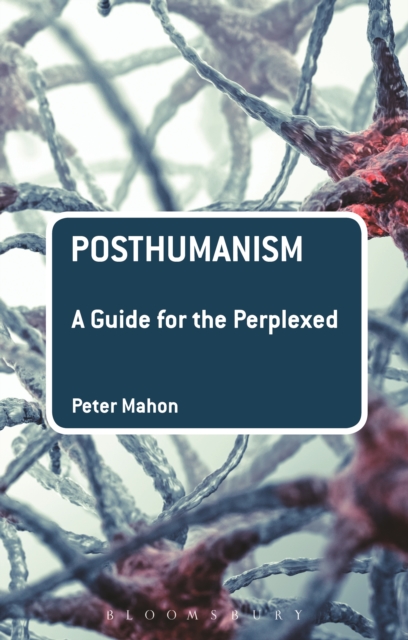
Posthumanism: A Guide for the Perplexed
In Posthumanism: A Guide for the Perplexed, Peter Mahon gives his readers an overview of posthumanism, examining the intoxicating-and often troubling-entanglements of humans, animals and technology in science, society and culture that constitute its field. Mahon not only explores the key scientific advances in information technology and genetics have made us and society posthuman, but also how certain strands in art (such as science fiction and video games) and philosophy (for example, in the work of Andy Clarke and Jacques Derrida) have played-and continue to play-a crucial role in shaping how we understand those advances. Central to Mahon's analysis of posthumanism is an understanding of technology as a pharmakon-an ancient Greek word for a substance that is both a poison and a cure. In the light of this analysis, Mahon considers our posthuman future, as envisioned by a range of futurists, from Ray Kurzweil to those at the Machine Intelligence Research Institute. What seems clear is that this future will require massive shifts in how we think about ourselves as techno-biological entities, about the benefits and threats of intelligent technologies and about the roles consumerism and universal basic income will play in societies. Posthumanism is our present, our future and a challenge to which we must rise. The book provides a concise and coherent overview of Posthumanism, introducing all the key concepts and themes, and is ideal for undergraduates who require more than just a simple introduction to Posthumanist thought.
eBook