
Catalogue Search | MBRL


Are you sure you want to remove the book from the shelf?

{{itemTitle}}
286
result(s) for
"Humanismus"
Sort by:

Architectural invention in Renaissance Rome : artists, humanists, and the planning of Raphael's Villa Madama
\"Humanist collaborators also contributed to the development of visual projects in many ways. That they served as advisors and propagandists is well known, but we have scant knowledge of exactly how they worked with artists, and especially with architects. How did their ideas make their way into form? The role of the humanist advisor has been studied primarily in respect to the representational media of painting and sculpture, focusing on so-called iconographic programs or inventions; but their role in architectural projects is much less understood\"-- Provided by publisher.
Book

A Humanistic Perspective for Management Theory: Protecting Dignity and Promoting Well-Being
The notion of dignity as that which has intrinsic value has arguably been neglected in economics and management despite its societal importance and eminent relevance in other social sciences. While management theory gained parsimony, this paper argues that the inclusion of dignity in the theoretical precepts of management theory will: (a) improve management theory in general, (b) align it more directly with the public interest, and (c) strengthen its connection to social welfare creation. The paper outlines the notion of dignity, discusses its historical understanding, and explains its relevance in the context of management theory. Furthermore, it proposes a framework of paradigmatic assumptions along two dimensions: (a) understanding human dignity as unconditional or conditional and (b) understanding social welfare as wealth creation or well-being creation. I propose alternative management theory archetypes and discuss these archetypes' theoretical implications for management research. I also suggest how management theory can be shifted to contribute toward social welfare creation more directly.
Journal Article
The Common Good of the Firm and Humanistic Management: Conscious Capitalism and Economy of Communion
Businesses have long been admonished for being unduly focused on the pursuit of profit. However, there are some organizations whose purpose is not exclusively economic to the extent that they seek to constitute common good. Building on Christian ethics as a starting point, our article shows how the pursuit of the common good of the firm can serve as a guide for humanistic management. It provides two principles that humanistic management can attempt to implement: first, that community good is a condition for the realization of personal good, and second, that community good can only be promoted if it is oriented towards personal good. To better understand which community good can favor personal good and how it can be achieved, we examine two recent humanistic movements—Conscious Capitalism and Economy of Communion—that strive to participate in the common good. From the analysis of these two movements, we identify a shared managerial willingness to adopt the two principles. Moreover, we also reveal that Conscious Capitalism and Economy of Communion present different ways of linking community good and personal good, and therefore, different means exist for firms to participate in the common good.
Journal Article
A Humanistic Narrative for Responsible Management Learning: An Ontological Perspective
Why has responsible management been so difficult and why is the chorus of stakeholders demanding such responsibility getting louder? We argue that management learning has been framed within the narrative of economism. As such, we argue that managers need to be aware of the paradigmatic frame of the dominant economistic narrative and learn to transcend it. We also argue that for true managerial responsibility, an alternative humanistic narrative is more fit for purpose. This humanistic narrative is based on epistemological metaphors and ontological insights that integrate the latest insights from evolutionists suggesting that humans only survived by being responsible. This understanding has consequences for responsible management learning in that it focuses on dignity literacy, balance orientation, as well as creativity and innovation for the common good. We argue that managerial learning within a humanistic paradigm is more likely to lead to ethical and sustainable business conduct.
Journal Article

The Cuban Revolution as Socialist Human Development
The book argues that the Cuban Revolution should be understood as a model of socialist human development. Several particular features of this model were critical to the survival of the Cuban Revolution under conditions of neoliberal globalization.
eBook

The Battle of the Classics
The Battle of the Classics criticizes contemporary apologetics for the humanities and presents a historically informed case for a decidedly different approach to rescuing the humanistic disciplines in American higher education. It uses the so-called Battle of the Classics of the late nineteenth and early twentieth centuries as a springboard for crafting a novel foundation for the humanistic tradition. The book argues that current defences of the humanities rely on the humanistic disciplines as inculcators of certain poorly defined skills such as “critical thinking.” It finds fault with this conventional approach, arguing that humanists cannot hope to save their disciplines without arguing in favor of particular humanities content. As the lackluster defenses of the classical humanities in the late nineteenth century help prove, instrumental apologetics are bound to fail. All the same, the book shows that proponents of the Great Books favor a curriculum that is too intellectually narrow for the twenty-first century. The Battle of the Classics thus lays out a substance-based approach to undergraduate education that will revive the humanities while steering clear of overreliance on the Western canon. The book envisions a global humanities based on the examination of masterworks from manifold cultures as the heart of an intellectually and morally sound education.
eBook
Humanism in Business — Towards a Paradigm Shift?
Management theory and practice are facing unprecedented challenges. The lack of sustainability, the increasing inequity, and the continuous decline in societal trust pose a threat to ' business as usual' (Jackson and Nelson, 2004). Capitalism is at a crossroad and scholars, practitioners, and policy makers are called to rethink business strategy in light of major external changes (Arena, 2004; Hart, 2005). In the following, we review an alternative view of human beings that is based on a renewed Darwinian theory developed by Lawrence and Nohria (2002). We label this alternative view ' humanistic' and draw distinctions to current ' economistic' conceptions. We then develop the consequences that this humanistic view has for business organizations, examining business strategy, governance structures, leadership forms, and organizational culture. Afterward, we outline the influences of humanism on management in the past and the present, and suggest options for humanism to shape the future of management. In this manner, we will contribute to the discussion of alternative management paradigms that help solve the current crises.
Journal Article

Site-seeing Humanness in Organizations
In this study, we theorize humanness in organizations as a property of practice. We apply practice theory to examine how humanness becomes enacted in a business organization as people prioritize organizational and individual ends in their work activities. Our empirical case study examines the everyday interactions of development team members in an R&D organization of a large Nordic cooperative. Challenging the dominant individualist and structuralist approaches in humanness and human dignity studies, we identify and locate four different aspects of humanness in organizational practices. As a result, we show how the emergence of humanness is an ongoing process that transpires through two mechanisms: site shifting and reconciliation; that is, people shift between different sites of the social, consisting of different sets of practices with underlying disparate assumptions of humanness, which requires reconciliation. These findings provide a basis for an alternative theorizing of humanness in organizations.
Journal Article
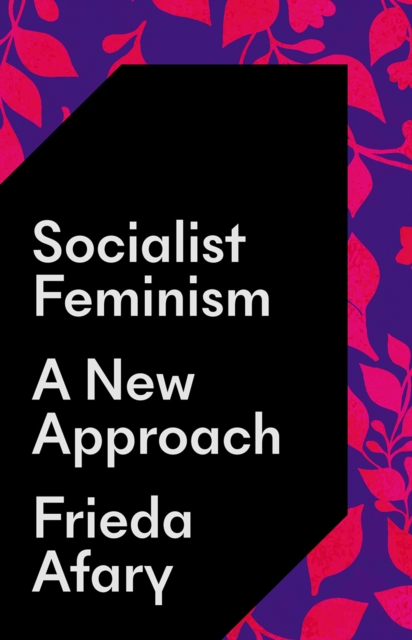
Socialist Feminism
What is socialist feminism and why is it needed to fight the global rise of authoritarianism and fascism? Frieda Afary brings the insights gained through her study of feminist philosophy, her international activism and her work in community education as a public librarian in Los Angeles, offering a bold new vision of an alternative to capitalism, racism, sexism, heterosexism and alienation.Socialist Feminism: A New Approach reclaims theories of women’s oppression through a return to humanism, enriched by social reproduction theories, Black feminist intersectionality, abolitionism, queer theories, Marxist-Humanism and the author’s own experiences as an Iranian American feminist, scholar and activist.She looks at global developments in gender relations since the 1980s, the impact of the Covid-19 pandemic, the distinct features of twenty-first century authoritarianism and current struggles against it, drawing out lessons for revolutionary theorising, organising and international solidarity including the #MeToo and Black Lives Matter movements.This book also contains a study guide which transforms it into a useful pedagogical tool for teachers and activists.
eBook
