
Catalogue Search | MBRL


Are you sure you want to remove the book from the shelf?

{{itemTitle}}
33
result(s) for
"Humanists -- Europe -- History"
Sort by:
Portraying the prince in the Renaissance : the humanist depiction of rulers in historiographical and biographical texts
Although Antiquity itself has been intensively researched, together with its reception, to date this has largely happened in a compartmentalized fashion. This series presents for the first time an interdisciplinary contextualization of the productive acquisitions and transformations of the arts and sciences of Antiquity in the slow process of the European societies constructing a scientific system and their own cultural identity, a process which started in the Middle Ages and has continued up to the Modern Age. The series is a product of work in the Collaborative Research Centre \"Transformations of Antiquity\" and the \"August Boeckh Centre of Antiquity\" at the Humboldt University of Berlin. Their individual projects examine transformational processes on three levels in particular - the constitutive function of Antiquity in the formation of the European knowledge society, the role of Antiquity in the genesis of modern cultural identities and self-constructions, and the forms of reception in art, literature, translation and media. * new transdisciplinary series * the editors are prominent professors from different disciplines at the Humboldt University of Berlin * strengthens de Gruyter's profile in Classical Studies, Medieval Studies, Intellectual History _x000D_.
eBook

Creating East and West
As the Ottoman Empire advanced westward from the fourteenth to the sixteenth centuries, humanists responded on a grand scale, leaving behind a large body of fascinating yet understudied works. These compositions included Crusade orations and histories; ethnographic, historical, and religious studies of the Turks; epic poetry; and even tracts on converting the Turks to Christianity. Most scholars have seen this vast literature as atypical of Renaissance humanism. Nancy Bisaha now offers an in-depth look at the body of Renaissance humanist works that focus not on classical or contemporary Italian subjects but on the Ottoman Empire, Islam, and the Crusades. Throughout, Bisaha probes these texts to reveal the significant role Renaissance writers played in shaping Western views of self and other.Medieval concepts of Islam were generally informed and constrained by religious attitudes and rhetoric in which Muslims were depicted as enemies of the faith. While humanist thinkers of the Renaissance did not move entirely beyond this stance, Creating East and West argues that their understanding was considerably more complex, in that it addressed secular and cultural issues, marking a watershed between the medieval and modern. Taking a close look at a number of texts, Bisaha expands current notions of Renaissance humanism and of the history of cross-cultural perceptions. Engaging both traditional methods of intellectual history and more recent methods of cross-cultural studies, she demonstrates that modern attitudes of Western societies toward other cultures emerged not during the later period of expansion and domination but rather as a defensive intellectual reaction to a sophisticated and threatening power to the East.
eBook
Staging History
Staging History unites essays by nine specialists in the field of late medieval and early Renaissance drama. Their focus is on English, Dutch and Humanist German drama, as well as on a modern Swiss adaptation of Shakespeare's Henry V.
eBook
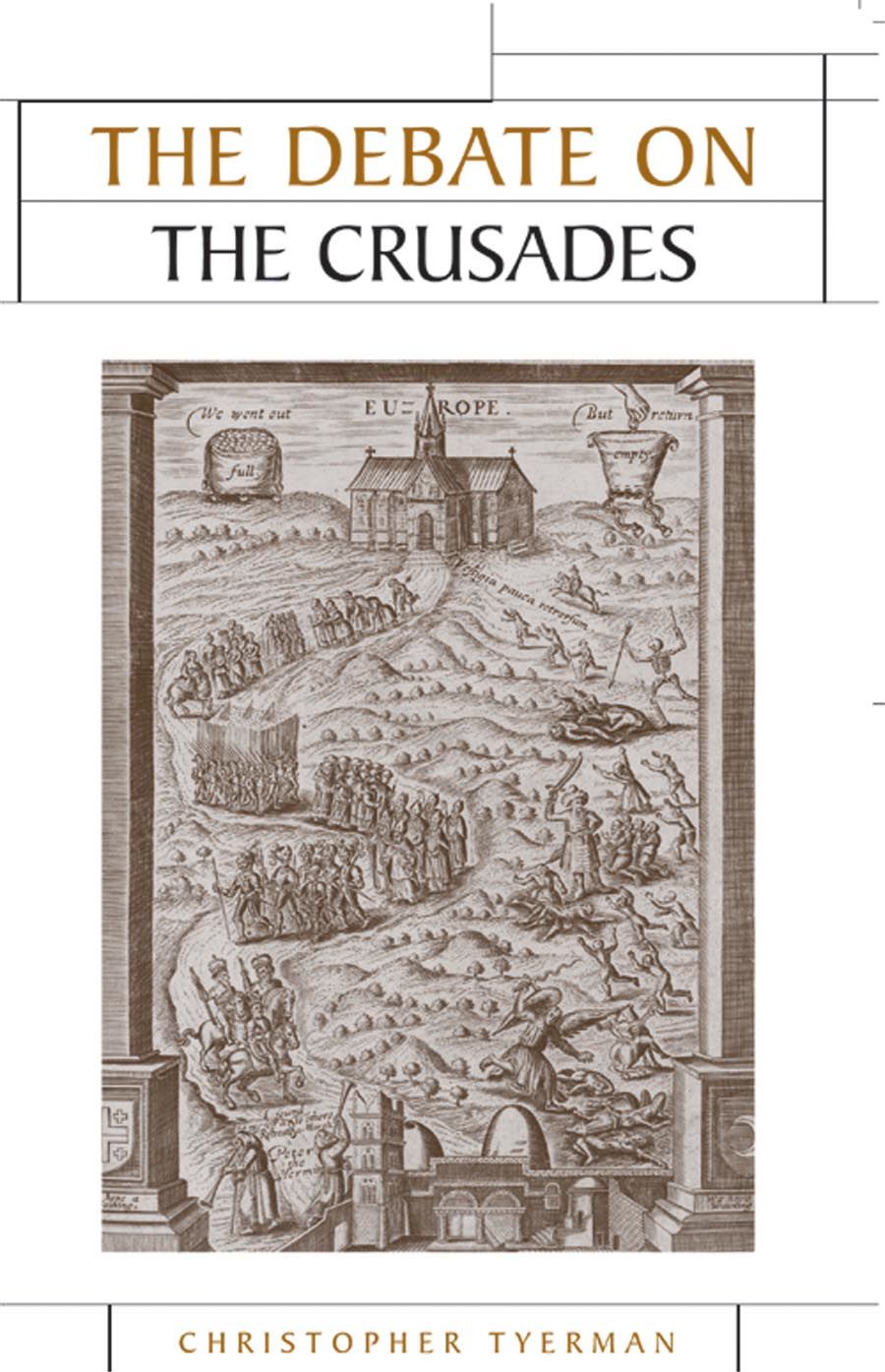
The Debate on the Crusades, 1099–2010
David Hume, the eighteenth century philosopher, famously declared that ‘the crusades engrossed the attention of Europe and have ever since engaged the curiosity of man kind’. This is the first book length study of how succeeding generations from the First Crusade in 1099 to the present day have understood, refashioned, moulded and manipulated accounts of these medieval wars of religion to suit changing contemporary circumstances and interests. The crusades have attracted some of the leading historical writers, scholars and controversialists from John Foxe (of Book of Martyrs fame), to the philosophers G.W. Leibniz, Voltaire and David Hume, to historians such as William Robertson, Edward Gibbon and Leopold Ranke. Accessibly written, a history of histories and historians, the book will be of interest to students and researchers of crusading history from sixth form to postgraduate level and beyond and to cultural historians of the use of the past and of medievalism.
eBook
Before Enlightenment
The literary qualities of humanists' writings convey how play and illusion helped form their ideas about knowledge, ethics, and metaphysics. Timothy Kircher argues for new ways of appreciating Renaissance humanist philosophy.
eBook

Printing and Reading Italian Latin Humanism in Renaissance Europe (ca. 1470-Ca. 1540)
With the advent of the printing press throughout Europe in the last quarter of the fifteenth century, the key Latin texts of Italian humanism began to be published outside Italy, most of them by a small group of printers who, in most cases, worked in close collaboration with lecturers and teachers. This study provides the first comprehensive account of the dissemination of this important literary corpus in Spain, France, the Low Countries and the German-speaking world between ca. 1470 and ca. 1540. By combining an examination of book production and consumption with attention to the educational system of Renaissance Europe, this book highlights both the historical significance of the Latin literature of Italian humanism within the school and university curriculum of the time, and the impact of such a body of texts on the rising national literary traditions, in Latin and in the vernacular, of the period. Printing and Reading Italian Latin Humanism in Renaissance Europe will appeal to scholars of classical and Renaissance literature, and to anyone interested in intellectual history and in the history of education in the Renaissance. It will be of particular interest to scholars in Hispanic studies.
eBook

Social Network Analysis and Medieval History
Social network analysis is revolutionizing our understanding of business, politics, public health, and now history. In this book, the first collection of network analysis case studies dedicated to the study of the European Middle Ages, fourteen scholars present their ground-breaking research on subjects as varied as saints’ lives, royal households, landholding society, ecclesiastical structures, town life, and financial dealings. Spanning the chronological breadth of the medieval era, this collection is international in both its subject matter and its scholarship. With leading researchers from across Europe, this book announces the arrival of an exciting new subdiscipline in Medieval Studies.
eBook

The End of Conduct
Grobianus et Grobiana, a little-known but key Renaissance text, is the starting point for this examination of indecency, conduct, and subject formation in the early modern period. First published in 1549, Friedrich Dedekind's ironic poem recommends the most disgusting behavior-indecency-as a means of instilling decency. The poem, Barbara Correll maintains, not only supplements prior conduct literature but offers a reading of it as well; her analysis of the Grobianus texts (the neo-Latin original, the German vernacular adaptation, the 1605 English translation, and Thomas Dekker'sGuls Horne-booke) also provides a historical account of conduct during the shift from a medieval to a Renaissance sensibility. According to Correll, the effect of Dedekind's text is to establish normative masculine identity through the labor of aversion. The gross, material body must be subjugated and reconstituted in order to attain its status as the bearer of civil manhood. Correll shows how the virtual subject of civil conduct emerges in dominant yet necessarily beleaguered relation to colonized Others, whether in feminine, animal, or peasant guise. Referring to Renaissance courtesy literature from Castiglione to Erasmus, she identifies this double drama of early modern subject formation as central to conduct books as well as to their grobian extensions. Her work places Grobianus in the civilizing process that marked emerging bourgeois society in early modern Europe.
Grobianus et Grobiana, a little-known but key Renaissance text, is the starting point for this examination of indecency, conduct, and subject formation in the early modern period.
First published in 1549, Friedrich Dedekind's ironic poem recommends the most disgusting behavior-indecency-as a means of instilling decency. The poem, Barbara Correll maintains, not only supplements prior conduct literature but offers a reading of it as well; her analysis of the Grobianus texts (the neo-Latin original, the German vernacular adaptation, the 1605 English translation, and Thomas Dekker'sGuls Horne-booke) also provides a historical account of conduct during the shift from a medieval to a Renaissance sensibility.
According to Correll, the effect of Dedekind's text is to establish normative masculine identity through the labor of aversion. The gross, material body must be subjugated and reconstituted in order to attain its status as the bearer of civil manhood. Correll shows how the virtual subject of civil conduct emerges in dominant yet necessarily beleaguered relation to colonized Others, whether in feminine, animal, or peasant guise. Referring to Renaissance courtesy literature from Castiglione to Erasmus, she identifies this double drama of early modern subject formation as central to conduct books as well as to their grobian extensions. Her work places Grobianus in the civilizing process that marked emerging bourgeois society in early modern Europe.
eBook
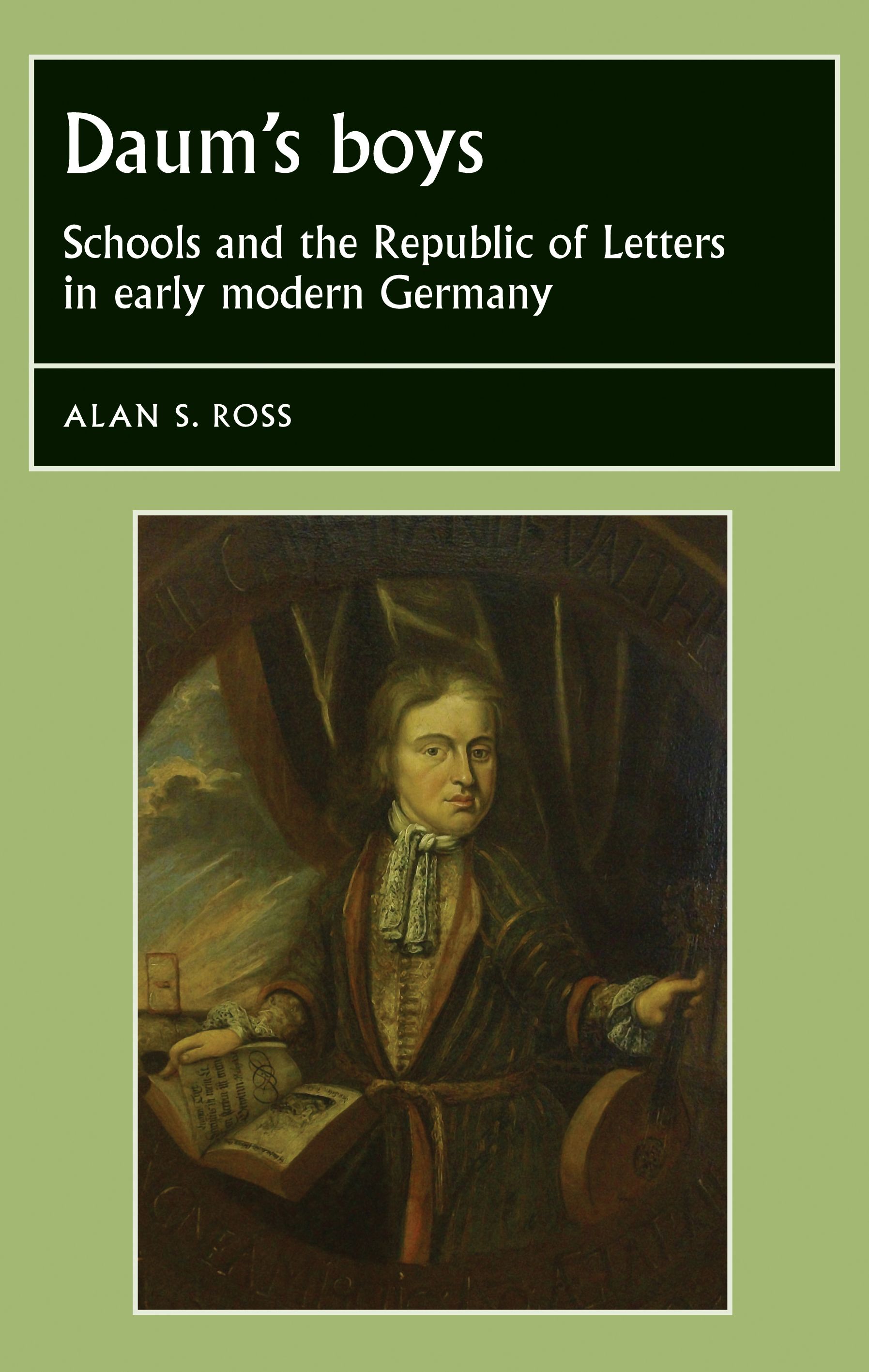
Daum's boys
This highly original book is the first in-depth study of a footsoldier of the seventeenth-century German Republic of Letters. Its subject, the polymath and schoolteacher Christian Daum, is today completely forgotten, yet left behind one of the largest private archives of any early modern European scholar. On the basis of this unique source, this book portrays schools as focal points of a whole world of Lutheran learning outside of universities and courts, as places not just of education but of intense scholarship, and examines their significance for German culture.Multi-confessional Germany was different from Catholic France and Protestant England in that its network of small cities fostered educational and cultural competition and made possible a much larger and socially open Republic. This book allows us for the first time to understand how the Republic of Letters was constructed from below and how it was possible for individuals from relatively humble backgrounds and occupations to be at the centre of European intellectual life.This book is aimed at other specialists as well as postgraduate students in the fields of cultural and social history, and can also serve as an introduction to recent European literature on early modern scholarship for undergraduate students.
eBook

The Archaeology of Colonialism
This volume examines human sexuality as an intrinsic element in the interpretation of complex colonial societies. While archaeological studies of the historic past have explored the dynamics of European colonialism, such work has largely ignored broader issues of sexuality, embodiment, commemoration, reproduction and sensuality. Recently, however, scholars have begun to recognize these issues as essential components of colonization and imperialism. This book explores a variety of case studies, revealing the multifaceted intersections of colonialism and sexuality. Incorporating work that ranges from Phoenician diasporic communities of the eighth century to Britain's nineteenth-century Australian penal colonies to the contemporary Maroon community of Brazil, this volume changes the way we understand the relationship between sexuality and colonial history.
eBook