
Catalogue Search | MBRL


Are you sure you want to remove the book from the shelf?

{{itemTitle}}
12
result(s) for
"Humanitarian assistance-Rwanda"
Sort by:

Humanitarian aid, genocide and mass killings : Mâedecins Sans Frontiلeres, the Rwandan experience, 1982-97
Throughout the 1990s, Mâedecins Sans Frontiلeres (MSF) faced the challenges posed by the genocide of Rwandan Tutsis and a succession of outbreaks of political violence in Rwanda and in its neighbours. One of the authors, a doctor, participated in MSF's Rwandan operations during the 1990s. The other, a sociologist, has been an assiduous researcher into humanitarian action and its context since 1994.
Book
Humanitarian aid, genocide and mass killings
Throughout the 1990s, Médecins Sans Frontières (MSF) faced challenges posed by the genocide of Rwandan Tutsis and a succession of outbreaks of political violence in Rwanda and in its neighbours. This book recounts the experiences of the MSF teams working in the field.
eBook

Humanitarian aid, genocide and mass killings
Throughout the 1990s, Médecins Sans Frontières (MSF) faced the challenges posed by the genocide of Rwandan Tutsis and a succession of outbreaks of political violence in Rwanda and in its neighbours. One of the authors, a doctor, participated in MSF's Rwandan operations during the 1990s. The other, a sociologist, has been an assiduous researcher into humanitarian action and its context since 1994.
eBook

One hundred days
When Swiss aid worker David Hohl arrives in Rwanda in 1990, he wants to know what it feels like to make a difference. Instead, he finds himself among expats, living a life of postcolonial privilege and boredom, and he begins to suspect that the agency is more concerned with political expedience than improving lives. But are his own motives any more noble? When civil war breaks out and David goes into hiding, he is forced to examine his own relationship to the country he wants to help and to the cosmopolitan Rwandan woman he wants to possess. As the genocide rages over the course of one hundred desperate days, the clear line David has always drawn between idealism and complicity quickly begins to blur.--P. [4] of cover.
BOOK

Responding further to the plight of Rwandan refugees
One of the biggest problems facing Rwandan refugees in Zaire is a lack of adequate food supplies. Cholera has affected many refugees and has inspired the addition of millions of dollars for emergency aid. In a speech by Brian Atwood, Administrator for the Agency For International Development, the concerns relating to food and clean water shortages are expressed in a White House press briefing.
Journal Article

The Limits of Humanitarian Intervention: Genocide in Rwanda
In 1994 genocide in Rwanda claimed the lives of at least 500,000 Tutsi -some three-quarters of their population -while UN peacekeepers were withdrawn and the rest of the world stood aside. Ever since, it has been argued that a small military intervention could have prevented most of the killing. In The Limits of Humanitarian Intervention, Alan J. Kuperman exposes such conventional wisdom as myth.
Combining unprecedented analyses of the genocide's progression and the logistical limitations of humanitarian military intervention, Kuperman reaches a startling conclusion: even if Western leaders had ordered an intervention as soon as they became aware of a nationwide genocide in Rwanda, the intervention forces would have arrived too late to save more than a quarter of the 500,000 Tutsi ultimately killed. Serving as a cautionary message about the limits of humanitarian intervention, the book's concluding chapters address lessons for the future.
eBook

The World and Darfur
This updated edition of The World and Darfur brings together genocide scholars from a range of disciplines - social history, art history, military history, African studies, media studies, literature, political science, and sociology - to provide a cohesive and nuanced understanding of the international response to the crisis in Western Sudan. Contributing authors, including Eric Reeves, Frank Chalk, Eric Markusen, and Samuel Totten, look at the lessons learned from the United Nations' failure to intervene during the Rwandan genocide, the representation of Darfur in the mainstream media, atrocity investigations, activist and NGO campaigns, art exhibitions and political rhetoric, and the role of the international community in the discourse of genocide prevention and intervention. For a complete list of contributors please visit www.mqup.ca
eBook

Problems of Protection
First Published in 2003. Routledge is an imprint of Taylor & Francis, an informa company.
Niklaus Steiner is Associate Director of the University Center for International Studies at University of North Carolina. Gil Loesher was professor of International Relations at Notre Dame and he is now at the Center for International Studies at Oxford University. He serves on the Editorial board of the Journal of Refugee Studies and the UNHCR's State of the World's Refugees . Mark Gibney is Belk Distinguished Professor of Humanities at University of North Carolina.
eBook
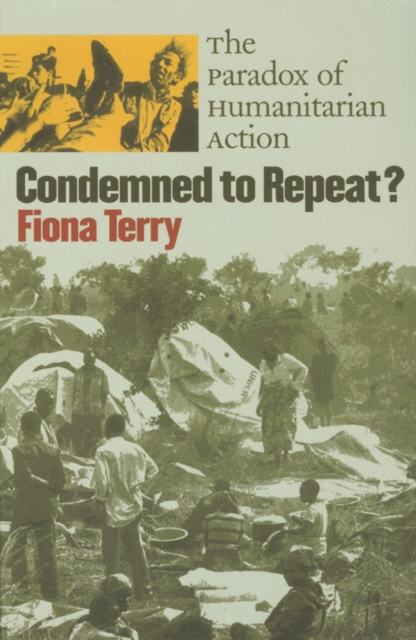
Condemned to Repeat?
Humanitarian groups have failed, Fiona Terry believes, to face up to the core paradox of their activity: humanitarian action aims to alleviate suffering, but by inadvertently sustaining conflict it potentially prolongs suffering. InCondemned to Repeat?, Terry examines the side-effects of intervention by aid organizations and points out the need to acknowledge the political consequences of the choice to give aid. The author makes the controversial claim that aid agencies act as though the initial decision to supply aid satisfies any need for ethical discussion and are often blind to the moral quandaries of aid. Terry focuses on four historically relevant cases: Rwandan camps in Zaire, Afghan camps in Pakistan, Salvadoran and Nicaraguan camps in Honduras, and Cambodian camps in Thailand.
Terry was the head of the French section of Medecins sans frontieres (Doctors Without Borders) when it withdrew from the Rwandan refugee camps in Zaire because aid intended for refugees actually strengthened those responsible for perpetrating genocide. This book contains documents from the former Rwandan army and government that were found in the refugee camps after they were attacked in late 1996. This material illustrates how combatants manipulate humanitarian action to their benefit.Condemned to Repeat?makes clear that the paradox of aid demands immediate attention by organizations and governments around the world. The author stresses that, if international agencies are to meet the needs of populations in crisis, their organizational behavior must adjust to the wider political and socioeconomic contexts in which aid occurs.
eBook