
Catalogue Search | MBRL


Are you sure you want to remove the book from the shelf?

{{itemTitle}}
542,979
result(s) for
"Humanities History."
Sort by:


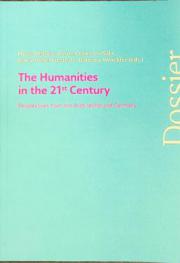
The Humanities between Global Integration and Cultural Diversity
Die Reihe widmet sich zentralen neueren Konzepten und Methoden im Feld der kulturwissenschaftlichen Grundlagenforschung und inhaltlichen Fragestellungen. Sie zielt darauf, die gegenwrtige Diskussion in den Kulturwissenschaften weiter zu profilieren und sie zugleich fr die Arbeit in den Disziplinen fruchtbar zu machen: durch die Ausarbeitung interdisziplinrer Schlsselkonzepte und die Entwicklung einer transkulturellen study of culture. Die Bnde gehen berwiegend aus den Literatur-, Geschichts- und Kulturwissenschaften hervor, aber auch aus der Politikwissenschaft, der Soziologie und den Medienwissenschaften.
eBook

A Diversity of Divisions: Tracing the History of the Demarcation between the Sciences and the Humanities
Throughout history, divides between the sciences and the humanities have been drawn in many different ways. This essay shows that the notion of a divide became more urgent and pronounced in the second half of the nineteenth century. While this shift has several causes, the essay focuses on the rise of the social sciences, which is interpreted as posing a profound challenge to the established disciplines of the study of humankind. This is demonstrated by zooming in on linguistics, one of the key traditional disciplines of the humanities. Through the assumption of a correspondence between mental and linguistic categories, psychology became of central importance in the various conceptions of linguistics that emerged in the nineteenth century. Both linguistics and psychology were very much engaged in a process of discipline formation, and opinions about the proper directions of the fields varied considerably. Debates on these issues catalyzed the construction of more radical divisions between the sciences and the humanities. Both Wilhelm Dilthey’s dichotomy between understanding and explanation and Wilhelm Windelband’s dichotomy between nomothetic and idiographic sciences respond to these debates. While their constructions are often lumped together, the essay shows that they actually meant very different things and have to be treated accordingly.
Journal Article

The humanities between global integration and cultural diversity
\"The disposition of the humanities formed in the age of modernity has come under scrutiny. Pushed by digitization, globalization, and new concepts for the study of culture, the humanities were forced to reorient themselves. Focusing on the relational dynamics between global integration and cultural diversification, this volume explores the transdisciplinary and transnational reconfiguration of the humanities under the impact of globalization\"--Provided by publisher.
BOOK

Weimar Thought
During its short lifespan, the Weimar Republic (1918-33) witnessed an unprecedented flowering of achievements in many areas, including psychology, political theory, physics, philosophy, literary and cultural criticism, and the arts. Leading intellectuals, scholars, and critics--such as Hannah Arendt, Walter Benjamin, Ernst Bloch, Bertolt Brecht, and Martin Heidegger--emerged during this time to become the foremost thinkers of the twentieth century. Even today, the Weimar era remains a vital resource for new intellectual movements. In this incomparable collection,Weimar Thoughtpresents both the specialist and the general reader a comprehensive guide and unified portrait of the most important innovators, themes, and trends of this fascinating period.
The book is divided into four thematic sections: law, politics, and society; philosophy, theology, and science; aesthetics, literature, and film; and general cultural and social themes of the Weimar period. The volume brings together established and emerging scholars from a remarkable array of fields, and each individual essay serves as an overview for a particular discipline while offering distinctive critical engagement with relevant problems and debates.
Whether used as an introductory companion or advanced scholarly resource,Weimar Thoughtprovides insight into the rich developments behind the intellectual foundations of modernity.
eBook

Kore : on sickness, the sick, and the search for the soul of medicine
\"There is a grand tradition of physicians who are also great writers and philosophers. From Copernicus and Paracelsus, to Chekov, Osler and Frankl. And most recently Sherwin Nuland and Oliver Sacks have gained broad readerships and made huge contributions to the way we think and the way we live our lives. Andrzej Szczeklik is entirely worthy to join their company. When his first book, Catharsis, was published in English, critics from Seamus Heaney to Czeslaw Milosz stood to applaud. Now he has followed with an ever deeper and more accomplished book.It has become unfortunately rare for a scientist or doctor to find his grounding in a broad understanding of literature and the humanities. But in Kore, the author insists that only with a curiosity thoroughly at home in both worlds can one expect to discover what we should mean about sickness and about the soul. No tedious academic, Szczeklik writes with the grace of a poet and the ease of a fine storyteller. Anecdotes drawn from a personal immersion in art, music, and literature are woven with reports on experimental medicine and daily clinical experience. From DNA and the re-creation of the Spanish Flu virus, to contemporary research in genetics, cancer, neurology, and the AIDS virus, from \"Symptoms and Shadows,\" to \"Dying and Death,\" to \"Enchantment of Love,\" every chapter of this book is alive and engaging. The result is a life-affirming work of science, philosophy, art, and spirituality\"--Provided by publisher.
Book
Introduction: The Humanities and the Sciences
The humanities and the sciences have a strongly connected history, yet their histories continue to be written separately. Although the scope of the history of science has undergone a tremendous broadening during the past few decades, scholars of the history of the humanities and the history of science still seem to belong to two separate cultures that have endured through the past century. This Focus section explores what common ground would enable a study of the histories of the humanities and the sciences to investigate their shared epistemic objects, virtues, values, methods, and practices.
Journal Article


Amnesties, Accountability, and Human Rights
For the last thirty years, documented human rights violations have been met with an unprecedented rise in demands for accountability. This trend challenges the use of amnesties which typically foreclose opportunities for criminal prosecutions that some argue are crucial to transitional justice. Recent developments have seen amnesties circumvented, overturned, and resisted by lawyers, states, and judiciaries committed to ending impunity for human rights violations. Yet, despite this global movement, the use of amnesties since the 1970s has not declined.
Amnesties, Accountability, and Human Rightsexamines why and how amnesties persist in the face of mounting pressure to prosecute the perpetrators of human rights violations. Drawing on more than 700 amnesties instituted between 1970 and 2005, Renée Jeffery maps out significant trends in the use of amnesty and offers a historical account of how both the use and the perception of amnesty has changed. As mechanisms to facilitate transitions to democracy, to reconcile divided societies, or to end violent conflicts, amnesties have been adapted to suit the competing demands of contemporary postconflict politics and international accountability norms. Through the history of one evolving political instrument,Amnesties, Accountability, and Human Rightssheds light on the changing thought, practice, and goals of human rights discourse generally.
eBook