
Catalogue Search | MBRL


Are you sure you want to remove the book from the shelf?

{{itemTitle}}
18,265
result(s) for
"Humanities Methodology."
Sort by:

Hermeneutica : computer-assisted interpretation in the humanities
\"With increasing interest being shown in participatory research models, whether it be Wikipedia, World of Warcraft, participatory writing (like Montfort et al's 10 Print or Laurel et al's Design Research) or the more traditional communal research cultures of the arts collective or engineering lab, the Humanities is increasingly relying on computational tools to do the 'heavy lifting' necessary to process all of this information. Hermeneuti.ca, as its name implies, is about hermeneutical things--the computing tools of research that are usually hidden--how to use them, and how they are interpretative objects to be understood. Hermeneuti.ca is both a book and also a web site (http://hermeneuti.ca) that shows the interactive text analysis tools woven into the book. Essentially, Hermeneuti.ca is both a text about computer-assisted methods and a collection of analytical tools called Voyant (http://voyant-tools.org) that instantiate the authors ideas. While there is a definitely an emphasis on classic Digital Humanities work (corpus analysis, information retrieval, etc.), there is also a focus on the development of software as part of a project of knowledge that encompasses the idea of software as an active part of knowledge production that brings this book into the Software Studies series\"--Provided by publisher.
Book

A new companion to digital humanities
This highly-anticipated volume has been extensively revised to reflect changes in technology, digital humanities methods and practices, and institutional culture surrounding the valuation and publication of digital scholarship.
eBook

Critical Digital Humanities : The Search for a Methodology
\"Can established humanities methods coexist with computational thinking? It is one of the major questions in humanities research today, as scholars increasingly adopt sophisticated data science for their work. James E. Dobson explores the opportunities and complications faced by humanists in this new era. Though the study and interpretation of texts alongside sophisticated computational tools can serve scholarship, these methods cannot replace existing frameworks. As Dobson shows, ideas of scientific validity cannot easily nor should be adapted for humanities research because digital humanities, unlike science, lack a leading-edge horizon charting the frontiers of inquiry. Instead, the methods of digital humanities require a constant rereading. At the same time, suspicious and critical readings of digital methodologies make it unwise for scholars to defer to computational methods. Humanists must examine the tools--including the assumptions that went into the codes and algorithms--and questions surrounding their own use of digital technology in research. Insightful and forward thinking, this book lays out a new path of humanistic inquiry that merges critical theory and computational science\"-- Provided by publisher.
Book

Digital Humanities Pedagogy
Academic institutions are starting to recognize the growing public interest in digital humanities research, and there is an increasing demand from students for formal training in its methods. Despite the pressure on practitioners to develop innovative courses, scholarship in this area has tended to focus on research methods, theories and results rather than critical pedagogy and the actual practice of teaching. The essays in this collection offer a timely intervention in digital humanities scholarship, bringing together established and emerging scholars from a variety of humanities disciplines across the world. The first section offers views on the practical realities of teaching digital humanities at undergraduate and graduate levels, presenting case studies and snapshots of the authors’ experiences alongside models for future courses and reflections on pedagogical successes and failures. The next section proposes strategies for teaching foundational digital humanities methods across a variety of scholarly disciplines, and the book concludes with wider debates about the place of digital humanities in the academy, from the field’s cultural assumptions and social obligations to its political visions. Digital Humanities Pedagogy broadens the ways in which both scholars and practitioners can think about this emerging discipline, ensuring its ongoing development, vitality and long-term sustainability.
eBook

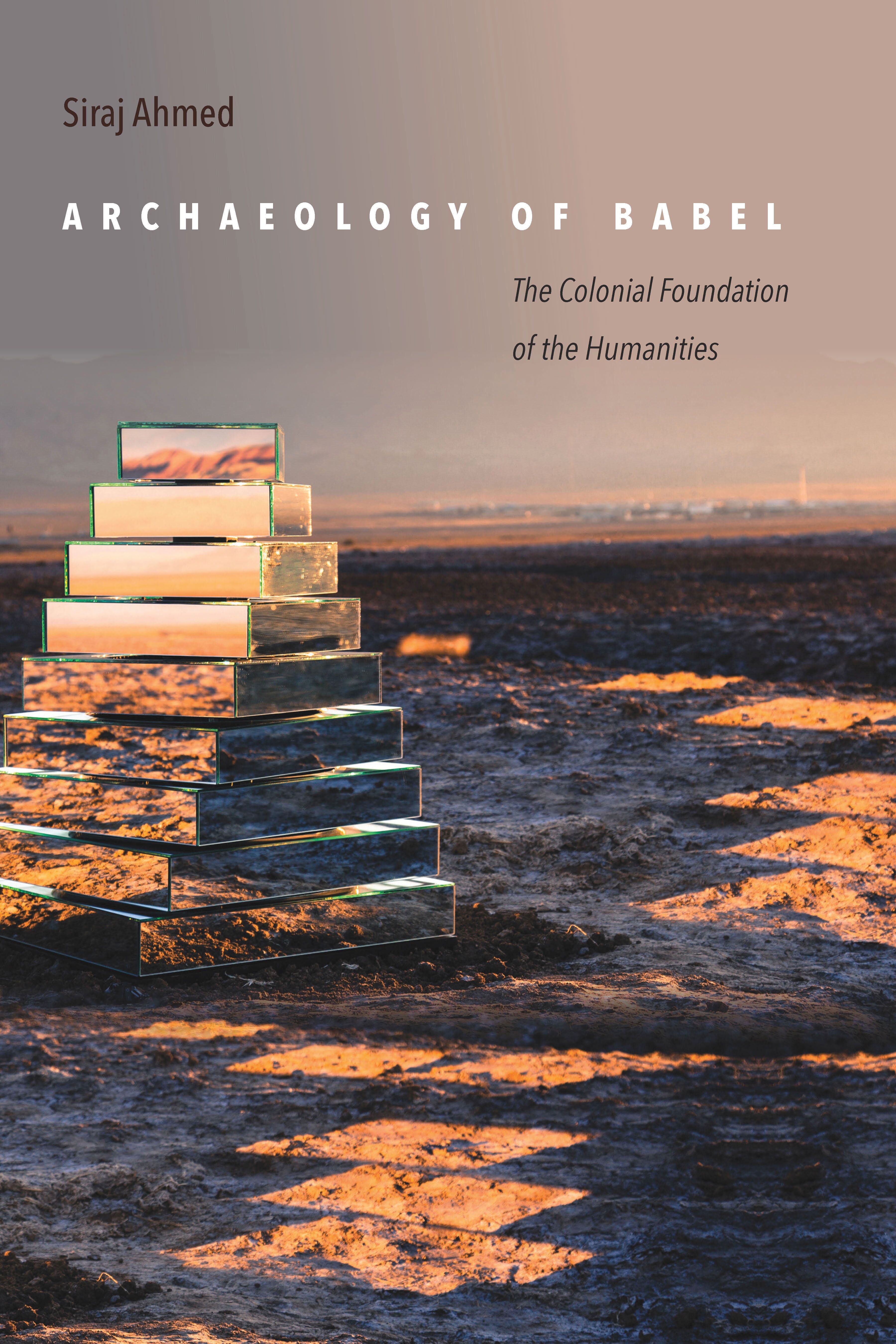
Archaeology of Babel
For more than three decades, preeminent scholars in comparative literature and postcolonial studies have called for a return to philology as the indispensable basis of critical method in the humanities. Against such calls, this book argues that the privilege philology has always enjoyed within the modern humanities silently reinforces a colonial hierarchy. In fact, each of philology's foundational innovations originally served British rule in India. Tracing an unacknowledged history that extends from British Orientalist Sir William Jones to Palestinian American intellectual Edward Said and beyond, Archaeology of Babel excavates the epistemic transformation that was engendered on a global scale by the colonial reconstruction of native languages, literatures, and law. In the process, it reveals the extent to which even postcolonial studies and European philosophy—not to mention discourses as disparate as Islamic fundamentalism, Hindu nationalism, and global environmentalism—are the progeny of colonial rule. Going further, it unearths the alternate concepts of language and literature that were lost along the way and issues its own call for humanists to reckon with the politics of the philological practices to which they now return.
eBook


Research methods for reading digital data in the digital humanities
The first volume centred on the navigation and interpretation of digital material as research methods in the Humanities.
eBook

Doing more digital humanities : open approaches to creation, growth, and development
\"As digital media, tools, and techniques continue to impact and advance the humanities, Doing More Digital Humanities provides practical information on how to do digital humanities work. This book offers: A comprehensive, practical guide to the digital humanities ; Accessible introductions, which in turn provide the grounding for the more advanced chapters within the book ; An overview of core competencies, to help research teams, administrators, and allied groups, make informed decisions about suitable collaborators, skills development, and workflow ; Guidance for individuals, collaborative teams, and academic managers who support digital humanities researchers ; Contextualized case studies, including examples of projects, tools, centres, labs, and research clusters ; Resources for starting digital humanities projects, including links to further readings, training materials and exercises, and resources beyond ; Additional augmented content that complements the guidance and case studies in Doing Digital Humanities\"-- Provided by publisher.
Book

Reconstruction, Replication and Re-Enactment in the Humanities and Social Sciences
This book offers sustained, interdisciplinary reflections on performative methods, variously known as Reconstruction, Replication and Re-enactment (RRR) practices across the fields of history of science, archaeology, art history, conservation, musicology and anthropology.
eBook