
Catalogue Search | MBRL


Are you sure you want to remove the book from the shelf?

{{itemTitle}}
8
result(s) for
"Humility Fiction."
Sort by:

Sunny's royal ball
After being invited to the royal ball, Sunny and her friends help teach Prince Dudley how to accept help from others.
Book
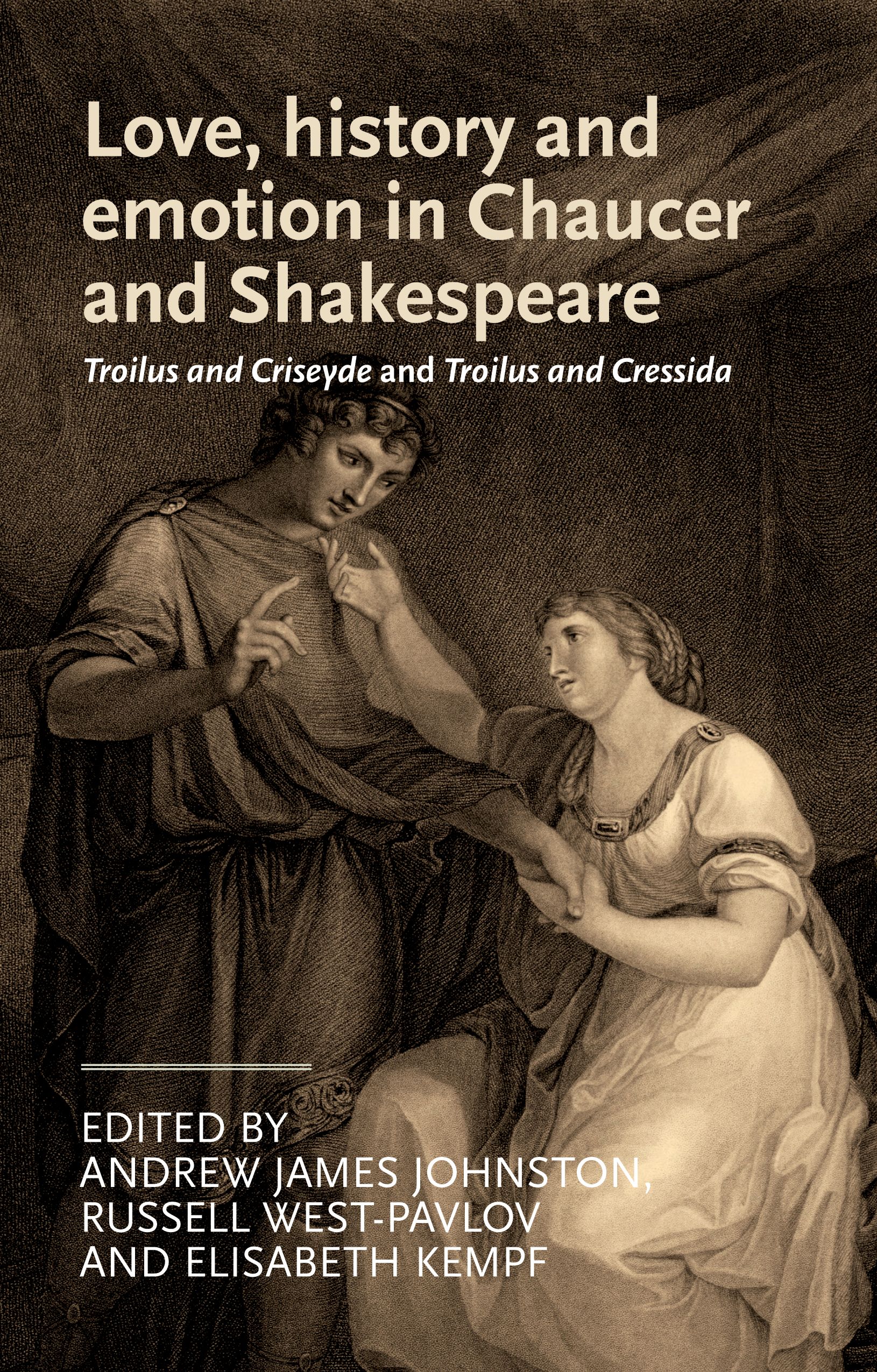
Love, history and emotion in Chaucer and Shakespeare
This collection of essays explores medieval and early modern Troilus-texts from Chaucer to Shakespeare. The contributions show how medieval and early modern fictions of Troy use love and other emotions as a means of approaching the problem of tradition. As these texts reflect on their own traditionality, they highlight both the affective nature of temporality and the role of affect in scrutinising tradition itself. Focusing on a specific textual lineage that bridges the conventional period boundaries, the collection participates in an exchange between medievalists and early modernists that seeks to generate a dialogic encounter between the periods with the aim of further dismantling the rigid notions of chronology and periodisation that have kept medieval and early modern scholarship apart.
eBook

The Big Cheese
\"The Big Cheese is the best at everything, and brags about it, too. When the annual Cheese-cathlon comes around, the Big Cheese is prepared to win, as always. But what happens when the quiet new kid, Wedge Wedgeman, comes out on top? Is a slice of humility all the Big Cheese needs to discover that some things are better than being the best?\"-- Provided by publisher.
Book


Shakespeare's Festive Comedy
In this classic work, acclaimed Shakespeare critic C. L. Barber argues that Elizabethan seasonal festivals such as May Day and Twelfth Night are the key to understanding Shakespeare's comedies. Brilliantly interweaving anthropology, social history, and literary criticism, Barber traces the inward journey--psychological, bodily, spiritual--of the comedies: from confusion, raucous laughter, aching desire, and aggression, to harmony. Revealing the interplay between social custom and dramatic form, the book shows how the Elizabethan antithesis between everyday and holiday comes to life in the comedies' combination of seriousness and levity.
\"I have been led into an exploration of the way the social form of Elizabethan holidays contributed to the dramatic form of festive comedy. To relate this drama to holiday has proved to be the most effective way to describe its character. And this historical interplay between social and artistic form has an interest of its own: we can see here, with more clarity of outline and detail than is usually possible, how art develops underlying configurations in the social life of a culture.\"--C. L. Barber, in the Introduction
This new edition includes a foreword by Stephen Greenblatt, who discusses Barber's influence on later scholars and the recent critical disagreements that Barber has inspired, showing thatShakespeare's Festive Comedyis as vital today as when it was originally published.
eBook
Love, history and emotion in Chaucer and Shakespeare
This collection of essays explores medieval and early modern Troilus-texts from Chaucer to Shakespeare. The contributions show how medieval and early modern fictions of Troy use love and other emotions as a means of approaching the problem of tradition. As these texts reflect on their own traditionality, they highlight both the affective nature of temporality and the role of affect in scrutinising tradition itself. Focusing on a specific textual lineage that bridges the conventional period boundaries, the collection participates in an exchange between medievalists and early modernists that seeks to generate a dialogic encounter between the periods with the aim of further dismantling the rigid notions of chronology and periodisation that have kept medieval and early modern scholarship apart.
eBook
Spenser's allegory of justice in book five of the fairie queen
The book description for \"Spenser's Allegory of Justice in Book Five of the Fairie Queen\" is currently unavailable.
eBook

Why Read Books from the Past?
Mitali Perkins's nonfiction book for adults Steeped in Stories: Timeless Children's Novels to Refresh Our Tired Souls (Broadleaf Books) will be published in August. In it Perkins examines seven classic children's novels--Anne of Green Gables, Heidi, Emily of Deep Valley, The Hobbit, Little Women, A Little Princess, and The Silver Chair--through a contemporary and Christian lens. These books are far from perfect, and Perkins assesses their problems, but she argues that reading or rereading these books as adults can help us build virtue, unmask our vices, and restore our hope. This brief excerpt is adapted from a chapter titled \"Seven Books, Seven Virtues: Finding Goodness in Person,\" in which she continues making her case to read novels by those who wrote in another era.
Magazine Article