
Catalogue Search | MBRL


Are you sure you want to remove the book from the shelf?

{{itemTitle}}
469
result(s) for
"Hunger Fiction."
Sort by:

Maddi's fridge
Maddi's fridge is almost empty, while Sophia's fridge is full of food. How can Sophia help her friend Maddi without breaking her promise not to tell anyone?
Book
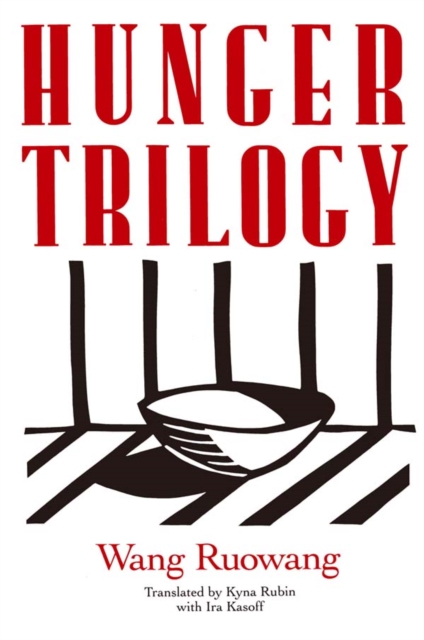
Hunger Trilogy
This autobiographical novella was written in 1980 by one of China’s leading dissidents, who was released from jail in late October 1990 again after being imprisoned as a pro-democracy activist in the wake of the Tiananmen incident of spring 1989. Wang recounts three episodes of extreme hardship in his life: incarceration in a Guomindang jail during the 1930s for his communist activism, on the run from Japanese troops during the 1940s in a bleak part of Shandong Province, and imprisonment as a “rightist” in Shanghai during the 1960s cultural revolution. The central theme of the three stories is extreme deprivation and “Hunger”.
eBook

THE PRIMAL FEAR: THE LANGUAGE OF THE FUTURE IN THE HUNGER GAMES
The Hunger Games series was banned to begin with before even it became a cult classic because of its anti-family concerns, the rebellion and the attitude of challenging the governmental authority. The system of futuristic governance is a warning to the readers, especially the teens of tomorrow as to how their lives would be in future if they continue to remain complacent about the ways of the authorities who rule them over. There is crime, retribution and rebellion each of which has its causes, consequences and repercussions. The paper aims to look at the struggle for food which Katniss and Dale confront to take care of their families written in the language of the future. The words which the author has coined for the future and the shades of meaning that they give are also highlighted.
Journal Article

Hungry Bird
\"Bird is hiking with his friends when his tummy rumbles. But no one packed him a snack that he likes. With every step, his hunger mounts until he collapses on the ground. How will Bird survive if he doesn't eat the perfect something this instant?\"-- Provided by publisher
Book


Rice from heaven
In South Korea, Yoori and her Appa, who grew up in North Korea, work with other villagers to send special balloons to carry rice over the border into North Korea, where people are starving.
Book

Gaza is the New Panem
For years, the Hunger Games franchise has captivated Nasrallah's heart and imagination, immersing him farther into its dystopian world with each viewing. Initially, he saw these movies, based on the Suzanne Collins trilogy, as pure fiction, far removed from reality. Little did he know that the lines between fantasy and their own reality in Gaza would one day blur. In the movies, events are set in Panem, a fictitious nation dominated by the iron grip of a tyrannical regime known as the Capitol. Panem is divided into 12 districts, each marked by its own shade of poverty. While the districts grapple with exploitation, oppression and despair, the Capitol basks in excessive wealth. The ones in charge maintain power by controlling the food supply. They starve the people of the districts and turn them against one another to compete for survival in the Hunger Games. From the fictional divisions of Panem to the all-too-real landscapes of Palestine, the themes of the film continue.
Journal Article

Hungry
In Thalia's world there is no more food and no need for food, as everyone takes medication to ward off hunger. But when she meets a boy who is part of an underground movement to bring food back, she realizes that the meds are not working.
Book
