
Catalogue Search | MBRL


Are you sure you want to remove the book from the shelf?

{{itemTitle}}
8
result(s) for
"Huns Europe History"
Sort by:


The Huns, Rome and the Birth of Europe
The Huns have often been treated as primitive barbarians with no advanced political organisation. Their place of origin was the so-called 'backward steppe'. It has been argued that whatever political organisation they achieved they owed to the 'civilizing influence' of the Germanic peoples they encountered as they moved west. This book argues that the steppes of Inner Asia were far from 'backward' and that the image of the primitive Huns is vastly misleading. They already possessed a highly sophisticated political culture while still in Inner Asia and, far from being passive recipients of advanced culture from the West, they passed on important elements of Central Eurasian culture to early medieval Europe, which they helped create. Their expansion also marked the beginning of a millennium of virtual monopoly of world power by empires originating in the steppes of Inner Asia. The rise of the Hunnic Empire was truly a geopolitical revolution.
eBook


Gender (In)equality and Gender Politics in Southeastern Europe
The collapse of socialist regimes across Southeastern Europe changed the rules of the political game and led to the transformation of these societies. The status of women was immediately affected. The contributors to this volume contrast the status of women in the post-socialist societies of the region with their status under socialism.
eBook

The Huns, Rome and the birth of Europe
\"The Huns have often been treated as primitive barbarians with no advanced political organisation. Their place of origin was the so-called 'backward steppe'. It has been argued that whatever political organisation they achieved they owed to the 'civilizing influence' of the Germanic peoples they encountered as they moved west. This book argues that the steppes of Inner Asia were far from 'backward' and that the image of the primitive Huns is vastly misleading. They already possessed a highly sophisticated political culture while still in Inner Asia and, far from being passive recipients of advanced culture from the West, they passed on important elements of Central Eurasian culture to early medieval Europe, which they helped create\"-- Provided by publisher.
BOOK
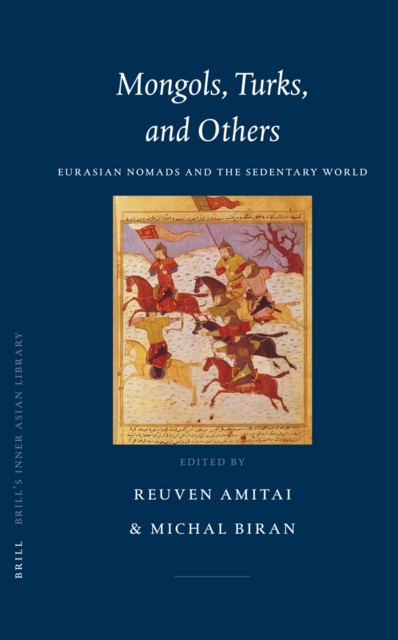
Mongols, Turks, and others : Eurasian nomads and the sedentary world
The interaction between Eurasian pastoral nomads and the surrounding sedentary societies is a major theme in world history. This volume explores the mulitfarious nature of nomadic society and its relations with China, Russia and the Middle East from antiquity into the contemporary world with emphasis on the Mongol and Turkish peoples.
eBook

Huns
\"A history of the Huns, equestrian nomads of Central Asia who pillaged Europe and Asia from the third through fifth centuries\"--Provided by publisher.
Book

Gendering welfare states
′As the title suggests, the objective of this fine collection of high quality essays is to incorporate gender into comparative welfare state analysis... the essays enrich current knowledge of variations among welfare states and offer new or enlarged concepts which challenge widely held tenets. Above all, the book forces us to carefully consider contexts and to avoid quick conclusions′ - Journal of European Social Policy.
eBook