
Catalogue Search | MBRL


Are you sure you want to remove the book from the shelf?

{{itemTitle}}
911
result(s) for
"Hunters Biography."
Sort by:


The last of the market hunters
Duck hunting has changed greatly since the days of unlimited duck kills, as the limit of fifty ducks a day established in 1902 has fallen to the present three. A legitimate hunter now, Dale Hamm learned the art of market hunting—taking waterfowl out of season and selling them to restaurants—from his father during the l920s. During the l930s and l940s, he kept his family alive by market hunting. At the peak of his career, Hamm poached every private hunting club along the Illinois River from Havana to Beardstown. After market hunting died out, Hamm became a legendary and almost respected—albeit controversial—character on the Illinois backwaters. He was eventually invited to hunt on the same clubs from which he had once been chased at the point of a shotgun. He hunted with judges, sheriffs, and the head of undercover operations for the Illinois Department of Conservation, all of whom knew of his reputation. He passed on to these hunting partners a lifetime of outdoor knowledge gained from slogging through mud, falling through ice, hunting ducks at three o’clock in the morning, dodging game wardens, and running the world’s only floating tavern. I always said if anyone ever cut open one of us Hamms, all they’d find was duck or fish, Hamm once said of his family. Now in his eighties, Hamm still carries a pellet from a shotgun in his chin to remind him of a shotgun blast that ricocheted off the water and into his face. Bakke notes that it is appropriate that a man who spent his life with a shotgun in his hands should carry a bit of buckshot wherever he goes. Everyone who ever met Dale Hamm has a story about him. His own story is that of a one-of-a-kind character who, in his later years, used his considerable outdoor savvy to conserve the natural resources he once savaged. His time and kind are gone, Bakke notes, and there will never be another like him. This book will be of interest to anyone who has ever been hunting—or who enjoys reading about colorful people and times that exist no more.
eBook

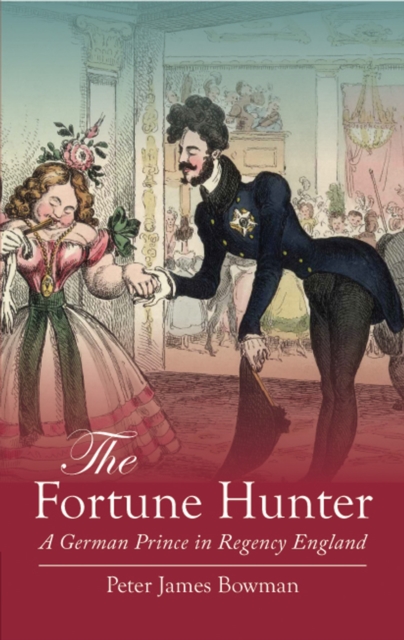
The Fortune Hunter
The two decades after Waterloo marked the great age of foreign fortune hunters in England. Each year brought a new influx of impecunious Continental noblemen to the world's richest country, and the more brides they carried off, the more alarmed society became.The most colourful of these men was Prince Hermann von Pückler-Muskau (1785-1871), remembered today as Germany's finest landscape gardener. In the mid-1820s, however, his efforts to turn his estate into a magnificent park came close to bankrupting him. To save his legacy his wife Lucie devised an unusual plan: they would divorce so that Pückler could marry an heiress who would finance further landscaping and, after a decent interval, be cajoled into accepting Lucie's continued residence. In September 1826, his marriage dissolved, Pückler set off for London.Pückler is the most intelligent of the overseas visitors who noted their impressions of Regency England. His matrimonial quest brings him into contact with such luminari.
eBook
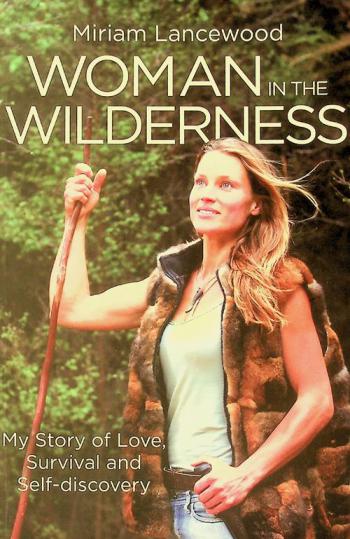
Woman in the wilderness : my story of love, survival and self-discovery
\"Miriam Lancewood lives a primitive, nomadic life in the heart of the mountains with her husband in New Zealand. She lives simply in a tent or hut and survives by hunting wild animals, foraging edible plants and using minimal supplies. For the last six years, she and her husband have lived this way through all seasons, often cold, hungry and isolated but, more importantly, connected to the land and happy\"--Back cover.
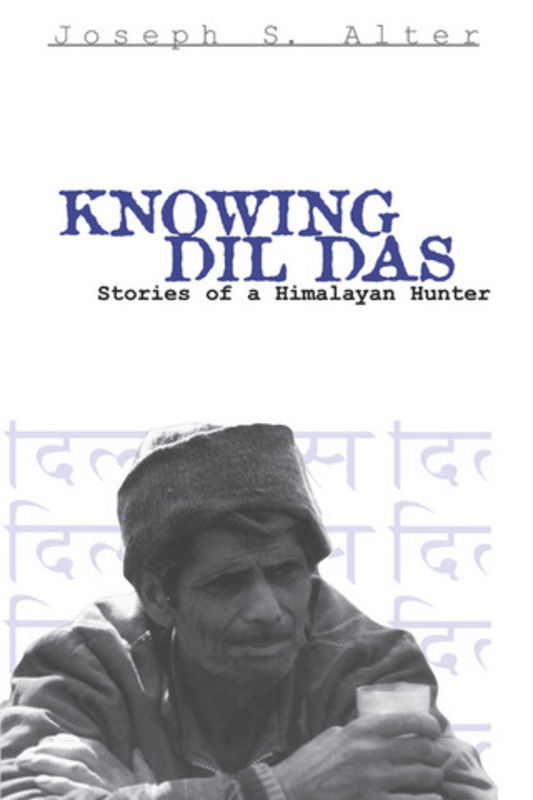
Knowing Dil Das
Dil Das was a poor farmer-an untouchable-living near Mussoorie, a colonial hill station in the Himalayas. As a boy he became acquainted with a number of American missionary children attending a boarding school in town and, over the years, developed close friendships with them and, eventually, with their sons. The basis for these friendships was a common passion for hunting. This passion and the friendships it made possible came to dominate Dil Das's life. When Joseph S. Alter, one of the boys who had hunted with Dil Das, became an adult and a scholar, he set out to write the life history of Dil Das as a way of exploring Garhwali peasant culture. But Alter found his friend uninterested in talking about traditional ethnographic subjects, such as community life, family, or work. Instead, Dil Das spoke almost exclusively about hunting with his American friends-telling endless tales about friendship and hunting that seemed to have nothing to do with peasant culture. When Dil Das died in 1986, Alter put the project away. Years later, he began rereading Dil Das's stories, this time from a completely new perspective. Instead of looking for information about peasant culture, he was able to see that Dil Das was talking against culture. From this viewpoint Dil Das's narrative made sense for precisely those reasons that had earlier seemed to render it useless-his apparent indifference toward details of everyday life, his obsession with hunting, and, above all, his celebration of friendship. To a degree in fact, but most significantly in Dil Das's memory, hunting served to merge his and the missionary boys' identities and, thereby, to supersede and render irrelevant all differences of class, caste, and nationality. For Dil Das the intimate experience of hunting together radically decentered the prevailing structure of power and enabled him to redefine himself outside the framework of normal social classification. Thus,Knowing Dil Dasis not about peasant culture but about the limits of culture and history. And it is about the moral ambiguity of writing and living in a field of power where, despite intimacy, self and other are unequal.
eBook

Knowing Dil Das: Stories of a Himalayan Hunter
Dil Das was a poor farmer—an untouchable—living near Mussoorie, a colonial hill station in the Himalayas. As a boy he became acquainted with a number of American missionary children attending a boarding school in town and, over the years, developed close friendships with them and, eventually, with their sons. The basis for these friendships was a common passion for hunting. This passion and the friendships it made possible came to dominate Dil Das's life.
When Joseph S. Alter, one of the boys who had hunted with Dil Das, became an adult and a scholar, he set out to write the life history of Dil Das as a way of exploring Garhwali peasant culture. But Alter found his friend uninterested in talking about traditional ethnographic subjects, such as community life, family, or work. Instead, Dil Das spoke almost exclusively about hunting with his American friends—telling endless tales about friendship and hunting that seemed to have nothing to do with peasant culture.
When Dil Das died in 1986, Alter put the project away. Years later, he began rereading Dil Das's stories, this time from a completely new perspective. Instead of looking for information about peasant culture, he was able to see that Dil Das was talking against culture. From this viewpoint Dil Das's narrative made sense for precisely those reasons that had earlier seemed to render it useless—his apparent indifference toward details of everyday life, his obsession with hunting, and, above all, his celebration of friendship.
To a degree in fact, but most significantly in Dil Das's memory, hunting served to merge his and the missionary boys' identities and, thereby, to supersede and render irrelevant all differences of class, caste, and nationality. For Dil Das the intimate experience of hunting together radically decentered the prevailing structure of power and enabled him to redefine himself outside the framework of normal social classification.
Thus, Knowing Dil Das is not about peasant culture but about the limits of culture and history. And it is about the moral ambiguity of writing and living in a field of power where, despite intimacy, self and other are unequal.
eBook

The Idea of Home
The Idea of Home is a collection of five autobiographical essays, in which John Hughes reflects on growing up in the Hunter Valley coal-mining town of Cessnock, in a household ruled by memories of the Ukraine, from which his mother's family fled during the Second World War.
eBook

In 'Hunter,' Laughton Stalked A Masterpiece
Not only an esteemed film critic but also the scriptwriter for John Huston's \"The African Queen,\" Agee had authored his own sui generis masterpiece of Americana, a sustained prose poem about poor Southern families that, with photographs by Walker Evans, became \"Let Us Now Praise Famous Men.\"
Newspaper Article
