
Catalogue Search | MBRL


Are you sure you want to remove the book from the shelf?

{{itemTitle}}
206
result(s) for
"Hybrid regime"
Sort by:

The Umbrella Movement
This volume examines the most spectacular struggle for democracy in post-handover Hong Kong. Bringing together scholars with different disciplinary focuses and comparative perspectives from mainland China, Taiwan and Macau, one common thread that stitches the chapters is the use of first-hand data collected through on-site fieldwork. This study unearths how trajectories can create favourable conditions for the spontaneous civil resistance despite the absence of political opportunities and surveys the dynamics through which the protestors, the regime and the wider public responses differently to the prolonged contentious space. The Umbrella Movement: Civil Resistance and Contentious Space in Hong Kong offers an informed analysis of the political future of Hong Kong and its relations with the authoritarian sovereignty as well as sheds light on the methodological challenges and promises in studying modern-day protests.
eBook

Archipiélagos politicos bajo la tormenta en Venezuela: Coaliciones, actores y autocratización
Political archipelagos under the storm in Venezuela: Coalitions, actors, and autocratizationThe evolution of the hybrid regime in Venezuela has caused an extended political conflict that has led to deinstitutionalization and to a complex humanitarian crisis. Based on this mutation, this article conceptualizes the emergence of two coalitions that have interacted for twenty years as archipelagos, each made up of groups (islets) with different visions and ways of relating. Disputing power, these coalitions have promoted actions and speeches based on fundamental ideas: one, with an illiberal and revolutionary tendency (CIR); another, with a liberal and democratic tendency (CLD). This article also analyses how their interaction has promoted the development of a pattern: escalation of violence; installation of alternative mechanisms for dialogue and negotiation (MADN), de-escalation of violence; no transformation of the conflict. Finally, the involvement of external actors represents an essential factor in the composition and displacement of each islet to radicalize its position or, on the contrary, contribute to a democratic and negotiated solution.ResumenLa evolución del régimen híbrido en Venezuela ha provocado un conflicto político extendido que ha derivado en desinstitucionalización y una crisis humanitaria compleja. Partiendo de esta mutación, este artículo conceptualiza la emergencia de dos coaliciones que han interactuado durante veinte años a modo de archipiélagos, cada una compuesta por grupos (islotes) con diversas visiones y formas de relacionarse. Disputando el poder, estas coaliciones han promovido acciones y discursos basados en ideas fundamentales: una, de tendencia iliberal y revolucionaria (CIR); otra, de tendencia liberal y democrática (CLD). También, se analiza cómo su interacción ha promovido el desarrollo de un patrón: escalamiento de violencia; instalación de mecanismos alternativos de diálogo y negociación (MADN) desescalamiento de violencia; no transformación del conflicto. Finalmente, el involucramiento de los actores externos representa un factor consustancial a la composición y desplazamiento de cada islote para radicalizar su postura o, por el contrario, contribuir a una solución democrática y negociada.
Journal Article
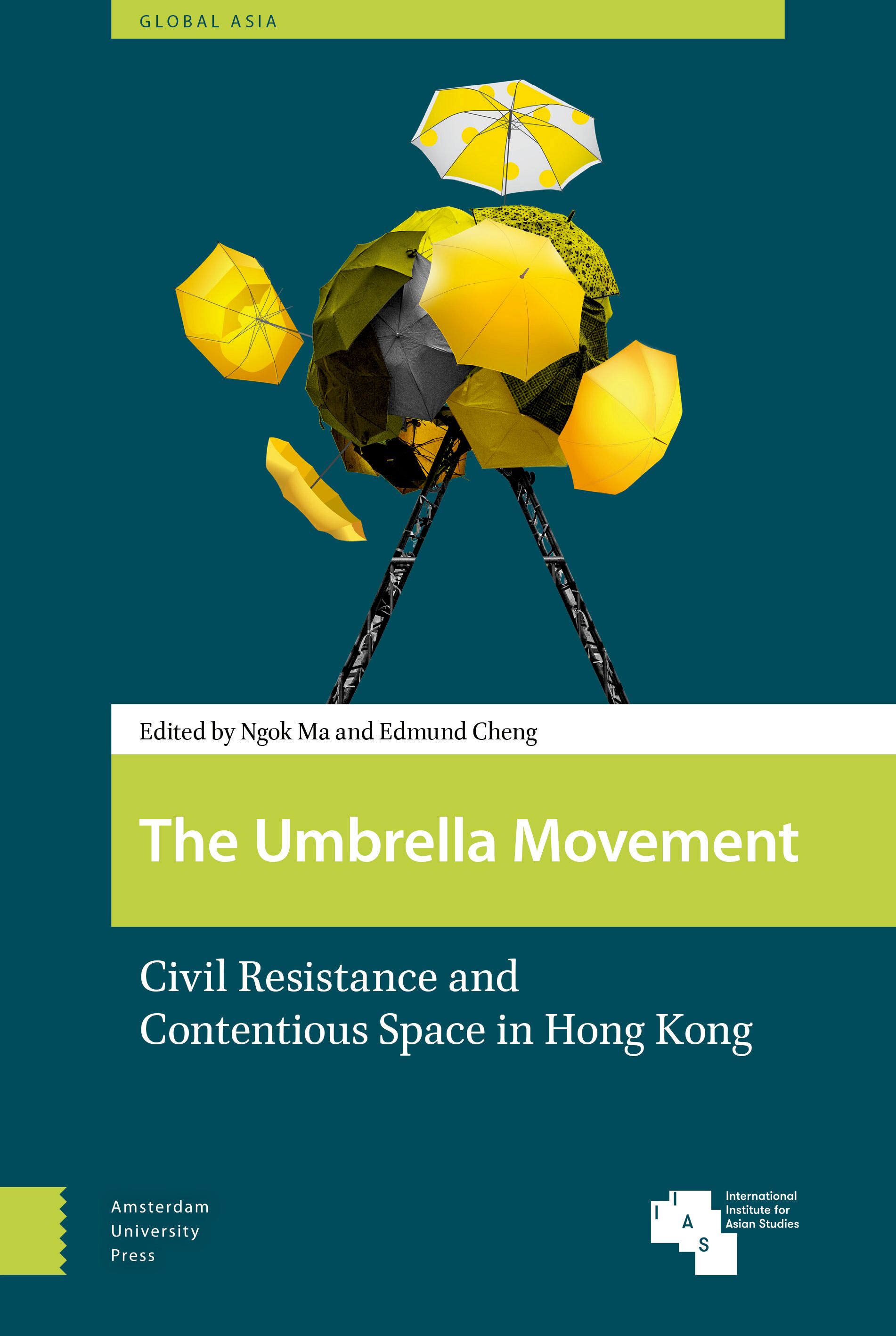
The Umbrella Movement
This volume examines the most spectacular struggle for democracy in post-handover Hong Kong.
eBook

Street Politics in a Hybrid Regime: The Diffusion of Political Activism in Post-colonial Hong Kong
This paper examines the diffusion of activism in post-colonial Hong Kong through the lens of the political regime and eventful analysis. It first reveals the institutional foundations of the hybrid regime that allowed the creation of a nascent movement society. It then explains how the historic 1 July rally in 2003 and a series of critical events since 2006 have led to a shift in scale and the public staging of street politics. A time-series analysis and onsite survey further capture the dynamics that spawned the collective recognition of grievances and reduced participation costs, leading to the Umbrella Movement. While the spontaneous, voluntary and decentralized organizational structure sustained protest momentum, the regime has adopted hybrid strategies to counter-mobilize bottom-up activism. The result is widening contention between the state and civil society and within civil society, or the coexistence of regime instability and regime longevity, a trend that is increasingly common in hybrid regimes encountering mass protests. 本文藉政治体制和历史变迁的视角, 理解香港政治行动在后殖民时期扩散的历程。本文首先揭示混合政体的制度基础是如何产生一个初生社运社会。本文继而分析 2003 年的游行和自 2006 年的一系列关键事件的作用, 在于加剧动员规模并趋生街头政治的公共舞台。透过时间序列和现场民调, 本文更进一步展现这些社运剧目如何降低参与成本、集约不满情绪并促成自发抗争, 最终导致了雨伞运动;与此同时, 政权也完善了相应的策略来应对这一波自下而上的群众动员。其结果是国家与社会之间及公民社会内部的对抗日烈。在遭遇大规模抗议的混合政体, 这种政权不稳和政权坚韧的现象, 将日趋普遍。
Journal Article

The Umbrella Movement
This volume examines the most spectacular struggle for democracy in post-handover Hong Kong. It offers an informed analysis of the political future of Hong Kong and its relations with the authoritarian sovereignty as well as sheds light on the methodological challenges and promises in studying modern-day protests.
eBook
DEMOCRACY STATE AND AUTOCRATIZATION FEATURES IN THE REPUBLIC OF ALBANIA
This article examines the Albanian political regime, as a single case study, for the period 2013-2021, as part of the Western Balkans' experience of democratic backsliding, by investigating the framework of factors linked with the formidable challenge posed by the emergence of a hybrid regime of Albania in these years. For the first time in Albania’s post-communist history, the incumbent Socialist Party of Albania won for the third time in a row the parliamentary elections of April 2021, thus making the bid for the power of the leading opposition parties much harder. This paper uses country-expert statistical data from V-Dem and qualitative data analyses. The study reveals that the over-reliance on strong leaders, the growing government control over public life, fragmentation of the opposition, its lack of appeal, organization, and mobilization, the boycott of the parliamentary mandates, combined with the weakening role of media and distrust of the citizens in democratic institutions, led to the resurgence of the authoritarian mechanisms, making the liberal democratic transformation in Albania an increasingly challenging task.
Journal Article

Decline, Fall, and Resurrection of a Dominant-coalition System: Malaysia's Tortured Partisan Path
Malaysia's 15th general election in November 2022 decisively ended the country's dominant-party system. What might take its place, however, remains hazy-how competitive, how polarized, how politically liberal, and how stable an order might emerge will take some time to become
clear. The opposition Pakatan Harapan (Alliance of Hope), having secured a plurality of seats, but with a sharply pronounced ethnic skew, formed a coalition government with the previously dominant, incumbent Barisan Nasional (National Front) and smaller, regional coalitions. This settlement
resolved an immediate impasse, but relied upon obfuscation of real programmatic, ideological, and identity differences, raising questions of longer-term durability or results. Examining this uncertainty, we broach three broad queries, with resonance well beyond Malaysia. First, we examine
the fragmentation and reconsolidation of Malaysian party politics to explore how party dominance transforms or collapses. Second, we explore the extent to which its dominant party defined or confirmed Malaysia as electoral- authoritarian, and whether we should still consider it so.Third, we
ask what possibilities Malaysia's apparent party-system deinstitutionalization opens up for structural reform beyond parties. Does the deterioration of that system-more than simply the previous dominant party's electoral loss-clear the way for more far-reaching liberalization?
All told, we find that Malaysia's incremental dismantling of its dominant-party system does not also spell the end of electoral authoritarianism. Party and party-system deinstitutionalization leave the system in flux, but illiberal reconsolidation is as plausible as progressive structural
reform.
Journal Article

Postmaterialism and the Perceived Quality of Elections
Inglehart's theory of postmaterialism outlines the influence of intergenerational value change on social change. While the sense of security during a formative period is an essential context for postmaterialist values to be bred among the younger generation in democratic states, social protests and political instability are common in some hybrid regimes. Yet how social protests in a hybrid regime interfere in the building of postmaterialism and its association with other value has been underresearched. Based on the data collected from the seventh wave of the World Value Survey in Hong Kong in 2018 (N = 1,031), this paper investigates the role of a critical event—the Umbrella Movement in 2014—in moderating the relationship between a postmaterialist orientation and perceived quality of elections in Hong Kong. It reveals that the negative relationship between a postmaterialist orientation and perceived quality of Hong Kong's election was stronger among the people who supported and participated in the Umbrella Movement. Moreover, the moderation effect of the Umbrella Movement was stronger among young people. This paper underscores the context of socialisation in influencing both a postmaterialist orientation and intergenerational change occurring during a critical event, which sheds light on the relationship between value change and authoritarian resilience.
Journal Article

Populism and political development in hybrid regimes
Hybrid regimes like electoral authoritarianism blend elements of democratic and non-democratic political practices. Hybrid regimes can develop from populism or can themselves develop populism to explain and justify their democratic shortcomings. Where the latter occurs, populism is a tool of regime stabilisation rather than a form of ‘populism in power’. Moving from using some populist themes to assist regime stabilisation to official populism requires the development of populist discourse to a point where it becomes definitional of what constitutes the relationship between state and society. The paper uses the example of Russia to discuss the uses of populism in a hybrid regime. Populist rhetoric has been used by the Putin regime since the mid-2000s, but was initially balanced by other discourses. This changed during the 2011–2012 electoral cycle as a conservative-traditional populist discourse was deployed that redefined political agency and the relationship of the state to Russian society.
Journal Article

The Institutional Foundation of Countermobilization: Elites and Pro-Regime Grassroots Organizations in Post-Handover Hong Kong
Countermobilization has been a common strategy for autocrats to counteract the threat of opposition. Although the use of countermobilization has drawn scholarly attention, research on the mechanisms that enable countermobilization remains limited. This article underscores the role of political institutions in allowing autocrats to carry out countermobilization through incentivizing elites to serve as a bridge between the state and the masses. Focusing on the case of Hong Kong, where pro-government countermobilization is rising along with pro-democracy challenges against the hybrid regime, the article argues that countermobilization is enabled because societal elites are incentivized through political institutions to organize the masses and develop mobilization capacity through grassroots organizations. Using original elite biographical data and organizational data, the article shows that elites with more ties with grassroots organizations are more likely to remain in office in the Chinese People's Political Consultative Conference. The findings offer an institutionalist explanation of how authoritarian rulers enact countermobilization by leveraging elite intermediaries and their grassroots networks. In this light, political institutions can serve as a conduit for the state to extend social control.
Journal Article