
Catalogue Search | MBRL


Are you sure you want to remove the book from the shelf?

{{itemTitle}}
373
result(s) for
"Hysteria History."
Sort by:


From hysteria to hormones : a rhetorical history
In From Hysteria to Hormones, Amy Koerber examines the rhetorical activity that preceded the early twentieth-century emergence of the word hormone and the impact of this word on expert understandings of women's health.
Shortly after Ernest Henry Starling coined the term \"hormone\" in 1905, hormones began to provide a chemical explanation for bodily phenomena that were previously understood in terms of \"wandering wombs,\" humors, energies, and balance. In this study, Koerber posits that the discovery of hormones was not so much a revolution as an exigency that required old ways of thinking to be twisted, reshaped, and transformed to fit more scientific turn-of-the-century expectations of medical practices. She engages with texts from a wide array of medical and social scientific subdisciplines; with material from medical archives, including patient charts, handwritten notes, and photographs from the Salpêtrière Hospital, where Dr. Jean Charcot treated hundreds of hysteria patients in the late nineteenth century; and with current rhetorical theoretical approaches to the study of health and medicine. In doing so, Koerber shows that the boundary between older, nonscientific ways of understanding women's bodies and newer, scientific understandings is much murkier than we might expect.
A clarifying examination of how the term \"hormones\" preserves key concepts that have framed our understanding of women's bodies from ancient times to the present, this innovative book illuminates the ways in which the words we use today to discuss female reproductive health aren't nearly as scientifically accurate or socially progressive as believed. Scholars of rhetoric, gender studies, and women's health will find Koerber's work provocative and valuable.
eBook


Hysteria complicated by ecstasy
Hysteria Complicated by Ecstasyoffers a rare window into the inner life of a person ordinarily inaccessible to historians: a semiliterate peasant girl who lived almost two centuries ago, in the aftermath of the French Revolution. Eighteen-year-old Nanette Leroux fell ill in 1822 with a variety of incapacitating nervous symptoms. Living near the spa at Aix-les-Bains, she became the charity patient of its medical director, Antoine Despine, who treated her with hydrotherapy and animal magnetism, as hypnosis was then called. Jan Goldstein translates, and provides a substantial introduction to, the previously unpublished manuscript recounting Nanette's strange illness--a manuscript coauthored by Despine and Alexandre Bertrand, the Paris physician who memorably diagnosed Nanette as suffering from \"hysteria complicated by ecstasy.\" While hysteria would become a fashionable disease among urban women by the end of the nineteenth century, the case of Nanette Leroux differs sharply from this pattern in its early date and rural setting.
Filled with intimate details about Nanette's behavior and extensive quotations of her utterances, the case is noteworthy for the sexual references that contemporaries did not recognize as such; for its focus on the difference between biological and social time; and for Nanette's fascination with the commodities available in the region's nascent marketplace. Goldstein's introduction brilliantly situates the text in its multiple contexts, examines it from the standpoint of early nineteenth-century medicine, and uses the insights of Foucault and Freud to craft a twenty-first-century interpretation.
A compelling, multilayered account of one young woman's mental afflictions,Hysteria Complicated by Ecstasyis an extraordinary addition to the cultural and social history of psychiatry and medicine.
eBook

Hysteria in performance
\"The nineteenth-century study of hysteria at the Salpêtrière hospital was a medical project, but also a theatrical one. The hysteric's public appearance was a continual ethical provocation, pointing not only to the vulnerability of her person but to the unstable position of her spectator. Hysteria in Performance sets out to uncover what kind of performance the hysterical attack is, as well as the nature of hysteria in and as performance as it occurred at Salpêtrière. The Salpêtrière documents undeniably show the gravity of the institutional violence committed against its female patients. Using the lenses of performance studies and performance theory, Jenn Cole expresses the overt and subtle damages done to hysterical women in Jean-Martin Charcot's hospital, drawing attention to the hysteric's resistance to these experiences: it is often simply by being herself that the hysteric points to the inherent weaknesses in these systemic modes of violence. In Hysteria in Performance, the hysteric becomes a figure who represents possibilities for ethical encounters within performance and everyday living. Revealing the fraught and exciting nature of theatrical representation, and continually drawing out the dilemmas and unexpected dynamics of witnessing the suffering of others, this groundbreaking study explores how Charcot's findings on hysteria produced a unique mixture of theatre and science that has unexpected things to teach.\"-- Provided by publisher.
BOOK

Dreams: Charcot's Last Words on Hysteria
Jean-Martin Charcot (1825–1893), the leading neurologist of his time, is best remembered for his studies on hysteria presented in clinical lectures at the Paris Salpêtrière hospital. Developing the concept of traumatic male hysteria after accidents in which patients suffered slight physical damage led him to advance a psychological explanation for hysteria. Traumatic hysteria is the context for a close reading of Charcot's \"last words\" based upon a final unpublished lesson in 1893. This case history concerns a seventeen-year-old Parisian artisan whose various signs of hysteria developed following a dream in which he imagined himself the victim of a violent assault. Charcot identifies the dream/nightmare as the \"original\" feature determining traumatic hysteria. The dream sets in motion an overwhelming consciousness followed by a susceptibility to \"autosuggestion\" producing somatic signs of hysteria. Charcot's final lesson on dreams thus culminates his study of the psychological basis of traumatic hysteria.
Journal Article

Medical muses : hysteria in nineteenth-century Paris
Depicts the lives of three French women who became unwitting celebrities after being committed to the hysteria ward of Salpetriلere Hospital in 1870s Paris and delves into the treatment they received from noted French neurologist Jean-Martin Charcot.
Book
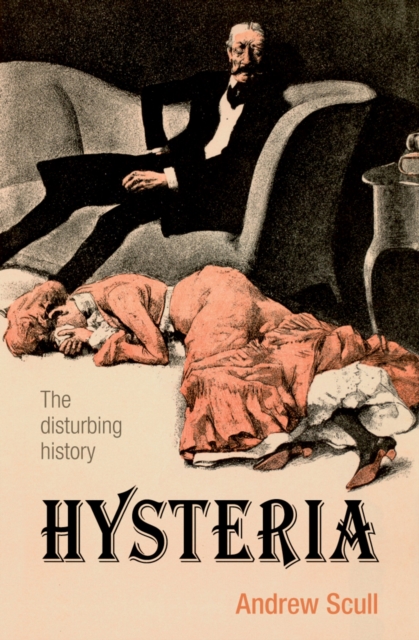
Hysteria : the biography
The nineteenth century seems to have been full of hysterical women - or so they were diagnosed. Where are they now? The very disease no longer exists. In this fascinating account, Andrew Scull tells the story of Hysteria - an illness that disappeared not through medical endeavour, but through growing understanding and cultural change. More generally, it raises the question of how diseases are framed, and how conceptions of a disease change through history. The lurid history of hysteria makes fascinating reading. Charcot's clinics showed off flamboyantly 'hysterical' patients taking on sexualized poses, and among the visiting professionals was one Sigmund Freud. Scull discusses the origins of the idea of hysteria, the development of a neurological approach by John Sydenham and others, hysteria as a fashionable condition, and its growth from the 17th century. Some regarded it as a peculiarly English malady, 'the natural concomitant of England's greater civilization and refinement'. Women were the majority of patients, and the illness became associated with female biology, resulting in some gruesome 'treatments'. Charcot and Freud were key practitioners defining the nature of the illness. But curiously, the illness seemed to swap gender during the First World War when male hysterics frequently suffering from shell shock were also subjected to brutal 'treatments'. Subsequently, the 'disease' declined and eventually disappeared, at least in professional circles, though attenuated elements remain, reclassified for instance as post-traumatic stress disorder. Hysteria: the biography is part of the Oxford series, Biographies of Diseases, edited by William and Helen Bynum. In each individual volume an expert historian or clinician tells the story of a particular disease or condition throughout history - not only in terms of growing medical understanding of its nature and cure, but also shifting social and cultural attitudes, and changes in the meaning of the name of the disease itself.
eBook

Manufacturing hysteria : a history of scapegoating, surveillance, and secrecy in modern America
In this wide-ranging history, Jay Feldman takes us from the run-up to World War I and its anti-German hysteria through the September 11 attacks and Arizona's current anti-immigration movement. What we see is a striking pattern of elected officials and private citizens alike using the American people's fears and prejudices to isolate minorities, silence dissent, and stem the growth of civil rights and liberties. Whether it's the post-World War I persecution of radicals; the Depression-era deportations of Mexican immigrants and Mexican-Americans; the World War II internment of 112,000 ethnic Japanese along with thousands of German and Italian aliens; the Cold War campaigns against Communists, gays, and civil-rights activists; or the Vietnam-era COINTELPRO operations, we see how economic, military, and political crises have been used to curtail the rights of supposedly subversive minorities. Rather than treating this history as a series of discrete moments, Feldman shows how these tendencies have been part of a continuous vein that runs through American life, and gives us a potent reminder of how, even in America, democracy and civil liberties are never guaranteed.--From publisher description.
Book

‘Shell shock’ Revisited: An Examination of the Case Records of the National Hospital in London
During the First World War the National Hospital for the Paralysed and Epileptic, in Queen Square, London, then Britain’s leading centre for neurology, took a key role in the treatment and understanding of shell shock. This paper explores the case notes of all 462 servicemen who were admitted with functional neurological disorders between 1914 and 1919. Many of these were severe or chronic cases referred to the National Hospital because of its acknowledged expertise and the resources it could call upon. Biographical data was collected together with accounts of the patient’s military experience, his symptoms, diagnostic interpretations and treatment outcomes. Analysis of the notes showed that motor syndromes (loss of function or hyperkinesias), often combined with somato-sensory loss, were common presentations. Anxiety and depression as well as vegetative symptoms such as sweating, dizziness and palpitations were also prevalent among this patient population. Conversely, psychogenic seizures were reported much less frequently than in comparable accounts from German tertiary referral centres. As the war unfolded the number of physicians who believed that shell shock was primarily an organic disorder fell as research failed to find a pathological basis for its symptoms. However, little agreement existed among the Queen Square doctors about the fundamental nature of the disorder and it was increasingly categorised as functional disorder or hysteria.
Journal Article