
Catalogue Search | MBRL


Are you sure you want to remove the book from the shelf?

{{itemTitle}}
6,108
result(s) for
"INCENTIVES FOR TEACHERS"
Sort by:

Teacher Merit Pay: A Meta-Analysis
Empirical research investigating the association between teacher pay incentives and student test scores has grown rapidly over the past decade. To integrate the findings from these studies and help inform the debate over teacher merit pay, this meta-analysis synthesizes effect sizes across 37 primary studies, 26 of which were conducted in the United States. Among the U.S. base studies, the results suggest that the effect of teacher ment pay on student tes scores is positive and statistically significant (0.043 standard deviation). This summary effect varies by program design and study context, suggesting that teacher merit pay has the potential to improve student test scores in som contexts but researchers and policymakers should pay close attention to program design and implementation.
Journal Article

Current Situation of the Development of Primary School Teachers in Vietnam: A Case Study of An Giang Province, Vietnam Country
Background/purpose. This study explores the current status of teacher workforce management in An Giang province, Vietnam, in the context of national education reform. It focuses on five critical domains: teacher planning, recruitment and deployment, professional development, supervision and evaluation, and incentive policies. Materials/methods. A quantitative survey was conducted with 360 educational staff across the province. The instrument measured perceptions and practices related to teacher management across the five domains. Results. Findings indicate strong implementation in teaching supervision (M = 3.84) and professional training (M = 3.79). However, relatively lower scores were recorded for technology training (M = 3.57) and incentive policies (M = 3.55), highlighting gaps in digital skill development and motivation strategies. Conclusion. While the overall teacher management framework in An Giang is functioning effectively, disparities in digital training and incentive systems reveal areas needing policy attention. The study offers targeted recommendations to enhance teacher management in alignment with Vietnam’s broader education reform goals.
Journal Article

Optimization of Teacher Incentive Mechanism and Policy Supply in Rural China Based on Judgment Matrix
With the continuous development of artificial intelligence technology, rural education is crucial in Chinese education, and the problem of rural teachers’ incentive mechanisms directly affects the quality of rural education. Firstly, according to the incentive mechanism of rural teachers, quantitative and qualitative research on the incentive mechanism of teachers in rural areas using the fuzzy evaluation method is proposed. In the fuzzy judgment matrix, each level is determined based on the decomposition of the previous level, and the results of the previous level are determined based on the calculation results of the next level. Then, using the relevant motivation theory and questionnaires, the principal and teachers of the school were investigated to understand the current situation and main problems of the construction of teachers’ motivation mechanism in the junior high school of Un Dong Town, Duyun City. Using the fuzzy evaluation method to analyze the difference between the actual feeling and expected demand of teachers’ motivation, the result shows that the difference between salary and promotion is 1.22 and 1.19, which means that the difference between salary and promotion is bigger in the motivation mechanism of rural teachers, and we should focus on reforming the salary scheme and implementing the promotion training mechanism of rural teachers. This study confronts the problem of rural teachers’ incentive mechanism, which has good theoretical and practical guidance for improving education quality and so on.
Journal Article

Measuring quality for use in incentive schemes: The case of \shrinkage\ estimators
Researchers commonly \"shrink\" raw quality measures based on statistical criteria. This paper studies when and how this transformation's statistical properties would confer economic benefits to a utility-maximizing decision-maker across common asymmetric information environments. I develop the results for an application measuring teacher quality. The presence of a systematic relationship between teacher quality and class size could cause the data transformation to do either worse or better than the untransformed data. I use data from Los Angeles to confirm the presence of such a relationship and show that the simpler raw measure would outperform the one most commonly used in teacher incentive schemes.
Journal Article

Teacher compensation systems in the United States K-12 public school system
This paper provides a review of the current teacher compensation system and examines the structure of teacher compensation in the U.S. K-12 public education system. Teacher salaries are largely set by schedules that are neither performancerelated nor market-driven, and have significant consequences on school staffing and workforce quality. The second section summarizes the recent literature on compensation reform, with an emphasis on studies using experimental or quasiexperimental designs to evaluate the impact of programs on student achievement and teacher outcomes. A final section offers observations on prospects for future research and reforms.
Journal Article

Improving education in the developing world
Across a range of contexts, reductions in education costs and provision of subsidies can boost school participation, often dramatically. Decisions to attend school seem subject to peer effects and time-inconsistent preferences. Merit scholarships, school health programs, and information about returns to education can all cost-effectively spur school participation. However, distortions in education systems, such as weak teacher incentives and elite-oriented curricula, undermine learning in school and much of the impact of increasing existing educational spending. Pedagogical innovations designed to address these distortions (such as technology-assisted instruction, remedial education, and tracking by achievement) can raise test scores at a low cost. Merely informing parents about school conditions seems insufficient to improve teacher incentives, and evidence on merit pay is mixed, but hiring teachers locally on short-term contracts can save money and improve educational outcomes. School vouchers can cost-effectively increase both school participation and learning.
Journal Article
Teacher reform in Indonesia
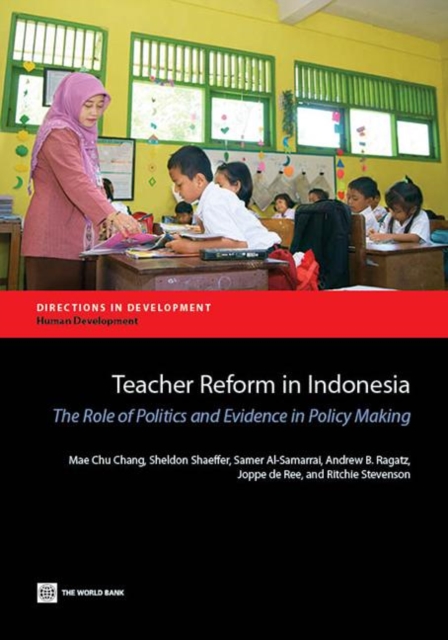
The evolving nature of education system and the increasing complex challenges facing individual teachers and the teaching profession as a whole are of immense importance in Indonesia. The Indonesian teacher reform was designed and is being implemented as a genuinely comprehensive program. From its beginning, it has therefore considered and responded to all of the necessary stages of an effective teacher management and development process. The importance of this reform is further underlined by the efforts made by the Ministry of education and culture, supported by the World Bank, to examine following points: (1) the quality of existing (pre-reform) and new (post-reform) teachers in the system; (2) the promotion of higher standards and enhanced competencies for teachers through more effective processes of recruitment, teacher education, certification, remuneration and other incentives, ongoing professional development and support, and career promotion or progression; and (3) the impact of these actions on teacher behavior and knowledge, student achievement, and the financing and efficiency of the education system. Thus, the World Bank team, with the Indonesian Ministry of national education, designed and managed a wide range of research projects and program support activities that, taken together, tell the story of the design, implementation, and impact of this reform. In order to reduce the budgetary impact of the certification program, the inefficiencies associated with teacher hiring and deployment need to be addressed. Attention will also need to be paid to staffing standards in small schools which are a key driver of low student-teacher ratios. But the incentive of both professional status and professional pay is now attracting more candidates into teacher education at the expense of other fields. The original intention of the teacher law was to put in place a framework of effective policies and procedures which will both assure the quality of the process and its products and encourage continuing professional development.
eBook

Decentralized decision-making in schools
Are school-based management reforms improving education? This book analyzes the theory and evidence behind decentralized decision-making in schools worldwide.
Decentralized Decision-Making in Schools explores the impact of school-based management (SBM) reforms across diverse countries. It examines how empowering principals and teachers, and strengthening parental involvement, affects educational outcomes. The authors review over 20 country experiences, providing insights into the effectiveness of SBM in various contexts.
* Discover the key factors for successful SBM implementation.
* Understand the impact of SBM on student achievement and attendance.
* Learn how to design effective education projects with decentralized authority.
This insightful analysis is for education officials, policymakers, and researchers seeking evidence-based strategies for improving school governance and student outcomes.
eBook

Strategies for Sustainable Financing of Secondary Education in Sub-Saharan Africa : Appendix 5 - Costs and Financing of Secondary Education in Zambia, A Situational Analysis
This thematic study discusses strategies for sustainable financing of secondary education in Sub-Saharan Africa. The report provides insight into options for financing the expansion of secondary education and training in Africa. This comes with a hefty price tag and points to the need to undertake fundamental reforms swiftly. This publication messages are clear: secondary education and training in Sub-Saharan Africa faces the challenge of improved efficiency and improved quality simultaneously with a fast growing demand. Sustainable financing will also require more effective public-private partnerships, because governments have many priorities and do not have a lot of room for significant additional public funding of post-primary systems. Educational reforms are needed to expand enrollment in secondary schooling in affordable ways. These reforms will contribute to poverty reduction by increasing the levels of knowledge, skills, and capability; diminishing inequalities in access that limit social mobility and skew income distribution; and contributing to the achievement of the Millennium Development Goals (MDGs) that relate to education.
Publication

Great teachers
The seven million teachers of Latin America and the Caribbean (LAC) are the critical actors in the region's efforts to improve education quality and raise student learning levels, which lag far behind those of OECD countries and East Asian countries such as China. This book documents the high economic stakes around teacher quality, benchmarks the current performance of LAC's teachers, and delineates the key issues. These include low standards for entry into teacher training, poor quality training programs that are detached from the realities of the classroom, unattractive career incentives, and weak support for teachers once they are on the job. New research conducted for this report in close to 15,000 classrooms in seven different LAC countries - the largest cross-country study of this kind to date - provides a first-ever insight into how the region's teachers perform inside the classroom. It documents that the average teacher in LAC loses the equivalent of one day of instructional time per week because of inadequate preparation, excessive time on administration (taking attendance, passing out papers) and a surprisingly high share of time physically absent from the classrooms where they should be teaching. Teachers also make limited use of available learning materials, espcially those using information and communications technology (ICT), and are unable to keep the majority of their students engaged. The book sets out the three priority lines of reform needed to produce great teachers in LAC: policies to recruit better teachers; programs to groom teachers and improve their skills once they are in service; and stronger incentives to motivate teachers to perform their best throughout their career. In every area, the book distills the latest evidence from inside and outside the region to provide practical guidance to policymakers in the design of effective programs and sustainable reforms. A final chapter analyzes the politics of recent major teacher reforms in Chile, Peru, Ecuador and Mexico, chronicling the prominent role of teachers' unions and the political and communications strategies that have underpinned successful reforms.
eBook