
Catalogue Search | MBRL


Are you sure you want to remove the book from the shelf?

{{itemTitle}}
41,193
result(s) for
"INDUSTRIAL PROJECTS"
Sort by:


A Risk-Based System Dynamics Model for Sustainable Expert Workforce Allocation in Industrial Multi-Project Environments
This study creates and refines a risk–effectiveness–integrated dynamic simulation framework that brings together risk and effectiveness factors affecting qualified workforce allocation in multi-project contexts, specifically in the construction of industrial production facilities. Based on a case study of three overlapping projects in West Java, Indonesia, this study examines the requirements for an expert workforce across the Engineering, Procurement, and Construction (EPC) phases. Conventional mitigation measures generally assume that a qualified expert workforce is immediately available. However, hiring the right personnel with specific qualifications for a project takes time. To fill this gap, this paper presents a system dynamics-based model that explicitly integrates quantified project risks and execution effectiveness to determine expert workforce requirements at the multi-project level. This aspect is often addressed implicitly in the existing workforce planning approaches. This mixed-methods strategy includes a literature review, variable validation, simulation modeling, and case analysis. The results show that workforce planning based on integrated risk and effectiveness factors significantly improves project delivery by anticipating expert workforce shortages and reducing the need for reactive solutions. Model validation using real project data demonstrates that the simulated expert workforce demand reproduces both the average behavior and variability observed in real-world practice, satisfying quantitative behavioral validation criteria across projects and the EPC phases. The model contributes to sustainability by enhancing long-term workforce resilience, reducing resource waste, and supporting more efficient industrial project delivery.
Journal Article

Project finance in construction : a structured guide to assessment
This work provides a structured process for determining the commercial viability of large construction projects - from gas pipelines and bridges to hospitals and schools - procured with project finance (PF). With this guide, readers can develop their own assessment structures as required using the assessment mechanism described.
Book

The wreckage of intentions : projects in British culture, 1660-1730
The seventeenth and eighteenth centuries in Britain saw the proposal of so many endeavors called \"projects\"-a catchphrase for the daring, sometimes dangerous practice of shaping the future-that Daniel Defoe dubbed his era a \"Projecting Age.\" These ideas spanned a wide variety of scientific, technological, and intellectual interventions intended for the betterment of England. But for all the fanfare surrounding them, few such schemes actually materialized, leaving scores of defunct visions, from Defoe's own attempt to farm cats for perfume, to Mary Astell's proposal to charter a college for women, to countless ventures for improving land, streamlining government, and inventing new consumer goods. Taken together, these failed plans form a compelling alternative history of a Britain that might have been. The Wreckage of Intentions offers a comprehensive and critical account of projects, exploring the historical memory surrounding these concrete yet incomplete efforts to advance British society during a period defined by revolutions in finance and agriculture, the rise of experimental science, and the establishment of constitutional monarchy. Using methods of literary analysis, David Alff shows how projects began as written proposals, circulated as print objects, spurred physical undertakings, and provoked responses in the realms of poetry, fiction, and drama. Mapping this process discloses the ways in which eighteenth-century authors applied their faculties of imagination to achieve finite goals and, in so doing, devised new ways of seeing the world through its future potential. Approaching old projects through the language, landscapes, data, and personas they left behind, Alff contends this vision was, and remains, vital to the functions of statecraft, commerce, science, religion, and literature.
eBook

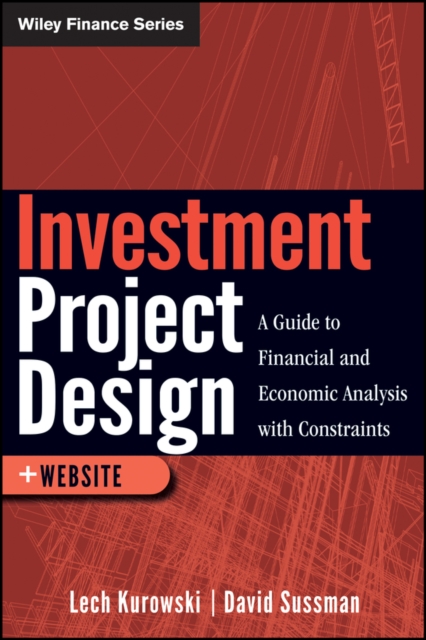
Investment project design
Make more informed project investment decisions by knowing what issues to examine in the planning process and how to analyze their impacts Poor or insufficient planning is primarily responsible for the inordinate number of idle and rusting capital facilities around the world, with investment decisions often made on the basis of either intuition or.
eBook

Project Management
What has been supported by advocates of professional project work for years has now become a reality in the daily routines of many employees and managers: highly project-oriented work structures. Consequently, professionalised project management competence is becoming increasingly vital to business success.
Following the five project management phases of DIN 69901:2009 and supplemented by chapters on cross-phase competencies and agile methods, this book offers a clear and professionally sound presentation of the modernised ICB 4.0 framework (effective from January 1, 2024). Its structured content, illustrated by a consistent project example, not only guides readers but also ensures they are well-prepared to meet the IPMA ICB 4.0 examination requirements.
This book equips anyone seeking to engage in professional project management with the knowledge and tools needed to successfully apply current best practices.
eBook

