
Catalogue Search | MBRL


Are you sure you want to remove the book from the shelf?

{{itemTitle}}
104,757
result(s) for
"INDUSTRIAL RELATION"
Sort by:

Trade Unions in China
The transition from a command economy to a capitalist market economy has entirely altered the industrial landscape in which Chinese trade unions have to operate. This book focuses on how the All China Federation of Trade Unions (ACFTU) is reforming under current conditions and demonstrates that labour unrest is the principal driving force behind trade union reform in China. Presenting case studies where reform has been largely inspired by the pressure of worker activism from below, the book examines three crucial areas of trade union activity - collective bargaining, labour rights and trade union direct elections - against the background of China's turbulent industrial relations history.
As well as exploring the principal direction of trade union reform, which has been to channel disputes into juridical forms of dispute resolution sponsored by the State, the book also highlights key examples of more innovative experiments in trade union work. These represent a clear break with past practice and, crucially, have been recognised by both the union and Party leaderships as models for future trade union policy and practice. The book provides both a timely reference point and highlights the road to effective trade union solidarity.
eBook

CONFRONTING RACE AND OTHER SOCIAL IDENTITY ERASURES
Despite the salience of racism and other “isms” woven into the fabric of US society, there is a dearth of industrial relations (IR) scholarship that engages critical race and intersectional theory (CRT/I) to deeply understand how structural racism and other social identity-based systems of oppression govern labor and employment systems. The authors call for the incorporation of CRT/I into IR to address the erasure of vital counter-narratives and to expand our empirical cases for labor and employment research. Focusing on leading scholarship on worker organizing, the authors confront white dominance in our research questions, methodologies, and analyses to illustrate how traditional “color-blind” and meritocracy-based IR theories lead to the exclusion of relevant knowledge. In an era of heightened public discourse and worker uprisings in response to deep-rooted systemic inequities, critical industrial relations research is vital to the field’s relevance and its expertise in explaining the nature and consequences of contemporary labor contestations and their impact on the future of the labor movement.
Journal Article

Moral Communities
This valuable study offers a rare perspective on the social and political crisis in late Imperial Russia. Mark D. Steinberg focuses on employers, supervisors, and workers in the printing industry as it evolved from a state-dependent handicraft to a capitalist industry. He explores class relations and the values, norms, and perceptions with which they were made meaningful. Using archival and printed sources, Steinberg examines economic changes, workplace relations, professional organizations, unions, strikes, and political activism, as well as shop customs, trade festivals, and everyday life. In rich detail he describes efforts to build a community of masters and men united by shared interests and moral norms. The collapse of this ideal in the face of growing class conflict is also explored, giving a full view of an important moment in Russian history. This title is part of UC Press's Voices Revived program, which commemorates University of California Press's mission to seek out and cultivate the brightest minds and give them voice, reach, and impact. Drawing on a backlist dating to 1893, Voices Revived makes high-quality, peer-reviewed scholarship accessible once again using print-on-demand technology. This title was originally published in 1992. Many titles in the Voices Revived program are also newly available as ebooks, offered at a discounted price to support wider access to scholarly work.
eBook

Revolting Subjects
Revolting Subjects is a groundbreaking account of social abjection in contemporary Britain, exploring how particular groups of people are figured as revolting and how they in turn revolt against their abject subjectification. The book utilizes a number of high-profile and in-depth case studies - including 'chavs', asylum seekers, Gypsies and Travellers, and the 2011 London riots - to examine the ways in which individuals negotiate restrictive neoliberal ideologies of selfhood. In doing so, Tyler argues for a deeper psychosocial understanding of the role of representational forms in producing marginality, social exclusion and injustice, whilst also detailing how stigmatization and scapegoating are resisted through a variety of aesthetic and political strategies. Imaginative and original, Revolting Subjects introduces a range of new insights into neoliberal societies, and will be essential reading for those concerned about widening inequalities, growing social unrest and social justice in the wider global context.
eBook
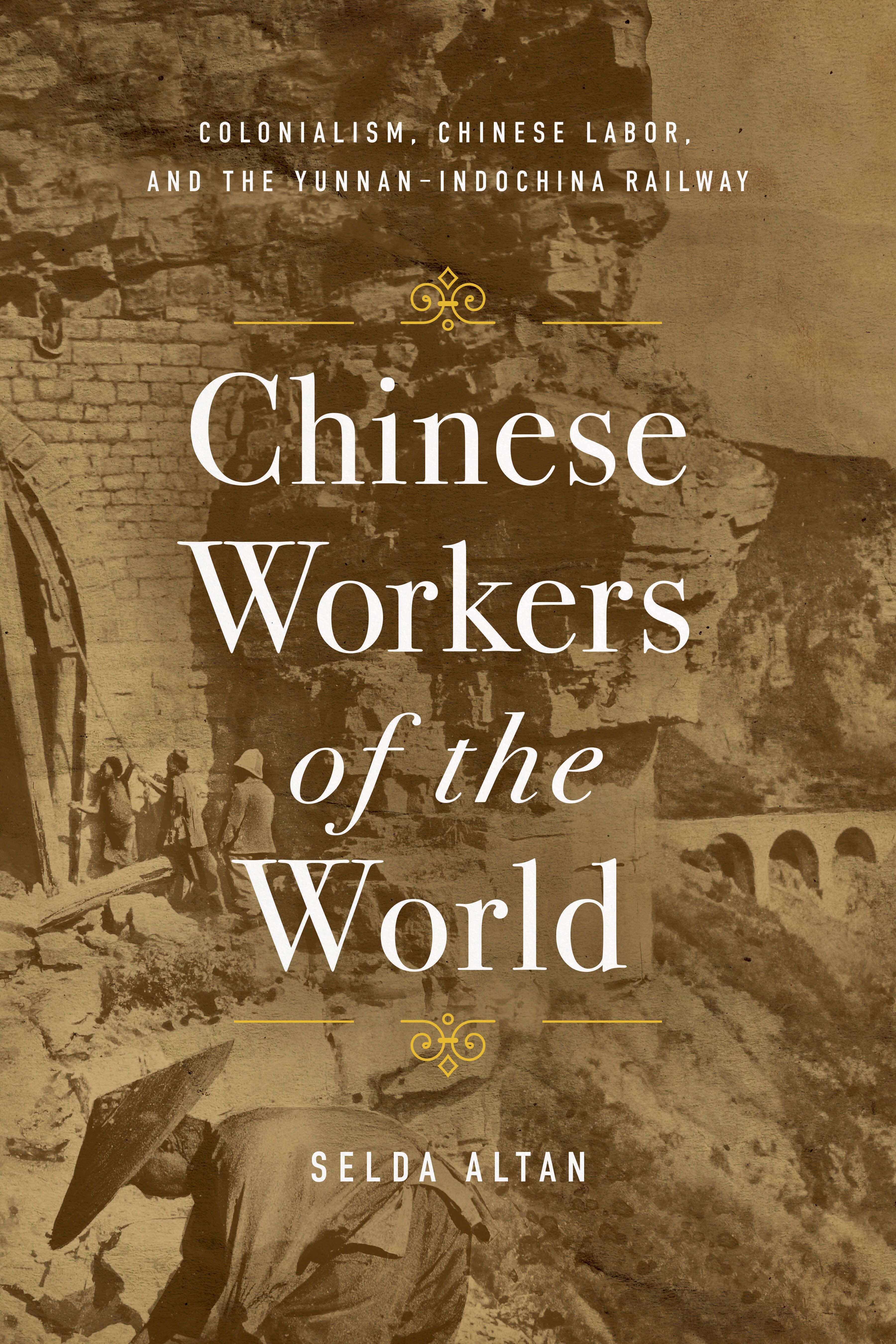
Chinese Workers of the World
Chinese workers helped build the modern world. They labored on New World plantations, worked in South African mines, and toiled through the construction of the Panama Canal, among many other projects. While most investigations of Chinese workers focus on migrant labor, Chinese Workers of the World explores Chinese labor under colonial regimes within China through an examination of the Yunnan-Indochina Railway, constructed between 1898–1910. The Yunnan railway—a French investment in imperial China during the age of \"railroad colonialism\"—connected French-colonized Indochina to Chinese markets with a promise of cross-border trade in tin, silk, tea, and opium. However, this ambitious project resulted in fiasco. Thousands of Chinese workers died during the horrid construction process, and costs exceeded original estimates by 74%.
Drawing on Chinese, French, and British archival accounts of day-to-day worker struggles and labor conflicts along the railway, Selda Altan argues that long before the Chinese Communist Party defined Chinese workers as the vanguard of a revolutionary movement in the 1920s, the modern figure of the Chinese worker was born in the crosscurrents of empire and nation in the late nineteenth century. Yunnan railway workers contested the conditions of their employment with the knowledge of a globalizing capitalist market, fundamentally reshaping Chinese ideas of free labor, national sovereignty, and regional leadership in East and Southeast Asia.
eBook

Against the Law
This study opens a critical perspective on the slow death of socialism and the rebirth of capitalism in the world's most dynamic and populous country. Based on remarkable fieldwork and extensive interviews in Chinese textile, apparel, machinery, and household appliance factories, Against the Law finds a rising tide of labor unrest mostly hidden from the world's attention. Providing a broad political and economic analysis of this labor struggle together with fine-grained ethnographic detail, the book portrays the Chinese working class as workers' stories unfold in bankrupt state factories and global sweatshops, in crowded dormitories and remote villages, at street protests as well as in quiet disenchantment with the corrupt officialdom and the fledgling legal system.
eBook

Confronting Dystopia
InConfronting Dystopia, a distinguished group of scholars analyze the implications of the ongoing technological revolution for jobs, working conditions, and income. Focusing on the economic and political implications of AI, digital connectivity, and robotics for both the Global North and the Global South, they move beyond diagnostics to seek solutions that offer better lives for all. Their analyses of the challenges of technology are placed against the backdrop of three decades of rapid economic globalization. The two in tandem are producing the daunting challenges that analysts and policymakers must now confront.
The conjuncture of recent advances in AI, machine learning, and robotization portends a vast displacement of human labor, argues the editor, Eva Paus. AsConfronting Dystopiashows, we are on the eve of-indeed we are already amid-a technological revolution that will impact profoundly the livelihoods of people everywhere in the world.
Across a broad and deep set of topics, the contributors explore whether the need for labor will inexorably shrink in the coming decades, how pressure on employment will impact human well-being, and what new institutional arrangements-a new social contract, for example, will be needed to sustain livelihoods. They evaluate such proposals as a basic income, universal social services, and investments that address key global challenges and create new jobs.
Contributors:Vandana Chandra, Mignon Duffy, Dieter Ernst, Vincent Ferraro, Martin Ford, Juliana Martinez Franzoni, Irmgard Nubler, Robert Pollin, David Rueda, Diego Sanchez-Ancochea, Guy Standing, Stefan Thewissen
eBook

Trade Unions and the State
The collapse of Britain's powerful labor movement in the last quarter century has been one of the most significant and astonishing stories in recent political history. How were the governments of Margaret Thatcher and her successors able to tame the unions? In analyzing how an entirely new industrial relations system was constructed after 1979, Howell offers a revisionist history of British trade unionism in the twentieth century. Most scholars regard Britain's industrial relations institutions as the product of a largely laissez faire system of labor relations, punctuated by occasional government interference. Howell, on the other hand, argues that the British state was the prime architect of three distinct systems of industrial relations established in the course of the twentieth century. The book contends that governments used a combination of administrative and judicial action, legislation, and a narrative of crisis to construct new forms of labor relations. Understanding the demise of the unions requires a reinterpretation of how these earlier systems were constructed, and the role of the British government in that process. Meticulously researched, Trade Unions and the State not only sheds new light on one of Thatcher's most significant achievements but also tells us a great deal about the role of the state in industrial relations.
eBook

Nice Work If You Can Get It
2009 Choice Outstanding Academic TitleIs job insecurity the new norm? With fewer and fewer people working in steady, long-term positions for one employer, has the dream of a secure job with full benefits and a decent salary become just that - a dream?In Nice Work If You Can Get It, Andrew Ross surveys the new topography of the global workplace and finds an emerging pattern of labor instability and uneven development on a massive scale. Combining detailed case studies with lucid analysis and graphic prose, he looks at what the new landscape of contingent employment means for workers across national, class, and racial lines - from the emerging creative class of high-wage professionals to the multitudes of temporary, migrant, or low-wage workers. Developing the idea of precarious livelihoods to describe this new world of work and life, Ross explores what it means in developed nations - comparing the creative industry policies of the United States, United Kingdom, and European Union, as well as developing countries - by examining the quickfire transformation of China's labor market. He also responds to the challenge of sustainability, assessing the promise of green jobs through restorative alliances between labor advocates and environmentalists.Ross argues that regardless of one's views on labor rights, globalization, and quality of life, this new precarious and indefinite life,and and the pitfalls and opportunities that accompany it is likely here to stay and must be addressed in a systematic way. A more equitable kind of knowledge society emerges in these pages - less skewed toward flexploitation and the speculative beneficiaries of intellectual property, and more in tune with ideals and practices that are fair, just, and renewable.
eBook
FROM BREAD AND ROSES TO #METOO
A central assumption in industrial relations theory is that conflict is rooted in an enduring difference between the interests of labor and management. In recent years, the reality of work has changed for many, and scholarship has called attention to overlooked dimensions of conflict that depart from this assumption. The authors account for these developments with the concepts of multiplicity and distance. Multiplicity means that a broad range of actors bring diverse goals, tied to identities and values in addition to interests, to the employment relationship. The competing and fluid motivations that stem from these goals alter how actors individually and collectively name conflict. Distance reflects a growing rift between those who control work and those who labor, rooted in prevailing organizational forms and practices and the transformation of institutions. Distance alters actors’ interdependence and their perceived and actual power in addressing conflict. From these observations, the authors derive propositions suggesting directions for research and theory regarding conflict and the institutions through which actors balance goals.
Journal Article