
Catalogue Search | MBRL


Are you sure you want to remove the book from the shelf?

{{itemTitle}}
132
result(s) for
"Icelandic fiction"
Sort by:
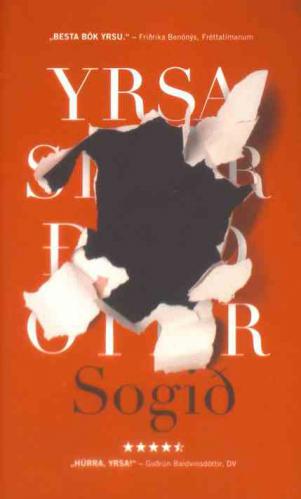
POLITICS OF FORGETTING AND COUNTER MEMORY IN CONTEMPORARY ICELANDIC LITERATURE: SJÓN AND RED MILK
This article discusses the trajectory of cultural memory in post-war Icelandic literature and culture. It draws on works from literary scholars and historians who have shown the difference between the memorialization of World War II in Iceland and elsewhere in Europe. It shows how the lack of social and cultural discussion of the war is influenced by different political and social forces and how it has been limited in scope and ambition. The article shows that there are, however, exceptions to this and takes as its case study the work of the Icelandic writer shown and in particular his novel Red Milk which tells the story of one young Icelandic man’s fascination with Neo-Nazism in the aftermath of World War II.
Journal Article
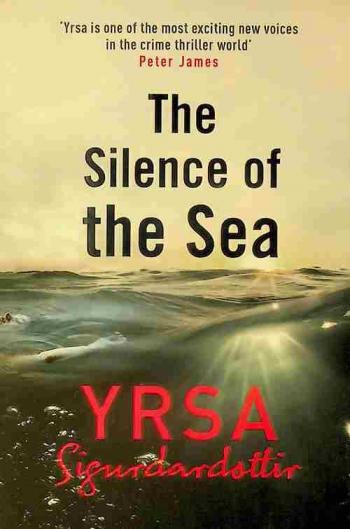
The silence of the sea
A luxury yacht arrives in Reykjavik harbour with nobody on board. What has happened to the crew, and to the family who were on board when it left Lisbon? Thora Gudmundsdottir is hired by the young father's parents to investigate, and is soon drawn deeper into the mystery. What should she make of the rumours saying that the vessel was cursed, especially given that when she boards the yacht she thinks she sees one of the missing twins? Where is Karitas, the glamorous young wife of the yacht's former owner? And whose is the body that has washed up further along the shore?
Book

Out of the Blue
This extraordinary collection, the first anthology of Icelandic short fiction published in English translation, features work by twenty of Iceland's most popular and celebrated living authors-including Andri Snær Magnason, Jón Kalman Stefánsson, Kristín Ómarsdóttir, and Auður Jónsdóttir-granddaughter of Halldór Laxness, who won the 1955 Nobel Prize in Literature.
Celebrated in Europe and Scandinavia but less known in the English-speaking world, these writers traverse realms of darkness and light that will be familiar to readers who have fallen under the spell of Scandinavian fiction. While uniquely Icelandic in topography and tenor, with a touch of the island's supernatural charm, the stories traffic in the enduring and universal complexities of human nature. Here is a fictional universe where the ghosts of Vikings and spirits tread, volcanoes grumble underfoot, and writers trip the Northern Lights fantastic across the landscape of the Icelandic imagination.
At long last, readers can enjoy award-winning stories now expertly rendered into English by the country's most renowned translators. In \"Killer Whale\" a father contemplates euthanasia for a terminally ill child, in \"Self Portrait\" a vacationing family in Spain crosses paths with migrants, in \"Escape for Men\" a woman searches for an ex-lover in the South of France, and in \"The Most Precious Secret\" the nature of artists and the art world is mercilessly revealed. Both the Viking myths of Iceland's forefathers and the cutting-edge modern world of the country today are brilliantly alive in these remarkable and original stories.
This collection is an excursion to an island where almost two million travelers descend yearly on a population of 345 thousand natives. Iceland is the place Björk calls home, the location whereGame of Throneswas filmed-a place with open lava fields, glaciers, and iceberg lagoons among other natural wonders that is becoming one of the \"hottest\" tourist destinations on earth.
Out of the Bluetransports readers to Iceland's timeless and magical island of Vikings and geographical wonders, and it promises to be a seminal collection that will define Icelandic literature in translation for decades to come.
Contributors: Auður Ava Olafsdóttir, Kristín Eiríksdóttir, Þórarinn Eldjárn, Gyrðir Elíasson, Einar Örn Gunnarsson, Ólafur Gunnarsson, Einar Már Guðmundsson, Auður Jónsdóttir, Gerður Kristný, Andri Snær Magnason, Óskar Magnússon, Bragi Ólafsson, Kristín Ómarsdóttir, Óskar Árni Óskarsson, Magnús Sigurðsson, Jón Kalman Stefánsson, Ágúst Borgþór Sverrisson, Guðmundur Andri Thorsson, Þórunn Erlu-Valdimarsdóttir, Rúnar Helgi Vignisson.
eBook
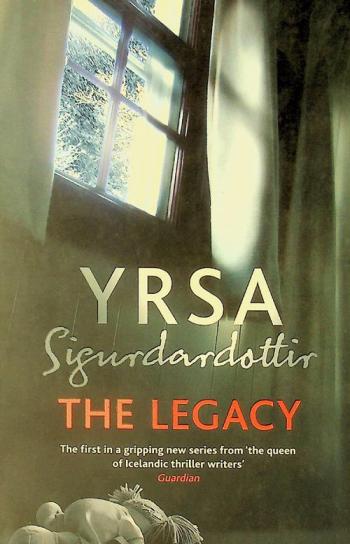
The legacy
Detective Huldar is out of his depth. His first murder case is like nothing he's seen before - a bizarre attack on a seemingly blameless woman. The only evidence is a list of numbers found at the scene, and the testimony of the victim's eleven-year-old daughter, who isn't talking. While his team attempt to crack the code, Huldar turns to child psychologist Freyja for her expertise with traumatised young people. Because time is running out... and the one thing they know for certain is that the murderer will strike again.
Book
POLITICS OF FORGETTING AND COUNTER MEMORY IN CONTEMPORARY ICE-LANDIC LITERATURE: SJÓN AND RED MILK
This article discusses the trajectory of cultural memory in post-war Icelandic literature and culture. It draws on works from literary scholars and historians who have shown the difference between the memorialization of World War II in Iceland and elsewhere in Europe. It shows how the lack of social and cultural discussion of the war is influenced by different political and social forces and how it has been limited in scope and ambition. The article shows that there are, however, exceptions to this and takes as its case study the work of the Icelandic writer shown and in particular his novel Red Milk which tells the story of one young Icelandic man's fascination with Neo-Nazism in the aftermath of World War П.
Journal Article
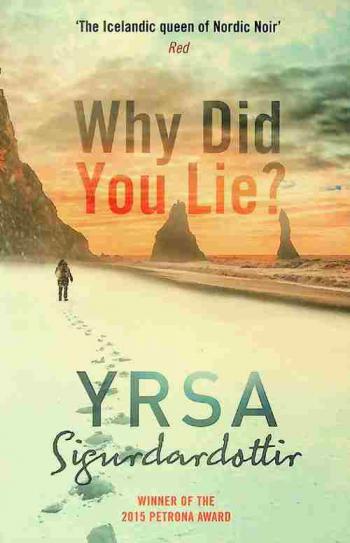
Why did you lie ?
A journalist on the track of an old case attempts suicide. An ordinary couple return from a house swap in the states to find their home in disarray and their guests seemingly missing. Four strangers struggle to find shelter on a windswept spike of rock in the middle of a raging sea. They have one thing in common: they all lied. And someone is determined to punish them.... Why Did You Lie? is a terrifying tale of long-delayed retribution from Iceland's queen of suspense.
Book

Old Norse Folklore
The medieval northern world consisted of a vast and
culturally diverse region both geographically, from roughly
Greenland to Novgorod and culturally, as one of the last areas of
Europe to be converted to Christianity . Old Norse
Folklore explores the complexities of thisfascinating world in
case studies and theoretical essays that connect orality and
performance theory to memory studies, and myths relating to
pre-Christian Nordic religion to innovations within late medieval
pilgrimage song culture.
Old Norse Folklore provides critical new perspectives
on the Old Norse world, some of which appear in this volume for the
first time in English. Stephen A. Mitchell presents emerging
methodologies by analyzing Old Norse materials to offer a better
understandings ofunderstanding of Old Norse materials. He examines,
interprets, and re-interprets the medieval data bequeathed to us by
posterity-myths, legends, riddles, charms, court culture,
conversion narratives, landscapes, and mindscapes-targeting largely
overlooked, yet important sources of cultural insights.
eBook


A Note on the Old Norse-Icelandic Verb at dreyma “to dream”
In Old Norse-Icelandic writing, excepting a few outlier cases, the verb at dreyma, \"to dream\" is accompanied by an accusative noun or pronoun and sometimes an accusative object. This morphological feature of the language has led some to claim that the absence of a nominative subject in references to the act of dreaming reflects a certain cultural attitude toward dreams in medieval Norse society. Ronald Grambo, for example, has asserted that the \"special structure of the clauses reveals that people in ancient times in the Norse area conceived the dream as a supernatural message, e. g., from enemies, friends or from supernatural powers.\" Popular writer Jane Smiley, author of the historical novel The Greenlanders, has likewise suggested that this construction represents the medieval Norse view that dreams were \"actually coming from without.\" Similar claims feature throughout and persist in scholarship on the subject.
Journal Article