
Catalogue Search | MBRL


Are you sure you want to remove the book from the shelf?

{{itemTitle}}
674
result(s) for
"Iconicity"
Sort by:
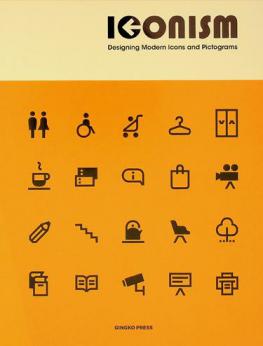
Iconism : designing modern icons and pictograms
*Iconism* is an inspirational reference for contemporary icon, pictogram and symbol design. Divided into three sections -- Visual Identity, Wayfinding and Interactive Design -- these ingenious and impactful styles from designers around the world highlight the importance of effective communication in our day to day lives.
Book

The limits of meaning: Social indexicality, variation, and the cline of interiority
The structural focus of linguistics has led to a static and modular treatment of meaning. Viewing language as practice allows us to transcend the boundaries of subdisciplines that deal with meaning and to integrate the social indexicality of variation into this larger system. This article presents the expression of social meaning as a continuum of decreasing reference and increasing performativity, with sociolinguistic variation at the performative extreme. The meaning potential of sociolinguistic variables in turn is based in their form and their social source, constituting a cline of ‘interiority’ from variables that index public social facts about the speaker to more internal, personal affective states.
Journal Article


The bouba/kiki effect is robust across cultures and writing systems
The bouba/kiki effect—the association of the nonce word bouba with a round shape and kiki with a spiky shape—is a type of correspondence between speech sounds and visual properties with potentially deep implications for the evolution of spoken language. However, there is debate over the robustness of the effect across cultures and the influence of orthography. We report an online experiment that tested the bouba/kiki effect across speakers of 25 languages representing nine language families and 10 writing systems. Overall, we found strong evidence for the effect across languages, with bouba eliciting more congruent responses than kiki. Participants who spoke languages with Roman scripts were only marginally more likely to show the effect, and analysis of the orthographic shape of the words in different scripts showed that the effect was no stronger for scripts that use rounder forms for bouba and spikier forms for kiki. These results confirm that the bouba/kiki phenomenon is rooted in crossmodal correspondence between aspects of the voice and visual shape, largely independent of orthography. They provide the strongest demonstration to date that the bouba/kiki effect is robust across cultures and writing systems.
This article is part of the theme issue 'Voice modulation: from origin and mechanism to social impact (Part II)'.
Journal Article


Two measures are better than one: combining iconicity ratings and guessing experiments for a more nuanced picture of iconicity in the lexicon
Iconicity in language is receiving increased attention from many fields, but our understanding of iconicity is only as good as the measures we use to quantify it. We collected iconicity measures for 304 Japanese words from English-speaking participants, using rating and guessing tasks. The words included ideophones (structurally marked depictive words) along with regular lexical items from similar semantic domains (e.g., fuwafuwa ‘fluffy’, jawarakai ‘soft’). The two measures correlated, speaking to their validity. However, ideophones received consistently higher iconicity ratings than other items, even when guessed at the same accuracies, suggesting the rating task is more sensitive to cues like structural markedness that frame words as iconic. These cues did not always guide participants to the meanings of ideophones in the guessing task, but they did make them more confident in their guesses, even when they were wrong. Consistently poor guessing results reflect the role different experiences play in shaping construals of iconicity. Using multiple measures in tandem allows us to explore the interplay between iconicity and these external factors. To facilitate this, we introduce a reproducible workflow for creating rating and guessing tasks from standardised wordlists, while also making improvements to the robustness, sensitivity and discriminability of previous approaches.
Journal Article


Vowel devoicing as prosodic augmentation in Mẽbêngôkre
This paper explores an instance of prosodic augmentation (Lovick 2023: 382) via devoicing in Mẽbêngôkre, a Jê language spoken in Brazilian Amazonia. While segment lengthening is usually associated with prosodic augmentation, in Mẽbêngôkre high vowels can be devoiced, besides also lengthened, to express intensity. While all vowel segments in Mẽbêngôkre can be lengthened for expressive means, only high vowels /i ɨ u/ can be both lengthened and devoiced. This talk contributes to studies on expressiveness and iconicity in language by showing that vowel devoicing can also be targeted by prosodic augmentation.
Journal Article

Lost in translation : an illustrated compendium of untranslatable words from around the world
\"An artistic collection of 50 drawings featuring unique, funny, and poignant foreign words that have no direct translation into English. Did you know that the Japanese have a word to express the way sunlight filters through the leaves of trees? Or that there's a Swedish word to describe the reflection of the moon across the water? The nuanced beauty of language is even more interesting and relevant in our highly communicative, globalized modern world. Lost in Translation brings this wonder to life with 50 ink illustrations featuring the foreign word, the language of origin, and a pithy definition. The words and definitions range from the lovely, such as goya, the Urdu word to describe the transporting suspension of belief that can occur in good storytelling, to the funny, like the Hawaiian pana po'o, which describes the act of scratching your head to remember something you've forgotten. Each beautiful, simple illustration adds just the right amount of visual intrigue to anchor the words and their meanings\"-- Provided by publisher.
Book

Sound–meaning association biases evidenced across thousands of languages
It is widely assumed that one of the fundamental properties of spoken language is the arbitrary relation between sound and meaning. Some exceptions in the form of nonarbitrary associations have been documented in linguistics, cognitive science, and anthropology, but these studies only involved small subsets of the 6,000+ languages spoken in the world today. By analyzing word lists covering nearly two-thirds of the world’s languages, we demonstrate that a considerable proportion of 100 basic vocabulary items carry strong associations with specific kinds of human speech sounds, occurring persistently across continents and linguistic lineages (linguistic families or isolates). Prominently among these relations, we find property words (“small” and i, “full” and p or b) and body part terms (“tongue” and l, “nose” and n). The areal and historical distribution of these associations suggests that they often emerge independently rather than being inherited or borrowed. Our results therefore have important implications for the language sciences, given that nonarbitrary associations have been proposed to play a critical role in the emergence of cross-modal mappings, the acquisition of language, and the evolution of our species’ unique communication system.
Journal Article