
Catalogue Search | MBRL


Are you sure you want to remove the book from the shelf?

{{itemTitle}}
1,148
result(s) for
"Identification (Psychology) in literature"
Sort by:

Life and Death in the Second Person: Identification, Empathy, and Antipathy in the Adventure Gamebook
This essay argues that the second-person address of the interactive adventure gamebook generates a mode of identification between reader (player) and character that functions not through immersion or presence but through an estranging logic that arises from the particular affordances of the print form. It begins by situating the gamebook, an influential but short-lived genre that enjoyed its heyday in the 1980s and early 1990s, in relation to other forms of second-person narrative as well as Interactive Fiction and video games, before turning to a consideration of the points at which the forms diverge. Taking Steve Jackson and Ian Livingstone's The Warlock of Firetop Mountain (1982) as its example, the essay then examines the ways in which the gamebook's highly-demanding print form undermines notions of transparency, arguing that identification with the gamebook you is specific to, and reliant upon, the material properties of the print text.
Journal Article
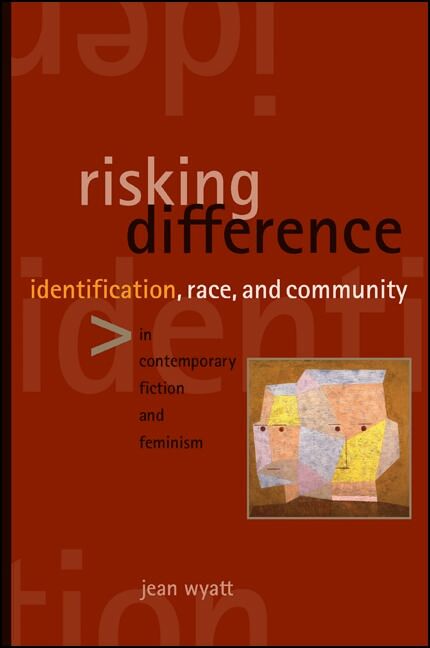
Risking Difference
Risking Difference revisions the dynamics of multicultural feminist community by exploring the ways that identification creates misrecognitions and misunderstandings between individuals and within communities. Drawing on Lacanian psychoanalysis, Jean Wyatt argues not only that individual psychic processes of identification influence social dynamics, but also that social discourses of race, class, and culture shape individual identifications. In addition to examining fictional narratives by Margaret Atwood, Angela Carter, Sandra Cisneros, Toni Morrison, and others, Wyatt also looks at nonfictional accounts of cross-race relations by white feminists and feminists of color.
eBook

Risking difference : identification, race, and community in contemporary fiction and feminism
Risking Difference revisions the dynamics of multicultural feminist community by exploring the ways that identification creates misrecognitions and misunderstandings between individuals and within communities. Drawing on Lacanian psychoanalysis, Jean Wyatt argues not only that individual psychic processes of identification influence social dynamics, but also that social discourses of race, class, and culture shape individual identifications. In addition to examining fictional narratives by Margaret Atwood, Angela Carter, Sandra Cisneros, Toni Morrison, and others, Wyatt also looks at nonfictional accounts of cross-race relations by white feminists and feminists of color.
eBook

The Changing Psychology of Culture From 1800 Through 2000
The Google Books Ngram Viewer allows researchers to quantify culture across centuries by searching millions of books. This tool was used to test theory-based predictions about implications of an urbanizing population for the psychology of culture. Adaptation to rural environments prioritizes social obligation and duty, giving to other people, social belonging, religion in everyday life, authority relations, and physical activity. Adaptation to urban environments requires more individualistic and materialistic values; such adaptation prioritizes choice, personal possessions, and child-centered socialization in order to foster the development of psychological mindedness and the unique self. The Google Ngram Viewer generated relative frequencies of words indexing these values from the years 1800 to 2000 in American English books. As urban populations increased and rural populations declined, word frequencies moved in the predicted directions. Books published in the United Kingdom replicated this pattern. The analysis established long-term relationships between ecological change and cultural change, as predicted by the theory of social change and human development (Greenfield, 2009).
Journal Article

Gender Identity in Autism: Sex Differences in Social Affiliation with Gender Groups
High rates of gender variance have been reported in autistic people, with higher variance in autistic females than males. The social component of gender identity may be affected, with autistic females experiencing lower identification with and feeling less positively about their gender groups than controls. We measured gender identification, gender self-esteem, and aspects of gender expression (masculinity and femininity) in autistic natal males and females, and controls (N = 486). We found that autistic people had lower gender identification and gender self-esteem than controls, and autistic natal females had lower gender identification than autistic natal males and natal female controls. In conclusion, autistic people, particularly natal females, had lower social identification with and more negative feelings about a gender group.
Journal Article

Understanding the Self-identification of Autism in Adults: a Scoping Review
Adults are increasingly self-identifying as autistic, and reporting problems being referred for an autism diagnostic assessment. This scoping review aims to ascertain: (1) what research has been conducted on the self-identification process of autism in adults, who do and do not have a formal diagnosis of autism, and (2) which aspects of the self-identification process could be used to improve the referral and the diagnostic process of an adult autism assessment. The main themes identified were: the diagnostic process from a client´s perspective; the process of self-identifying as autistic from a lifespan perspective; an autistic identity; sexual identity and experiences, and the perception of autism as a difference or a disability. These themes could positively enhance the referral and diagnostic process.
Journal Article

Stereotype Threat in High School Classrooms: How It Links to Teacher Mindset Climate, Mathematics Anxiety, and Achievement
As stereotype threat was initially examined in experimental settings, the effects of such threats have often been tested by temporarily manipulating social identity threats. This study expands the literature by examining 9th-grade adolescents’ naturalistic stereotype threat, using data from the National Study of Learning Mindsets in the United States (n ~= 6040, age: 13–17, Mage = 14.31, 6.9% Black boys, 6.5% Black girls, 13.1% Latinos, 12.3% Latinas, 31.5% White boys, 29.7% White girls). The results indicate that Black and Latinx students experience higher levels of stereotype threat in high school mathematics classrooms than do their White peers. When students perceive that their teachers have created fixed mindset climates, they experience greater stereotype threat. Stereotype threat, in turn, negatively predicts Black and Latino boys and White girls’ later achievement via anxiety. These findings highlight the importance of creating mathematics classrooms that cultivate a growth mindset and minimize social identity threat.
Journal Article

The prevalence and incidence of dementia with Lewy bodies: a systematic review of population and clinical studies
Dementia with Lewy bodies (DLB) is increasingly recognized as a common cause of dementia in older people. However, its true frequency remains unclear, with previous studies reporting a prevalence range from zero to 22.8% of all dementia cases. This review aimed to establish the population prevalence and incidence for DLB and to compare this to its prevalence in secondary care settings.
A literature review of all relevant population and clinical studies was conducted using PubMed. Additional references from papers found during that process were added to this.
DLB accounted for 4.2% of all diagnosed dementias in the community. In secondary care this increased to 7.5%. The incidence of DLB was 3.8% of new dementia cases. There was a significant increase in DLB diagnoses when using the revised (2005) International Consensus Criteria (ICC) for DLB compared to the original (1996) criteria.
DLB currently accounts for around one in 25 dementia cases diagnosed in the community and one in 13 cases in secondary care. The significantly higher rates of DLB in secondary care may reflect enhanced diagnostic accuracy in specialist settings and/or the increased morbidity and carer burden of the DLB syndrome compared to other dementias. However, the true prevalence is likely to be much higher because DLB diagnoses are often missed, although there is evidence that new criteria aid case identification.
Journal Article

The Relationship Between Professional Burnout and Quality and Safety in Healthcare: A Meta-Analysis
BackgroundHealthcare provider burnout is considered a factor in quality of care, yet little is known about the consistency and magnitude of this relationship. This meta-analysis examined relationships between provider burnout (emotional exhaustion, depersonalization, and reduced personal accomplishment) and the quality (perceived quality, patient satisfaction) and safety of healthcare.MethodsPublications were identified through targeted literature searches in Ovid MEDLINE, PsycINFO, Web of Science, CINAHL, and ProQuest Dissertations & Theses through March of 2015. Two coders extracted data to calculate effect sizes and potential moderators. We calculated Pearson’s r for all independent relationships between burnout and quality measures, using a random effects model. Data were assessed for potential impact of study rigor, outliers, and publication bias.ResultsEighty-two studies including 210,669 healthcare providers were included. Statistically significant negative relationships emerged between burnout and quality (r = −0.26, 95 % CI [−0.29, −0.23]) and safety (r = −0.23, 95 % CI [−0.28, −0.17]). In both cases, the negative relationship implied that greater burnout among healthcare providers was associated with poorer-quality healthcare and reduced safety for patients. Moderators for the quality relationship included dimension of burnout, unit of analysis, and quality data source. Moderators for the relationship between burnout and safety were safety indicator type, population, and country. Rigor of the study was not a significant moderator.DiscussionThis is the first study to systematically, quantitatively analyze the links between healthcare provider burnout and healthcare quality and safety across disciplines. Provider burnout shows consistent negative relationships with perceived quality (including patient satisfaction), quality indicators, and perceptions of safety. Though the effects are small to medium, the findings highlight the importance of effective burnout interventions for healthcare providers. Moderator analyses suggest contextual factors to consider for future study.
Journal Article

Psychological ownership
The concept of psychological ownership (PO) reflects a state in which individuals feel as though the target of ownership (e.g., job or organization) is theirs. In recent years, there has been an expansion of research linking PO with a range of desirable employee attitudes and behaviors. However, the theoretical foundations of the construct, its measurement, the factors that influence its development, and when and how it influences outcomes are areas of continued debate in the literature. In this article, we provide a narrative review of extant PO literature with the aim of developing a research agenda that encourages scholars to target opportunities for future research. In particular, we highlight the need for continued refinement of the conceptualization and measurement of PO, and development of its nomological network. In addition, we call for greater investigation of PO towards different objects or foci; examination of possible multilevel applications of PO research; identification of potential boundary conditions of PO; and exploration of the influence of culture and individual differences on the development and influence of PO. We also introduce alternative theoretical approaches for understanding and investigating PO. In doing so, we provide a roadmap for scholars to progress the development of the field.
Journal Article