
Catalogue Search | MBRL


Are you sure you want to remove the book from the shelf?

{{itemTitle}}
6,689
result(s) for
"Identity Fiction."
Sort by:

Where are you from?
When a girl is asked where shes from - where she's really from - none of her answers seems to be the right one. Unsure about how to reply, she turns to her loving abuelo for help. He doesn't give her the response she expects. She gets an even better one.
Book
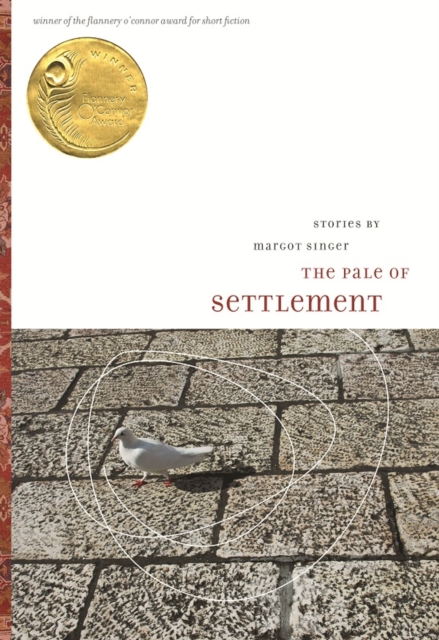
The Pale of Settlement
The Pale of Settlement is a collection of stories that explore the borderland between Israelis and American Jews, emigrants and expatriates, and vanished homelands and the dangerous world in which we live today.
eBook

Pezzettino
Little Pezzettino is so small he's convinced he must be a piece of somebody else. A wise man helps him discover the truth.
Book


Comedy: American Style
Comedy: American Style,Jessie Redmon Fauset's fourth and final novel, recounts the tragic tale of a family's destructionùthe story of a mother who denies her clan its heritage. Originally published in 1933, this intense narrative stands the test of time and continues to raise compelling, disturbing, and still contemporary themes of color prejudice and racial self-hatred. Several of today's bestselling novelists echo subject matter first visited in Fauset's commanding work, which overflows with rich, vivid, and complex characters who explore questions of color, passing, and black identity.
Cherene Sherrard-Johnson's introduction places this literary classic in both the new modernist and transatlantic contexts and will be embraced by those interested in earlytwentieth-century women writers, novels about passing, the Harlem Renaissance, the black/white divide, and diaspora studies. Selected essays and poems penned by Fauset are also included, among them \"Yarrow Revisited\" and \"Oriflamme,\" which help highlight the full canon of her extraordinary contribution to literature and provide contextual background to the novel.
eBook


Historicizing the Enlightenment.: (Literature, the arts, and the aesthetic in Britain)
Enlightenment critics from Dryden through Johnson and Wordsworth conceived the modern view that art and especially literature entails a double reflection: a reflection of the world, and a reflection on the process by which that reflection is accomplished. Instead \"neoclassicism\" and \"Augustanism\" have been falsely construed as involving a one-dimensional imitation of classical texts and an unselfconscious representation of the world. In fact these Enlightenment movements adopted an oblique perspective that registers the distance between past tradition and its present reenactment, between representation and presence. Two modern movements, Romanticism and modernism, have appropriated as their own these innovations, which derive from Enlightenment thought. Both of these movements ground their error in a misreading of \"imitation\" as understood by Aristotle and his Enlightenment proponents. Rightly understood, neoclassical imitation, constitutively aware of the difference between what it knows and how it knows it, is an experimental inquiry that generates a range of prefixes-\"counter-,\" \"mock-,\" \"anti-,\" \"neo-\"-that mark formal degrees of its epistemological detachment. Romantic ideology has denied the role of the imagination in Enlightenment imitation, imposing on the eighteenth century a dichotomous periodization: duplication versus imagination, the mirror versus the lamp. Structuralist ideology has dichotomized narration and description, form and content, structure and history. Poststructuralist ideology has propounded for the novel a contradictory \"novel tradition\"-realism, modernism, postmodernism, postcolonialism-whose stages both constitute a sequence and collapse it, each stage claiming the innovation of the stage that precedes it. Published by Bucknell University Press. Distributed worldwide by Rutgers University Press.
eBook

Blèud and magick
A fourteen-year-old girl discovers she has unusual abilities and learns that she was born in another world from the ashes of an evil shadow lord.
Book

Le Révizor - le Mariage
Creee a Saint-Petersbourg en 1836, d'apres une histoire racontee a Gogol par Pouchkine, Le Revizor est la plus celebre comedie du theatre russe : Khlestakof, un jeune voyageur, tout juste arrive dans une petite ville de province, est pris par les notables pour l'envoye secret du tsar charge d'enqueter sur eux. Aupres du ruse Khlestakof, qui n'en demandait pas tant, les notables vont rivaliser d'amabilites et de largesses.Le Mariage, cree en 1842 mais ecrit au meme moment que Le Revizor, raconte les atermoiements d'un fonctionnaire, Podkoliossine, celibataire endurci decide, peut-etre, a ne plus le rester.Traduction de Marc Semenoff, 1922EXTRAITLE PREFET DE LA VILLE. - Je vous ai invites, messieurs, pour vous annoncer une nouvelle quelque peu desagreable : le revizor arrive.AMMOSS PHIODOROVITCH. - Quoi! Le revizor?ARTEMI PHILIPPOVITCH. - Quoi! Le revizor?LE PREFET. - De Petrograd, incognito, et avec des ordres secrets!AMMOSS PHIODOROVITCH. - Ah! par exemple!ARTEMI PHILIPPOVITCH. - Nous n'avions pas assez d'ennuis, il nous fallait encore cette tuile!LOUKA LOUKITCH. - Seigneur Tout-Puissant! Est-il possible d'arriver avec des ordres secrets!A PROPOS DE L'AUTEURNikolai Vassilievitch Gogol est un romancier, nouvelliste, dramaturge, poete et critique litteraire russe d'origine ukrainienne, ne a Sorotchintsy dans le gouvernement de Poltava le 19 mars 1809 et mort a Moscou le 21 fevrier 1852.
eBook