
Catalogue Search | MBRL


Are you sure you want to remove the book from the shelf?

{{itemTitle}}
34
result(s) for
"Idiot savants"
Sort by:
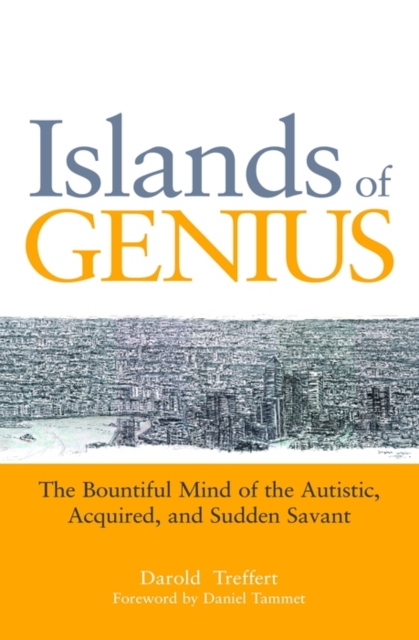
Islands of Genius
In this fascinating book, Dr. Treffert looks at what we know about savant syndrome, and at new discoveries that raise interesting questions about the hidden brain potential within us all. He looks both at how savant skills can be nurtured, and how they can help the person who has them, particularly if that person is on the autism spectrum.
eBook


Enhanced interest in letters and numbers in autistic children
Background
An intense and precocious interest in written material, together with a discrepancy between decoding and reading comprehension skills are defining criteria for hyperlexia, which is found in up to 20% of autistic individuals. It may represent the extreme end of a broader interest in written material in autism. This study examines the magnitude and nature of the interest in written material in a large population of autistic and non-autistic children.
Methods
All 701 children (391 autistic, 310 non-autistic) under the age of 7 referred to an autism assessment clinic over a span of 4 years were included. Ordinal logistic regressions assessed the association between diagnosis and the level of interest in letters and numbers. A nested sample of parents of 138 autistic, 99 non-autistic clinical, and 76 typically developing (TD) children completed a detailed questionnaire. Cox proportional hazards models analyzed the age of emergence of these interests. Linear regressions evaluated the association between diagnosis and interest level. The frequency of each behaviour showing interest and competence with letters and numbers were compared.
Results
In the two studies, 22 to 37% of autistic children had an intense or exclusive interest in letters. The odds of having a greater interest in letters was 2.78 times higher for autistic children than for non-autistic clinical children of the same age, and 3.49 times higher for the interest in numbers, even if 76% of autistic children were minimally or non-verbal. The age of emergence of these interests did not differ between autistic and TD children and did not depend on their level of oral language. Non-autistic children showed more interest in letters within a social context.
Limitations
The study holds limitations inherent to the use of a phone questionnaire with caregivers and missing sociodemographic information.
Conclusions
The emergence of the interest of autistic children toward written language is contemporaneous to the moment in their development where they display a strong deficit in oral language. Together with recent demonstrations of non-social development of oral language in some autistic children, precocious and intense interest in written material suggests that language acquisition in autism may follow an alternative developmental pathway.
Journal Article
Savant syndrome has a distinct psychological profile in autism
Background
Savant syndrome is a condition where prodigious talent can co-occur with developmental conditions such as autism spectrum conditions (autism). It is not yet clear why some autistic people develop savant skills while others do not.
Methods
We tested three groups of adults: autistic individuals who have savant skills, autistic individuals without savant skills, and typical controls without autism or savant syndrome. In experiment 1, we investigated the cognitive and behavioural profiles of these three groups by asking participants to complete a battery of self-report measures of sensory sensitivity, obsessional behaviours, cognitive styles, and broader autism-related traits including social communication and systemising. In experiment 2, we investigated how our three groups learned a novel savant skill—calendar calculation.
Results
Heightened sensory sensitivity, obsessional behaviours, technical/spatial abilities, and systemising were all key aspects in defining the savant profile distinct from autism alone, along with a different approach to task learning.
Conclusions
These results reveal a unique cognitive and behavioural profile in autistic adults with savant syndrome that is distinct from autistic adults without a savant skill.
Journal Article
Chimes for Tyler
Tyler has been classified as an autistic savant, and as such, he has an exceptional skill in a very specific area. In Tyler's case, he can distinguish the sounds of the entire inventory of Woodstock's chimes. And he can do this all by sound alone, without having to see the chimes.
Streaming Video

Savant Syndrome: Realities, Myths and Misconceptions
It was 126 years ago that Down first described savant syndrome as a specific condition and 70 years ago that Kanner first described Early Infantile Autism. While as many as one in ten autistic persons have savant abilities, such special skills occur in other CNS conditions as well such that approximately 50 % of cases of savant syndrome have autism as the underlying developmental disability and 50 % are associated with other disabilities. This paper sorts out realities from myths and misconceptions about both savant syndrome and autism spectrum disorders (ASD) that have developed through the years. The reality is that low IQ is not necessarily an accompaniment of savant syndrome; in some cases IQ can be superior. Also, savants can be creative, rather than just duplicative, and the skills increase over time on a continuum from duplication, to improvisation to creation, rather than diminishing or suddenly disappearing. Genius and prodigy exist separate from savant syndrome and not all such highly gifted persons have Asperger’s Disorder. This paper also emphasizes the critical importance of separating ‘autistic-like’ symptoms from ASD especially in children when the savant ability presents as hyperlexia (children who read early) or as Einstein syndrome (children who speak late), or have impaired vision (Blindisms) because prognosis and outcome are very different when that careful distinction is made. In those cases the term ‘outgrowing autism’ might be mistakenly applied when in fact the child did not have ASD in the first place.
Journal Article
Fragments of genius
Dane and Richard's artistic abilities are astounding. They are acknowledged artistic geniuses, yet both have IQs of less than 60, difficulty communicating and can barely function in the outside world. They are known as Savants - people in whom a spectacular island of genius exists in an otherwise damaged brain. This film explores a new and tantalizing theory that claims these incredible abilities can be tapped within all of us.
Streaming Video
Q.E.D. The boy who draws buildings
QED transformed the life of one young autistic boy. The astonishing talents of Stephen Wiltshire, one of three idiots savants featured in The Foolish Wise Ones, brought him fame and fortune. Stephen's brilliant drawings have been published around the world, and he is far more outgoing than before. He is followed to Venice and Leningrad to try to discover the secret of why he has changed.
Streaming Video
Is Talent in Autism Spectrum Disorders Associated with a Specific Cognitive and Behavioural Phenotype?
Parents of 125 children, adolescents and young adults with autism spectrum disorders completed a newly developed questionnaire aimed at identifying cognitive and behavioural characteristics associated with savant skills in this group. Factors distinguishing skilled individuals were then further investigated in case studies of three individuals with exceptional skills for music, art and mathematics. The findings from the case studies largely confirmed the results from the questionnaire study in showing that special skills are associated with superior working memory and highly focused attention that is not associated with increased obsessesionality. Although intellectual impairment and a local bias have been widely associated with special skills in the savant literature, neither the screening nor case studies provided strong evidence for such associations.
Journal Article
