
Catalogue Search | MBRL


Are you sure you want to remove the book from the shelf?

{{itemTitle}}
4
result(s) for
"Ignoramus"
Sort by:


Giambattista Della Porta, Dramatist
Although Renaissance scholars generally agree that Della Porta was the finest comic playwright of his generation in Italy, no detailed analysis of these plays and of their considerable influence outside Italy has previously appeared. One of the most famous men of his time in the field of scientific investigation, Della Porta wrote plays for relaxation and, on occasion, to camouflage controversial aspects of his scientific research from the Inquisitions. Today his works in science are largely forgotten and his right to fame rests on the plays. This book brings together the available facts of Della Porta's rich and often mysterious life and closely examines his dramatic works as part of the Italian literary scene in late Renaissance.
Originally published in 1965.
The Princeton Legacy Library uses the latest print-on-demand technology to again make available previously out-of-print books from the distinguished backlist of Princeton University Press. These editions preserve the original texts of these important books while presenting them in durable paperback and hardcover editions. The goal of the Princeton Legacy Library is to vastly increase access to the rich scholarly heritage found in the thousands of books published by Princeton University Press since its founding in 1905.
eBook
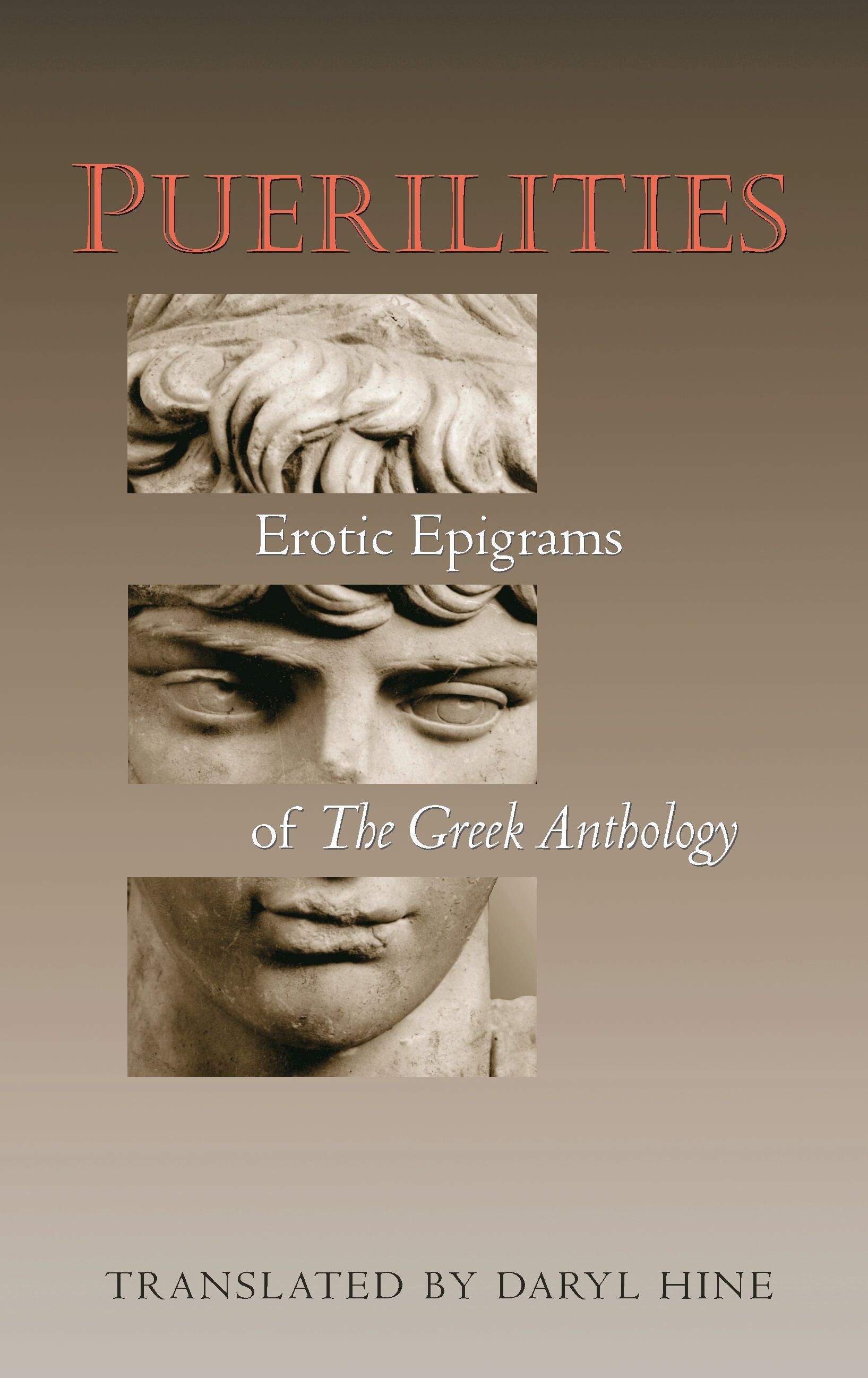
Puerilities
Elegiac lyrics celebrating the love of boys, which the translator termsPuerilities, comprise most of the twelfth book ofThe Greek Anthology. That book, the so-calledMusa Puerilis, is brilliantly translated in this, the first complete verse version in English. It is a delightful eroticopia of short poems by great and lesser-known Greek poets, spanning hundreds of years, from ancient times to the late Christian era.
The epigrams--wry, wistful, lighthearted, libidinous, and sometimes bawdy--revel in the beauty and fickle affection of boys and young men and in the fleeting joys of older men in loving them. Some, doubtless bandied about in the lax and refined setting of banquets, are translated as limericks. Also included are a few fine and often funny poems about girls and women.
Fashion changes in morality as well as in poetry. The sort of attachment that inspired these verses was considered perfectly normal and respectable for over a thousand years. Some of the very best Greek poets--including Strato of Sardis, Theocritus, and Meleager of Gadara--are to be found in these pages. The more than two hundred fifty poems range from the lovely to the playful to the ribald, but all are, as an epigram should be, polished and elegant. The Greek originals face the translations, enhancing the volume's charm.
A friend of Youth, I have no youth in mind, For each has beauties, of a different kind. --Strato I've had enough to drink; my heart and soul As well as tongue are losing self-control. The lamp flame bifurcates; I multiply The dinner guests by two each time I try. Not only shaken up by the wine-waiter, I ogle too the boy who pours the water. --Strato Venus, denying Cupid is her son, Finds in Antiochus a better one. This is the boy to be enamored of, Boys, a new love superior to Love. --Meleager
eBook

Giambattista Della Porta, Dramatist
No detailed description available for \"Giambattista Della Porta, Dramatist\".
eBook