
Catalogue Search | MBRL


Are you sure you want to remove the book from the shelf?

{{itemTitle}}
561
result(s) for
"Illegal abortion"
Sort by:

The abortion trend after the pronatalist turn of population policies in Iran: a systematic review from 2005 to 2022
Objective
Given Iran’s recent shift towards pronatalist population policies, concerns have arisen regarding the potential increase in abortion rates. This review study examines the trends of (medical), intentional (illegal), and spontaneous abortions in Iran over the past two decades, as well as the factors that have contributed to these trends.
Methods
This paper reviewed research articles published between 2005 and 2022 on abortion in Iran. The study employed the PRISMA checklist for systematic reviews. Articles were searched from international (Google Scholar, PubMed, Science Direct, and Web of Science) and national databases (Magiran, Medlib, SID). Once the eligibility criteria were applied, 42 records were included from the initial 349 records.
Results
Abortion is influenced by a variety of socioeconomic and cultural factors and the availability of family planning services. Factors that contribute to unintended pregnancy include attitudes toward abortion, knowledge about reproductive health, access to reproductive health services, and fertility desires, among others. In addition to health and medical factors, consanguineous marriage plays an important role in spontaneous and therapeutic abortion. A higher number of illegal abortions were reported by women from more privileged socioeconomic classes. In comparison, a higher number of medical and spontaneous abortions were reported by women from less privileged socioeconomic classes.
Conclusion
Iranian policymakers are concerned about the declining fertility rate and have turned to pronatalist policies. From a demographic standpoint, this seems to be a reasonable approach. However, the new population policies, particularly, the Family Protection and Young Population Law, along with creating limitations in access to reproductive health services and prenatal screening tests as well as stricter abortion law could potentially lead to an increase in various types of abortions and their associated consequences.
Journal Article

Clandestine induced abortion: prevalence, incidence and risk factors among women in a Latin American country
Clandestine induced abortions are a public health problem in many developing countries where access to abortion services is legally restricted. We estimated the prevalence and incidence of, and risk factors for, clandestine induced abortions in a Latin American country.
We conducted a large population-based survey of women aged 18–29 years in 20 cities in Peru. We asked questions about their history of spontaneous and induced abortions, using techniques to encourage disclosure.
Of 8242 eligible women, 7992 (97.0%) agreed to participate. The prevalence of reported induced abortions was 11.6% (95% confidence interval [CI] 10.9%–12.4%) among the 7962 women who participated in the survey. It was 13.6% (95% CI 12.8%–14.5%) among the 6559 women who reported having been sexually active. The annual incidence of induced abortion was 3.1% (95% CI 2.9%–3.3%) among the women who had ever been sexually active. In the multivariable analysis, risk factors for induced abortion were higher age at the time of the survey (odds ratio [OR] 1.11, 95% CI 1.07–1.15), lower age at first sexual intercourse (OR 0.87, 95% CI 0.84–0.91), geographic region (highlands: OR 1.56, 95% CI 1.23–1.97; jungle: OR 1.81, 95% CI 1.41–2.31 [v. coastal region]), having children (OR 0.82, 95% CI 0.68–0.98), having more than 1 sexual partner in lifetime (2 partners: OR 1.61, 95% CI 1.23–2.09; ≥ 3 partners: OR 2.79, 95% CI 2.12–3.67), and having 1 or more sexual partners in the year before the survey (1 partner: OR 1.36, 95% CI 1.01–1.72; ≥ 2 partners: OR 1.54, 95% CI 1.14–2.02). Overall, 49.0% (95% CI 47.6%–50.3%) of the women who reported being currently sexually active were not using contraception.
The incidence of clandestine, potentially unsafe induced abortion in Peru is as high as or higher than the rates in many countries where induced abortion is legal and safe. The provision of contraception and safer-sex education to those who require it needs to be greatly improved and could potentially reduce the rate of induced abortion.
Une version française de ce résumé est disponible à l'adresse www.cmaj.ca/cgi/content/full/180/3/298/DC1
CMAJ 2009;180(3):298-304
Journal Article

Aborting and Suspending Pregnancy in Rural Tanzania: An Ethnography of Young People's Beliefs and Practices
The World Health Organization estimates that 3.1 percent of East African women aged 15-44 have undergone unsafe abortions. This study presents findings regarding abortion practices and beliefs among adolescents and young adults in Tanzania, where abortion is illegal. From 1999 to 2002, six researchers carried out participant observation in nine villages and conducted group discussions and interviews in three others. Most informants opposed abortion as illegal, immoral, dangerous, or unacceptable without the man's consent, and many reported that ancestral spirits killed women who aborted clan descendants. Nonetheless, abortion was widely, if infrequently, attempted, by ingestion of laundry detergent, chloroquine, ashes, and specific herbs. Most women who attempted abortion were young, single, and desperate. Some succeeded, but they experienced opposition from sexual partners, sexual exploitation by practitioners, serious health problems, social ostracism, and quasi-legal sanctions. Many informants reported the belief that inopportune pregnancies could be suspended for months or years using traditional medicine. We conclude that improved reproductive health education and services are urgently needed in rural Tanzania.
Journal Article

No Real Choice
In the United States, the “right to choose” an abortion is the law of the land. But what if a woman continues her pregnancy because she didn’t really have a choice? What if state laws, federal policies, stigma, and a host of other obstacles push that choice out of her reach? Based on candid, in-depth interviews with women who considered but did not obtain an abortion, No Real Choice punctures the myth that American women have full autonomy over their reproductive choices. Focusing on the experiences of a predominantly Black and low-income group of women, sociologist Katrina Kimport finds that structural, cultural, and experiential factors can make choosing abortion impossible–especially for those who experience racism and class discrimination. From these conversations, we see the obstacles to “choice” these women face, such as bans on public insurance coverage of abortion and rampant antiabortion claims that abortion is harmful. Kimport's interviews reveal that even as activists fight to preserve Roe v. Wade, class and racial disparities have already curtailed many women’s freedom of choice. No Real Choice analyzes both the structural obstacles to abortion and the cultural ideologies that try to persuade women not to choose abortion. Told with care and sensitivity, No Real Choice gives voice to women whose experiences are often overlooked in debates on abortion, illustrating how real reproductive choice is denied, for whom, and at what cost.
eBook

Determinants of abortion views among reproductive age women in Georgia 2023–2024
Abortion is a continually debated legislative issue in the United States. We aimed to assess opinions toward abortion access amongst reproductive age adult women in Georgia, a state where abortion is banned after the detection of embryonic cardiac activity (around 6 weeks).
Participants were enrolled in the cross-sectional Policies and Social Stress (PASS) Study (N = 177). Sociodemographic characteristics, political orientation, religious characteristics, county of residence, and abortion views were assessed using self-reported questionnaires. Regarding abortion views, participants were asked about their opinion on the legality of abortion generally, and at 6, 14, and 24 weeks. We used logistic regression to examine whether sociodemographic factors, political orientation, religious characteristics, and county of residence were associated with odds of thinking abortion should be legal or illegal for each weeks' gestation.
Most participants (84%) reported supporting the legality of abortion in all or most cases. Though, that support decreased for specific weeks' gestation (6 Weeks: 76%; 14 Weeks: 60%; 24 Weeks: 31%). Conservatives and moderates had higher odds of thinking abortion should be generally illegal compared to liberals (odds ratio [OR]=10.2, 95% confidence interval [CI]=4.1-27.3). Those who attended religious services more often and those who resided outside of the Atlanta area were more likely to believe abortion should be illegal compared to reference groups (OR=7.2, 95% CI = 3.0-17.9; OR=6.0, 95% CI = 2.5-16.3, respectively). However, the differences between groups attenuated as the weeks of pregnancy increased.
In a sample of reproductive age women in Georgia, we observed that opinions regarding the legality of abortion were nuanced with regards to gestational age. Fewer participants supported abortion access after fetal viability (i.e., around 24 weeks). Further, attitudes differed mostly along political, religious, and geographic lines.
While 76% of adult women in our sample supported abortion access at six weeks of pregnancy, less than one-third supported abortion at 24 weeks of pregnancy. These findings suggest that Georgia's state policy that limits abortion after six weeks' gestation does not reflect the views of the women in our sample.
Journal Article

Real-Time Effects of Payer Restrictions on Reproductive Healthcare: A Qualitative Analysis of Cost-Related Barriers and Their Consequences among U.S. Abortion Seekers on Reddit
Objective: The Hyde Amendment and related policies limit or prohibit Medicaid coverage of abortion services in the United States. Most research on cost-related abortion barriers relies on clinic-based samples, but people who desire abortions may never make it to a healthcare center. To examine a novel, pre-abortion population, we analyzed a unique qualitative dataset of posts from Reddit, a widely used social media platform increasingly leveraged by researchers, to assess financial obstacles among anonymous posters considering abortion. Methods: In February 2020, we used Python to web-scrape the 250 most recent posts that mentioned abortion, removing all identifying information and usernames. After transferring all posts into NVivo, a qualitative software package, the team identified all datapoints related to cost. Three qualitatively trained evaluators established and applied codes, reaching saturation after 194 posts. The research team used a descriptive qualitative approach, using both inductive and deductive elements, to identify and analyze themes related to financial barriers. Results: We documented multiple cost-related deterrents, including lack of funds for both the procedure and attendant travel costs, inability to afford desired abortion modality (i.e., medication or surgical), and for some, consideration of self-managed abortion options due to cost barriers. Conclusions: Findings from this study underscore the centrality of cost barriers and third-party payer restrictions to stymying reproductive health access in the United States. Results may contribute to the growing evidence base and building political momentum focused on repealing the Hyde Amendment.
Journal Article

The Incidence of Abortion in Nigeria
Because of Nigeria's low contraceptive prevalence, a substantial number of women have unintended pregnancies, many of which are resolved through clandestine abortion, despite the country's restrictive abortion law. Up-to-date estimates of abortion incidence are needed.
A widely used indirect methodology was used to estimate the incidence of abortion and unintended pregnancy in Nigeria in 2012. Data on provision of abortion and postabortion care were collected from a nationally representative sample of 772 health facilities, and estimates of the likelihood that women who have unsafe abortions experience complications and obtain treatment were collected from 194 health care professionals with a broad understanding of the abortion context in Nigeria.
An estimated 1.25 million induced abortions occurred in Nigeria in 2012, equivalent to a rate of 33 abortions per 1,000 women aged 15-49. The estimated unintended pregnancy rate was 59 per 1,000 women aged 15-49. Fifty-six percent of unintended pregnancies were resolved by abortion. About 212,000 women were treated for complications of unsafe abortion, representing a treatment rate of 5.6 per 1,000 women of reproductive age, and an additional 285,000 experienced serious health consequences but did not receive the treatment they needed.
Levels of unintended pregnancy and unsafe abortion continue to be high in Nigeria. Improvements in access to contraceptive services and in the provision of safe abortion and postabortion care services (as permitted by law) may help reduce maternal morbidity and mortality.
Journal Article

Midwives’ perspectives on preventing unsafe abortion: a qualitative study
Background
Unsafe abortion poses severe risks to women’s health and well-being worldwide. In Iran, implementation of restrictive abortion rules in 2022 has intensified concerns about a potential rise in unsafe practices. This shift is likely to introduce new challenges for midwives, who are often the first point of contact in healthcare. Midwives are frequently the first healthcare professionals women consult when seeking abortion or post-abortion care, whether the services are legal or illegal. Thus, this study was conducted to explore midwives’ views on unsafe abortion.
Methods
This qualitative study was conducted in Yasuj, Iran, from 23 December 2024 to 29 April 2025. The participants were 14 midwives with practical experience in the region. Data were gathered from in-depth, semi-structured individual interviews with participants selected through purposive sampling. Data analysis involved conventional content analysis approach. Overall, 14 interviews with 14 midwives were done. Data were analyzed by MAXQDA. The trustworthiness was established.
Results
The interview analysis revealed 4 main categories and 11 sub-categories: 1.“policy development” including subcategories: implementing a policy for caregivers and clients,” “re-orientation in legal abortion policies,” “implementing policy for clients”, and “re-orientation of the Family Planning Program, 2.“risk communication strategies” including subcategories like “providing risk education to clients and caregivers”, 3.“media education on parenting” including subcategories like “responsibility of couples and adherence to values”, and 4. “supportive approach” including sub-categories like “economic and social support”.
Conclusion
Midwives in this study advocated for revising restrictive abortion laws, expanding family planning programs, and creating clear clinical guidelines. They emphasized educating women about the dangers of unsafe procedures and the media’s role in disseminating accurate reproductive health information. In Iran’s sociocultural context, these themes guide strategies for preventing unsafe abortion and enhancing reproductive healthpromotion. The study calls for a holistic, rights-based, and woman-centered approach to reproductive health, positioning midwives as essential contributors to policy and program development. Only with such integrated strategies can we achieve sustainable improvements in women’s health and broader public health outcomes.
Journal Article
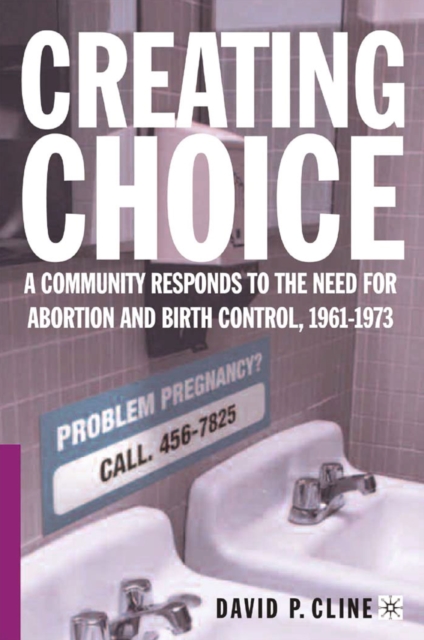
Creating choice : a community responds to the need for abortion and birth control, 1961-1973
Before Roe v. Wade, somewhere between one and two million illegal abortions were performed every year in the United States. Illegal abortion affected millions of women and their families, yet their stories remain hidden. In Creating Choice, citizens of one community in Western Massachusetts' Pioneer Valley break that silence.
eBook

Conscientious commitment, professional obligations and abortion provision after the reversal of Roe v Wade
We argue that, in certain circumstances, doctors might be professionally justified to provide abortions even in those jurisdictions where abortion is illegal. That it is at least professionally permissible does not mean that they have an all-things-considered ethical justification or obligation to provide illegal abortions or that professional obligations or professional permissibility trump legal obligations. It rather means that professional organisations should respect and indeed protect doctors’ positive claims of conscience to provide abortions if they plausibly track what is in the best medical interests of their patients. It is the responsibility of state authorities to enforce the law, but it is the responsibility of professional organisations to uphold the highest standards of medical ethics, even when they conflict with the law. Whatever the legal sanctions in place, healthcare professionals should not be sanctioned by the professional bodies for providing abortions according to professional standards, even if illegally. Indeed, professional organisation should lobby to offer protection to such professionals. Our arguments have practical implications for what healthcare professionals and healthcare professional organisations may or should do in those jurisdictions that legally prohibit abortion, such as some US States after the reversal of Roe v Wade.
Journal Article