
Catalogue Search | MBRL


Are you sure you want to remove the book from the shelf?

{{itemTitle}}
8
result(s) for
"Illustration of books, Victorian -- Great Britain -- History"
Sort by:

Poetry, pictures, and popular publishing : the illustrated gift book and Victorian visual culture, 1855-1875
\"In Poetry, Pictures, and Popular Publishing eminent Rossetti scholar Lorraine Janzen Kooistra demonstrates the cultural centrality of a neglected artifact: the Victorian illustrated gift book. Turning a critical lens on \"drawing-room books\" as both material objects and historical events, Kooistra reveals how the gift book's visual/verbal form mediated \"high\" and popular art as well as book and periodical publication. A composite text produced by many makers, the poetic gift book was designed for domestic space and a female audience; its mode of publication marks a significant moment in the history of authorship, reading, and publishing. With rigorous attention to the gift book's aesthetic and ideological features, Kooistra analyzes the contributions of poets, artists, engravers, publishers, and readers and shows how its material form moved poetry into popular culture. Drawing on archival and periodical research, she offers new readings of Eliza Cook, Adelaide Procter, and Jean Ingelow and shows the transatlantic reach of their verses. Boldly re-situating Tennyson's works within the gift-book economy he dominated, Kooistra demonstrates how the conditions of corporate authorship shaped the production and reception of the laureate's verses at the peak of his popularity. Poetry, Pictures, and Popular Publishing changes the map of poetry's place--in all its senses--in Victorian everyday life and consumer culture\"-- Provided by publisher.
Book

Serials to Graphic Novels
\"A valuable and comprehensive survey of an enormous subject.\"--Paul Goldman, author ofReading Victorian Illustration, 1855-1875: Spoils of the Lumber Room \"A marvelous overview of how and why illustrations became an integral part of Victorian fiction. Golden documents a remarkable continuity from early nineteenth-century caricatures to realistic portrait-based illustrations to current graphic rewritings of familiar classics.\"--Martha Vicinus, author ofIntimate Friends: Women Who Loved Women, 1778-1928 \"A capacious and synthetic work that draws on a wide variety of scholarship, a very impressive command of the history of book illustration, a huge array of visual and verbal texts, and (most important) a commitment to the genreas a genre in the history of literary and artistic form.\"--Peter Betjemann, author ofTalking Shop: The Language of Craft in an Age of Consumption
The Victorian illustrated book came into being, flourished, and evolved during the nineteenth century. Catherine Golden offers a new framework for viewing the arc of this vibrant form and surveys the fluidity in styles of illustration in serial instalments, British and American periodicals, adult and children's literature, and--more recently--graphic novels.
Golden examines widely recognized illustrated texts, such asThe Pickwick Papers, Oliver Twist, Alice in Wonderland, andPeter Rabbit, and finds new expressions of this traditional genre in present-day graphic novel adaptations of the works of Austen, Dickens, and Trollope, as well as Neo-Victorian graphic novels likeThe League of Extraordinary Gentlemen. She explores the various factors that contributed to the early popularity of the illustrated book--the growth of commodity culture, a rise in literacy, new printing technologies--and how these ultimately created a mass market for new fiction.
While existing scholarship on Victorian illustrators largely centers on the Household Edition of Dickens or the realist artists of the \"Sixties,\" notably Fred Barnard and John Tenniel, this volume examines the lifetime of the Victorian illustrated book. It also discusses how a particular canon has been refashioned and repurposed for new generations of readers. Catherine J. Golden, professor of English at Skidmore College, is author of several books, includingPosting It: The Victorian Revolution in Letter Writing.\"A valuable and comprehensive survey of an enormous subject.\"--Paul Goldman, author ofReading Victorian Illustration, 1855-1875: Spoils of the Lumber Room \"A marvelous overview of how and why illustrations became an integral part of Victorian fiction. Golden documents a remarkable continuity from early nineteenth-century caricatures to realistic portrait-based illustrations to current graphic rewritings of familiar classics.\"--Martha Vicinus, author ofIntimate Friends: Women Who Loved Women, 1778-1928 \"A capacious and synthetic work that draws on a wide variety of scholarship, a very impressive command of the history of book illustration, a huge array of visual and verbal texts, and (most important) a commitment to the genreas a genre in the history of literary and artistic form.\"--Peter Betjemann, author ofTalking Shop: The Language of Craft in an Age of Consumption
The Victorian illustrated book came into being, flourished, and evolved during the nineteenth century. Catherine Golden offers a new framework for viewing the arc of this vibrant form and surveys the fluidity in styles of illustration in serial instalments, British and American periodicals, adult and children's literature, and--more recently--graphic novels.
Golden examines widely recognized illustrated texts, such asThe Pickwick Papers, Oliver Twist, Alice in Wonderland, andPeter Rabbit, and finds new expressions of this traditional genre in present-day graphic novel adaptations of the works of Austen, Dickens, and Trollope, as well as Neo-Victorian graphic novels likeThe League of Extraordinary Gentlemen. She explores the various factors that contributed to the early popularity of the illustrated book--the growth of commodity culture, a rise in literacy, new printing technologies--and how these ultimately created a mass market for new fiction.
While existing scholarship on Victorian illustrators largely centers on the Household Edition of Dickens or the realist artists of the \"Sixties,\" notably Fred Barnard and John Tenniel, this volume examines the lifetime of the Victorian illustrated book. It also discusses how a particular canon has been refashioned and repurposed for new generations of readers. Catherine J. Golden, professor of English at Skidmore College, is author of several books, includingPosting It: The Victorian Revolution in Letter Writing.
eBook

Victorian Literature and the Victorian Visual Imagination
Nineteenth-century British culture frequently represented the eye as the preeminent organ of truth. These essays explore the relationship between the verbal and the visual in the Victorian imagination. They range broadly over topics that include the relationship of optical devices to the visual imagination, the role of photography in changing the conception of evidence and truth, the changing partnership between illustrator and novelist, and the ways in which literary texts represent the visual. Together they begin to construct a history of seeing in the Victorian period. This title is part of UC Press's Voices Revived program, which commemorates University of California Press's mission to seek out and cultivate the brightest minds and give them voice, reach, and impact. Drawing on a backlist dating to 1893, Voices Revived makes high-quality, peer-reviewed scholarship accessible once again using print-on-demand technology. This title was originally published in 1995.
eBook

Poetry, pictures, and popular publishing : the illustrated gift book and Victorian visual culture, 1855-1875
In Poetry, Pictures, and Popular Publishing eminent Rossetti scholar Lorraine Janzen Kooistra demonstrates the cultural centrality of a neglected artifact: the Victorian illustrated gift book. Turning a critical lens on \"drawing-room books\" as both material objects and historical events, Kooistra reveals how the gift book's visual/verbal form mediated \"high\" and popular art as well as book and periodical publication. A composite text produced by many makers, the poetic gift book was designed for domestic space and a female audience; its mode of publication marks a significant moment in the history of authorship, reading, and publishing. With rigorous attention to the gift book's aesthetic and ideological features, Kooistra analyzes the contributions of poets, artists, engravers, publishers, and readers and shows how its material form moved poetry into popular culture. Drawing on archival and periodical research, she offers new readings of Eliza Cook, Adelaide Procter, and Jean Ingelow and shows the transatlantic reach of their verses. Boldly resituating Tennyson's works within the gift-book economy he dominated, Kooistra demonstrates how the conditions of corporate authorship shaped the production and receptionof the laureate's verses at the peak of his popularity. Poetry, Pictures, and Popular Publishing changes the map of poetry's place—in all its senses—in Victorian everyday life and consumer culture.
eBook
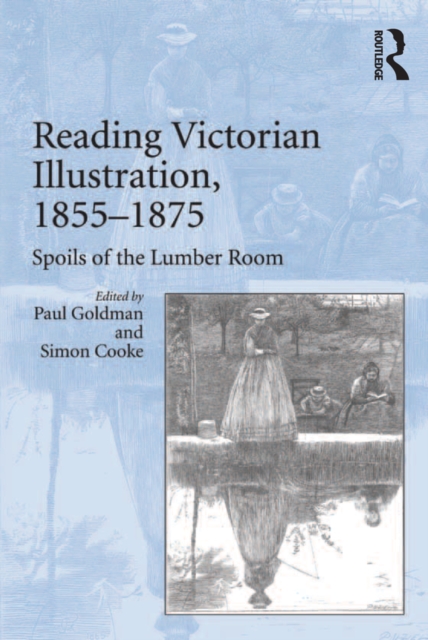
Reading Victorian Illustration, 1855–1875
In a reevaluation of that period in Victorian illustration known as 'The Sixties,' a distinguished group of international scholars consider the impact of illustration on the act of reading; its capacity to reflect, construct, critique and challenge its audience's values; its response to older graphic traditions; and its assimilation of foreign influences. While focused on the years 1855 to 1875, the essays take up issues related to the earlier part of the nineteenth century and look forward to subsequent developments in illustration. The contributors examine significant figures such as Ford Madox Brown, Frederick Sandys, John Everett Millais, George John Pinwell, and Hablot Knight Browne in connection with the illustrated magazine, the mid-Victorian gift book, and changing visual responses to the novels of Dickens. Engaging with a number of theories and critical debates, the collection offers a detailed and provocative analysis of the nature of illustration: its production, consumption, and place within the broader contexts of mid-Victorian culture.
Paul Goldman is Honorary Professor in the Department of English, Communication, and Philosophy at Cardiff University and Associate Fellow at the Institute of English Studies, School of Advanced Study, at the University of London, UK, and Simon Cooke, formerly of Birmingham University, is an independent scholar living in the UK.
eBook

Victorian Science and Imagery
The nineteenth century was a period of science and imagery: when
scientific theories and discoveries challenged longstanding
boundaries between animal, plant, and human, and when art and
visual culture produced new notions about the place of the human in
the natural world. Just as scientists relied on graphic
representation to conceptualize their ideas, artists moved
seamlessly between scientific debate and creative expression to
support or contradict popular scientific theories-such as Darwin's
theory of evolution and sexual selection-deliberately drawing on
concepts in ways that allowed them to refute popular claims or
disrupt conventional knowledges. Focusing on the close kinship
between the arts and sciences during the Victorian period, the art
historians contributing to this volume reveal the unique ways in
which nineteenth-century British and American visual culture
participated in making science, and in which science informed art
at a crucial moment in the history of the development of the modern
world. Together, they explore topics in geology, meteorology,
medicine, anatomy, evolution, and zoology, as well as a range of
media from photography to oil painting. They remind us that science
and art are not tightly compartmentalized, separate influences.
Rather, these are fields that share forms, manifest as waves,
layers, lines, or geometries; that invest in the idea of the
evolution of form; and that generate surprisingly kindred
responses, such as pain, pleasure, empathy, and sympathy.
eBook

Gerard Manley Hopkins and the Victorian Visual World
In her fascinating and beautifully illustrated book, Catherine Phillips uses letters, new archival material, and contemporary publications to reconstruct the visual world Gerard Manley Hopkins knew between 1862 and 1889 - with its illustrated journals, art exhibitions, Gothic architecture, photographic shows, and changing art criticism - and to sho.
eBook
