
Catalogue Search | MBRL


Are you sure you want to remove the book from the shelf?

{{itemTitle}}
14,561
result(s) for
"Image data mining."
Sort by:

Phishing detection using content based image classification
\"Phishing Detection using content-based image classification is an invaluable resource for any deep learning and cybersecurity professional and scholar trying to solve various cybersecurity tasks using new age technologies like Deep Learning and Computer Vision. With various rule-based phishing detection techniques at play which can be bypassed by phishers, this book provides a step-by-step approach to solve this problem using Computer Vision and Deep Learning techniques with significant accuracy. The book offers comprehensive coverage of the most essential topics, including: Programmatically reading and manipulating image data; Extracting relevant features from images; Building statistical models using image features; Using state of the art Deep Learning models for feature extraction; Build a robust phishing detection tool even with less data; Dimensionality reduction techniques; Class imbalance treatment; Feature Fusion techniques; Building performance metrics for multi-class classification task. Another unique aspect of this book is it comes with a completely reproducible code base developed by the author and shared via python notebooks for quick launch and running capabilities. They can be leveraged for further enhancing the provided models using new advancement in the field of computer vision and more advanced algorithms\"-- Provided by publisher.
Book

Canopy analysis and thermographic abnormalities determination possibilities of olive trees by using data mining algorithms
In order to take the appropriate tree protection measures, it is crucial to determine and track abnormalities that may occur in olive trees in time to time for many reasons. Abnormalities start in different sections of the trees, depending on the environmental effects of the olive tree, with a specific impact like fungal diseases, drought, etc. after a certain age especially in non-resistant species. Protection steps may be taken when abnormalities are apparent or predictable in certain olive trees, using some external indicators. However, when abnormalities formed within trees cannot be identified externally, there is a sudden breakdown and overthrow of valuable properties, such as monument trees. In the literature, various devices and methods are explained to classify these defects in different trees. By the way, in this research, a non-destructive inspection method (thermography) was clarified and used to assess anomalies in old olive trees without damage in the interior. According to the results of average thermal data, 60, 400, 600 year-old olive trees, 60-40, 70-30 and 80-20 learning-prediction data rates decision tree and random forest results according to normal and abnormal thermal difference, the thermal range was found as 35.95 ℃ at 60 year-old tree, also it was found as 36.25 ℃ at 400 year-old tree and it was found as 38.25 ℃ at 600 year-old tree.
Journal Article

Data mining in biomedical imaging, signaling, and systems
\"Data mining has rapidly emerged as an enabling, robust, and scalable technique to analyze data for novel patterns, trends, anomalies, structures, and features that can be employed for a variety of biomedical and clinical domains. Approaching the techniques and challenges of image mining from a multidisciplinary perspective, this book presents data mining techniques, methodologies, algorithms, and strategies to analyze biomedical signals and images. Written by experts, the text addresses data mining paradigms for the development of biomedical systems. It also includes special coverage of knowledge discovery in mammograms and emphasizes both the diagnostic and therapeutic fields of eye imaging\"--Provided by publisher.
Book

Automatic Recognition and Labeling of Knowledge Points in Learning Test Questions Based on Deep-Walk Image Data Mining
This paper deeply studies and discusses the application of image data mining technology based on the Deep-Walk algorithm in automatic recognition and annotation of knowledge points in learning test questions. With the rapid development of educational informatization, how to effectively mine and label the knowledge points in learning test questions from image data has become an urgent problem to be solved. In this paper, we introduce a novel approach that integrates graph embedding technology with natural language processing techniques. Initially, we leverage the Deep-Walk algorithm to embed the knowledge points present in the test question images, effectively transforming the high-dimensional image data into a low-dimensional vector representation. This transformation meticulously preserves the intricate structural information while meticulously capturing the subtle semantic nuances embedded within the image data. Subsequently, we undertake a thorough semantic analysis of these vectors, seamlessly integrating natural language processing techniques, to facilitate automated recognition with unparalleled precision. This innovative methodology not only elevates the accuracy of knowledge point recognition to new heights but also achieves semantic annotation of these points, thereby furnishing richer, more insightful data support for subsequent intelligent education applications. Through experimental verification, the proposed method has achieved remarkable results on multiple data sets, which proves its feasibility and effectiveness in practical applications. Furthermore, this paper delves into the expansive potential applications of this methodology in the realm of image data mining, encompassing areas such as online education, intelligent tutoring systems, personalized learning frameworks, and numerous other domains. As we look ahead, we aim to refine the algorithm, enhance recognition accuracy, and uncover additional application scenarios, thereby contributing significantly to the intelligent evolution of the education sector.
Journal Article

Understanding the cultural concerns of libraries based on automatic image analysis
Purpose
Photographs are a kind of cultural heritage and very useful for cultural and historical studies. However, traditional or manual research methods are costly and cannot be applied on a large scale. This paper aims to present an exploratory study for understanding the cultural concerns of libraries based on the automatic analysis of large-scale image collections.
Design/methodology/approach
In this work, an image dataset including 85,023 images preserved and shared by 28 libraries is collected from the Flickr Commons project. Then, a method is proposed for representing the culture with a distribution of visual semantic concepts using a state-of-the-art deep learning technique and measuring the cultural concerns of image collections using two metrics. Case studies on this dataset demonstrated the great potential and promise of the method for understanding large-scale image collections from the perspective of cultural concerns.
Findings
The proposed method has the ability to discover important cultural units from large-scale image collections. The proposed two metrics are able to quantify the cultural concerns of libraries from different perspectives.
Originality/value
To the best of the authors’ knowledge, this is the first automatic analysis of images for the purpose of understanding cultural concerns of libraries. The significance of this study mainly consists in the proposed method of understanding the cultural concerns of libraries based on the automatic analysis of the visual semantic concepts in image collections. Moreover, this paper has examined the cultural concerns (e.g. important cultural units, cultural focus, trends and volatility of cultural concerns) of 28 libraries.
Journal Article

Voxel-Based Dose–Toxicity Modeling for Predicting Post-Radiotherapy Toxicity: A Critical Perspective
This perspective paper critically examines the emerging role of voxel-based analysis (VBA), also referred to as image-based data mining (IBDM), in dose–toxicity modeling for post-radiotherapy toxicity assessment. These techniques offer promising insights into localized organ subregions associated with toxicity, yet their current application faces substantial methodological and validation challenges. Based on prior studies and practical experience, we highlight seven key limitations: (i) lack of clinical validation for dose–toxicity models, (ii) strong dependence of results on statistical method selection (parametric vs. nonparametric), (iii) insensitivity of commonly used tests to uniform dose scaling, (iv) influence of tail selection (one- vs. two-tailed tests) on statistical power, (v) frequent misapplication of permutation testing, (vi) reliance on dose as the sole predictor while neglecting patient-, treatment-, and genomic-level covariates, and (vii) misinterpretation of voxel-wise associations as causal in the absence of appropriate causal inference frameworks. Collectively, these limitations can obscure clinically relevant dose differences, inflate false-positive or false-negative findings, obscure effect direction, introduce confounded associations, and ultimately yield inconsistent identification of high-risk subregions in organs at risk and poor reproducibility across studies. Notably, current univariable VBA/IBDM approaches should be regarded as hypothesis-generating rather than clinical decision-making tools, as unvalidated findings risk premature translation into clinical practice. Advancing personalized radiotherapy requires rigorous outcome validation, integration of multivariable and causal modeling strategies, and incorporation of clinical and genomic data. By moving beyond dose-only predictor models, VBA/IBDM can achieve greater biological relevance, reliability, and clinical utility, supporting more precise and individualized radiotherapy strategies.
Journal Article
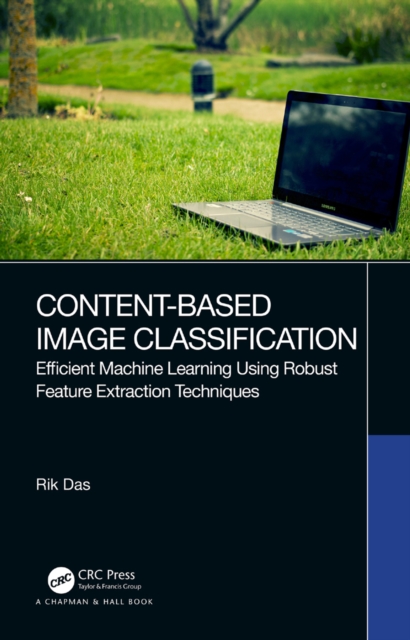
Content-Based Image Classification
Content-Based Image Classification Efficient Machine Learning using Robust Feature Extraction Techniques is a comprehensive guide to initiate and excel in researching with invaluable image data. Social Science Research Network has revealed the fact that sixty five percent of us are visual learners. Research data provided by Hyerle(2000) has clearly shown ninety percent of information in our brain is visual. Thus, it is no wonder that processing of visual information in brain is 60,000 times faster than text based information (3M Corporation, 2001). Recent times have witnessed significant surge in conversing with images with popularity of social networking platforms. The other reason of embracing extensive usage of image data is easy availability of image capturing devices in the form of high resolution cell phone cameras. Extensive application of image data in diversified application areas including, medical science, media, sports, remote sensing and so on has stimulated the requirement of further research in optimizing archival, maintenance and retrieval of appropriate image content to leverage data driven decision making. This book has demonstrated several techniques of image processing to represent image data in desired format for information identification. It has discussed the application of machine learning and deep learning for identifying and categorizing appropriate image data helpful in designing automated decision support systems.
The book offers comprehensive coverage of the most essential topics, including:
Different Open Access Image Datasets to start your Machine Learning Journey
Image Feature Extraction with Novel Handcrafted Techniques (Traditional Feature Extraction)
Image Feature Extraction with Automated Techniques (Representation Learning with CNNs)
Significance of Fusion Based Approaches in enhancing Classification Accuracy
Matlab Codes for implementing the Techniques
Use of Open Access Data Mining tool Weka for multiple tasks
The book is intended for budding researchers, technocrats, engineering students and machine learning / deep learning enthusiasts who are willing to start their computer vision journey with content based image recognition. The readers will get a clear picture of the essentials for transforming the image data into valuable means of insight generation. The book will make the reader adept with coding tricks necessary to propose novel mechanisms and also to enhance state-of-the-art with disruptive approaches. The Weka guide provided in the book can prove itself beneficial for those who are not comfortable with coding for application of machine learning algorithm. The Weka tool will assist the learner to implement machine learning algorithms with the click of a button.
Thus, the book is going to be your stepping stone for your machine learning journey. You may visit the author's website to get in touch for any further guidance required (Website: https://www.rikdas.com/)
eBook

Arterial Tortuosity Syndrome: An Approach through Imaging Perspective
This pictorial illustration demonstrates various aspects of arterial tortuosity syndrome (ATS) obtained predominantly from a multiple detector computed tomography (MDCT) examination of a patient. In addition, a comprehensive review of typical multi-modality imaging observations in patients with ATS is presented along with a description of a few imaging signs. Non-invasively obtained, conclusive information is required in patients with ATS in view of the fragile vascular structures involved. An amazing wealth of information can be obtained by reviewing the volumetric data sets of MDCT examination. In the context of incomplete clinical information or remote reading of radiographic examination with inadequate clinical details, ability to “image data mine” the hidden, unexplored information may be vastly useful. The role of MDCT as a single modality of evaluation in ATS is highlighted.
Journal Article

A Distributed Algorithm for Content Based Indexing of Images by Projections on Ritz Primary Images
Large collections of images can be indexed by their projections on a few \"primary\" images. The optimal primary images are the eigenvectors of a large covariance matrix. We address the problem of computing primary images when access to the images is expensive. This is the case when the images cannot be kept locally, but must be accessed through slow communication such as the Internet, or stored in a compressed form. A distributed algorithm that computes optimal approximations to the eigenvectors (known as Ritz vectors) in one pass through the image set is proposed. When iterated, the algorithm can recover the exact eigenvectors. The widely used SVD technique for computing the primary images of a small image set is a special case of the proposed algorithm. In applications to image libraries and learning, it is necessary to compute different primary images for several sub-categories of the image set. The proposed algorithm can compute these additional primary images \"offline\", without the image data. Similar computation by other algorithms is impractical even when access to the images is inexpensive.
Journal Article
Futures Past
In decades past, artists envisioned a future populated by technological wonders such as hovercraft vehicles and voice-operated computers. Today we barely recognize these futuristic landscapes that bear only slight resemblance to an everyday reality. Futures Past considers digital media's transformative impact on the art world from a perspective of thirty years' worth of hindsight. Herein a distinguished group of contributors—from researchers and teachers to curators and artists—argue for a more profound understanding of digital culture in the twenty-first century.
This unprecedented volume examines the disparities between earlier visions of the future of digital art and its current state, including frank accounts of promising projects that failed to deliver and assessments of more humble projects that have not only survived, but flourished. Futures Past is a look back at the frenetic history of computerized art that points the way toward a promising future.
eBook