
Catalogue Search | MBRL


Are you sure you want to remove the book from the shelf?

{{itemTitle}}
810
result(s) for
"Imagery (Psychology) in literature."
Sort by:


Incomprehensible Certainty
Thomas Pfau's study of images and visual experience is a
tour de force linking Platonic metaphysics to modern phenomenology
and probing literary, philosophical, and theological accounts of
visual experience from Plato to Rilke.
Incomprehensible Certainty presents a sustained
reflection on the nature of images and the phenomenology of visual
experience. Taking the \"image\" ( eikōn ) as the essential
medium of art and literature and as foundational for the intuitive
ways in which we make contact with our \"lifeworld,\" Thomas Pfau
draws in equal measure on Platonic metaphysics and modern
phenomenology to advance a series of interlocking claims. First,
Pfau shows that, beginning with Plato's later dialogues, being and
appearance came to be understood as ontologically distinct from
(but no longer opposed to) one another. Second, in contrast to the
idol that is typically gazed at and visually consumed as an object
of desire, this study positions the image as a medium whose
intrinsic abundance and excess reveal to us its metaphysical
function-namely, as the visible analogue of an invisible, numinous
reality. Finally, the interpretations unfolded in this book (from
Plato, Plotinus, Pseudo-Dionysius, John Damascene via Bernard of
Clairvaux, Bonaventure, Julian of Norwich, and Nicholas of Cusa to
modern writers and artists such as Goethe, Ruskin, Turner, Hopkins,
Cézanne, and Rilke) affirm the essential complementarity of image
and word, visual intuition and hermeneutic practice, in theology,
philosophy, and literature. Like Pfau's previous book, Minding
the Modern , Incomprehensible Certainty is a
major work. With over fifty illustrations, the book will interest
students and scholars of philosophy, theology, literature, and art
history.
eBook

Poetics of the Iconotext
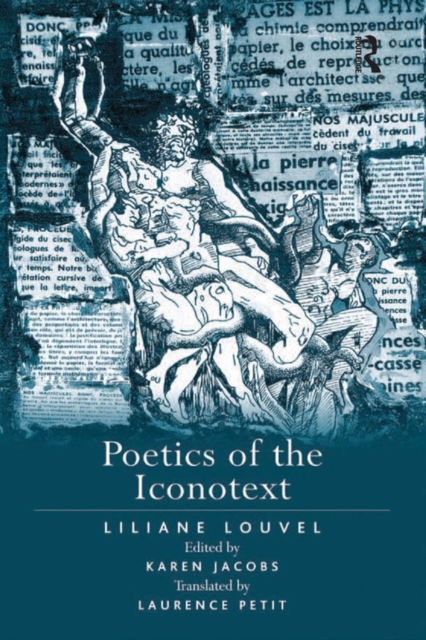
Poetics of the Iconotext makes available for the first time in English the theories of the respected French text/image specialist, Professor Liliane Louvel. A consolidation of the most significant theoretical materials of Louvel's two acclaimed books, L'Oeil du Texte: Texte et image dans la littérature anglophone and Texte/Image: Images à lire, textes à voir, this newly conceived work introduces English readers to the most current thinking in French text/image theory and visual studies. Focusing on the full spectrum of text/image relations, from medieval illuminated manuscripts to digital books, Louvel begins by introducing key terms and situating her work in the context of significant debates in text/image studies. Part II introduces Louvel's s typology of pictorial saturation through which she establishes a continuum along which to measure the effect of the most figurative to the most literal images upon writerly and readerly textual 'spaces.' Part III adopts a phenomenological approach towards the reading-viewing experience as expressed in conceptual categories that include the trace, focal range, synesthesia, and rhythm and speed. The result is a provocative interplay of the categorical and the subjective that invites readers to think at once more precisely and more inventively about texts, images, and the intersections between the two.
eBook

Greek political imagery from Homer to Aristotle
The great helmsman, the watchdog of the people, the medicine the state needs: all these images originated in ancient Greece, yet retain the capacity to influence an audience today. This is the first systematic study of political imagery in ancient Greek literature, history and thought, tracing it from its appearance, influenced by Near Eastern precursors, in Homer and Hesiod, to the end of the classical period and Plato's deployment of images like the helmsman and the doctor in the service of his political philosophy.
Book

Epic Visions
This wide-ranging, interdisciplinary collection explores different ways of visualising Greek and Roman epic from Homer to Statius, in both ancient and modern culture. The book presents new perspectives on Homer, Virgil, Ovid, Lucan, Valerius Flaccus and Statius, and covers the re-working of epic matter in tragedy, opera, film, late antique speeches of praise, story-boarding, sculpture and wall-painting. The chapters use a variety of methods to address the relationship between narrative and visuality, exploring how and why epic has inspired artists, authors and directors and offering fresh visual interpretations of epic texts. Themes and issues discussed include: intermediality, ekphrasis and panegyric, illusion and deception, imagery and deferral, alienation and involvement, the multiplicity of possible visual responses to texts, three-dimensionality, miniaturisation, epic as cultural capital, and the specificity of genres, both literary and visual.
eBook


Fishers of Fish and Fishers of Men
The metaphor is a hallmark of Classical Hebrew poetry. Some metaphors, such as \"Yhwh is king\" or \"Yhwh is warrior,\" play a foundational role. The same does not hold for metaphors from the fishing industry. Because they had access to only two major freshwater sources, archaeological research demonstrates that this industry did not play a major socioeconomic role in ancient Israel. Fishing has nevertheless made a substantial contribution to prophetic and wisdom literature. All metaphors manifest reality, but given the physical circumstances of a largely agrarian, nonmarine society, what does the sustained presentation of fishing metaphors in the Hebrew Bible communicate? Examining the use of fishing images in the Hebrew Bible is a formidable task that demands an open mind and a capacity to mine the gamut of contemporaneous evidence. In Fishers of Fish and Fishers of Men, Tyler Yoder presents the first literary study devoted to the fishing images used in the Hebrew Scriptures as well as in the Mesopotamian textual records. This calls for a penetrating look into cultural contact with Israel's neighbors to the east (Mesopotamia) and southwest (Egypt). Though nearly all fishing metaphors in the Hebrew Bible carry overt royal or divine connotations that mirror uses well-attested in Mesopotamian literature, this comparative analysis remains a largely untapped area of research. In this study of the diverse literary qualities of fishing images, Yoder offers a holistic understanding of how one integral component of ancient Near Eastern society affected the whole, bringing together the assemblage of disparate materials related to this field of study to enable scholars to integrate these data into related research and move the conversation forward.
eBook

Cityscaping : constructing and modelling images of the city
\"The term 'cityscaping' is here introduced to characterise the creative process through which the image of the city is created and represented in various media--text, film and artefacts. It thus turns attention away from built urban spaces and onto mental images of cities. One focus is on the question of which literary, visual and acoustic means prompt their recipients' spatial imagination; another is to inquire into the semantics and functions that are ascribed to the image of a city as constructed in various media. The examples of ancient texts and works of art, and modern literature and films, are used to elucidate the artistic potential of images of the city and the techniques by which they are semanticised. With its interdisciplinary approach, the volume for the first time makes clear how strongly mental images of urban space, both ancient and modern, have been shaped by the techniques of their representation in media\"--From publisher's website.
Book
Imagology Profiles
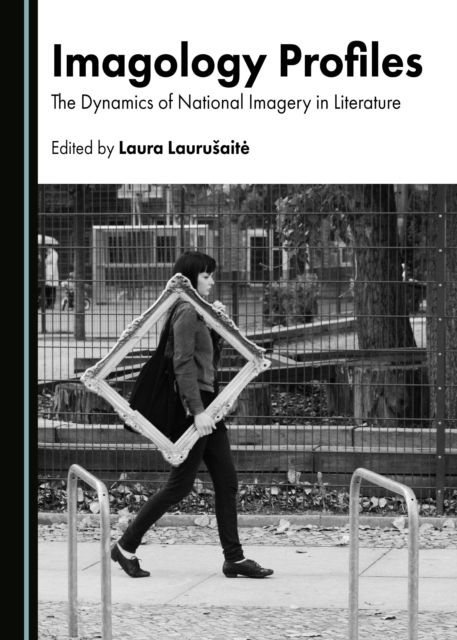
This volume highlights the importance of imagology, one of the most popular areas of research in contemporary comparative studies. It proposes new means of academic analysis to create critical attitudes towards the development of imagological studies. The topics discussed draw a wide trajectory, from classical to marginal images, from national heroes to (un)conventional aspects of gender, from ethno-imagology to the broader dimension of intercultural references and epistemological post-poststructuralist changes. The compendium widens the field of imagology by introducing concepts such as \"geo-imagology\" and \"imagology of gender\", and by linking the imagological strategy with the power principle developed by post-colonialism and with the fictional project of an imaginary utopian society. The essays selected include case studies focusing on the works of individual authors, as well as broader insights concentrating on regional, national and transnational identities that experienced a change of imagery due to historical, political and social shifts. The book pays particular attention to the aspects of mobile imagery, the emergence of peripheral identities related to gender, class, ethnicity or race, and the detection and assessment of well-established stereotypes. The scope of the topics discussed and the variety of periods covered imply the universal nature and versatile applicability of literary imagology.
eBook