
Catalogue Search | MBRL


Are you sure you want to remove the book from the shelf?

{{itemTitle}}
327
result(s) for
"Immigrants Denmark."
Sort by:


Family Upheaval
Pakistani migrant families in Denmark find themselves in a specific ethno-national, post-9/11 environment where Muslim immigrants are subjected to processes of non-recognition, exclusion and securitization. This ethnographic study explores how, why, and at what costs notions of relatedness, identity, and belonging are being renegotiated within local families and transnational kinship networks. Each entry point concerns the destructive-productive constitution of family life, where neglected responsibilities, obligations, and trust lead not only to broken relationships, but also, and inevitably, to the innovative creation of new ones. By connecting the micro-politics of the migrant family with the macro-politics of the nation state and global conjunctures in general, the book argues that securitization and suspicion-launched in the name of \"integration\"-escalate internal community dynamics and processes of family upheaval in unpredicted ways.
eBook

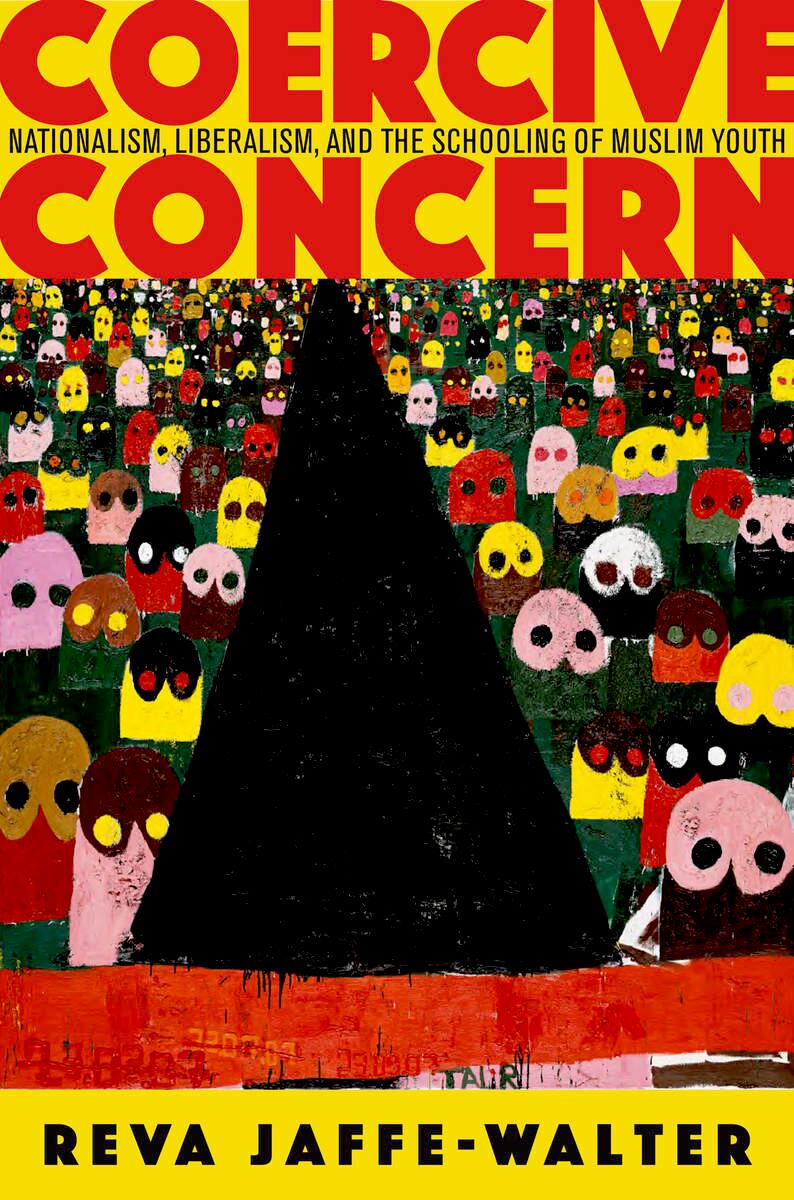
Coercive concern : nationalism, liberalism, and the schooling of Muslim youth
Many liberal-minded Western democracies pride themselves on their commitments to egalitarianism, the fair treatment of immigrants, and the right to education. These environments would seem to provide a best-case scenario for the reception of immigrant youth. But that is not always the case. Coercive Concern explores how stereotypes of Muslim immigrants in Western liberal societies flow through public schools into everyday interactions, informing how Muslim youth are perceived by teachers and peers. Beyond simply identifying the presence of racialized speech in schools, this book uncovers how coercive assimilation is cloaked in benevolent narratives of care and concern.
Coercive Concern provides an ethnographic critique of the \"concern\" that animates integration policy in Danish schools. Reva Jaffe-Walter focuses on the experiences of Muslim youth at a public school where over 40% of the student body is of immigrant descent, showing how schools operate as sites of governance. These efforts are led by political leaders who promote national fears of immigrant take-over, by teachers in schools, and by everyday citizens who are concerned about \"problems\" of immigration. Jaffe-Walter exposes the psychic and material costs immigrant youth endure when living in the shadow of social scrutiny, but she also charts a path forward by uncovering the resources these youth need to attain social mobility and success.
eBook

The question of integration : immigration, exclusion and the Danish welfare state
The question of integration has become an important concern as many societies are experiencing a growing influx of people from abroad. But what does integration really mean? What does it take for a person to be integrated in a society? Through a number of.
eBook

Between Care and Contract: Aging Muslim Immigrants, Self-appointed Helpers and Ambiguous Belonging in the Danish Welfare State
In Europe, a growing population of aging citizens have migrant background, and many have their origin in non-Western countries. Often, care arrangements in these families are different from those of the majority populations. In Denmark, a growing number of immigrant families utilise an option in the Social Service Act, under which municipalities can contract a family member to take care of an elderly citizen at home. Due to the special construct of the ‘self-appointed helper arrangement’, the caregiver is both a professional care worker, formally employed by the municipality, and a close relative. As such, the arrangement provides a unique opportunity to examine ideas and practices of care at the intersection of the immigrant family and the state.Based on data from interviews with and observations among both immigrant families and municipal care managers, we explore consequences of this care scheme for aging citizens and their self-appointed helpers. Drawing on the concept of ‘lenticular subject positions’, we show how both the self-appointed helpers and the care managers adopt two different, often contradictory, perspectives or subject positions simultaneously.In all, we argue that the self-appointed helper arrangement constitutes a grey zone in the Danish public health care system, since both care managers and helpers seem to neglect the national legislation and standard procedures, in relation to the elders and the general work environment. The consequences are most severe for the self-appointed helpers who end up in a particular precarious position at the margins of the Danish labor market.
Journal Article

Refugee Migration and Electoral Outcomes
To estimate the causal effect of refugee migration on voting outcomes in parliamentary and municipal elections in Denmark, our study is the first that addresses the key problem of immigrant sorting by exploiting a policy that assigned refugee immigrants to municipalities on a quasi-random basis. We find that in all but the most urban municipalities, allocation of larger refugee shares between electoral cycles leads to an increase in the vote share for right-leaning parties with an anti-immigration agenda, and we show large differences in voters’ responses to refugee allocation according to pre-policy municipal characteristics. However, in the largest and urban municipalities, refugee allocation has—if anything—the opposite effect on vote shares for anti-immigration parties. This coincides with a sharp divide in attitudes to refugees between urban and rural populations, which may be partly explained by distinctive interactions between natives and those with different background in cities and rural areas. Refugee allocation also has a large impact on the anti-immigration parties’ choice of where to stand for municipal election, and we provide some evidence that it influences voter turnout.
Journal Article

Associations of health literacy with socioeconomic position, health risk behavior, and health status: a large national population-based survey among Danish adults
Background
Health literacy concerns the ability of citizens to meet the complex demands of health in modern society. Data on the distribution of health literacy in general populations and how health literacy impacts health behavior and general health remains scarce. The present study aims to investigate the prevalence of health literacy levels and associations of health literacy with socioeconomic position, health risk behavior, and health status at a population level.
Methods
A nationwide cross-sectional survey linked to administrative registry data was applied to a randomly selected sample of 15,728 Danish individuals aged ≥25 years. By the short form HLS-EU-Q16 health literacy was measured for the domains of healthcare, disease prevention, and health promotion. Adjusted multinomial logistic regression analyses were used to estimate associations of health literacy with demographic and socioeconomic characteristics, health risk behavior (physical activity, smoking, alcohol consumption, body weight), and health status (sickness benefits, self-assessed health).
Results
Overall, 9007 (57.3%) individuals responded to the survey. Nearly 4 in 10 respondents faced difficulties in accessing, understanding, appraising, and applying health information. Notably, 8.18% presented with inadequate health literacy and 30.94% with problematic health literacy. Adjusted for potential confounders, regression analyses showed that males, younger individuals, immigrants, individuals with basic education or income below the national average, and individuals receiving social benefits had substantially higher odds of inadequate health literacy. Among health behavior factors (smoking, high alcohol consumption, and inactivity), only physical behavior [sedentary: OR: 2.31 (95% CI: 1.81; 2.95)] was associated with inadequate health literacy in the adjusted models. The long-term health risk indicator body-weight showed that individuals with obesity [OR: 1.78 (95% CI: 1.39; 2.28)] had significantly higher odds of lower health literacy scores. Poor self-assessed health [OR: 4.03 (95% CI: 3.26; 5.00)] and payments of sickness absence compensation benefits [OR: 1.74 (95% CI: 1.35; 2.23)] were associated with lower health literacy scores.
Conclusions
Despite a relatively highly educated population, the prevalence of inadequate health literacy is high. Inadequate health literacy is strongly associated with a low socioeconomic position, poor health status, inactivity, and overweight, but to a lesser extent with health behavior factors such as smoking and high alcohol consumption.
Journal Article

Reading intervention with a growth mindset approach improves children’s skills
Laboratory experiments have shown that parents who believe their child’s abilities are fixed engage with their child in unconstructive, performance-oriented ways. We show that children of parents with such “fixed mindsets” have lower reading skills, even after controlling for the child’s previous abilities and the parents’ socioeconomic status. In a large-scale randomized field trial (N
classrooms = 72; N
children = 1,587) conducted by public authorities, parents receiving a reading intervention were told about the malleability of their child’s reading abilities and how to support their child by praising his/her effort rather than his/her performance. This low-cost intervention increased the reading and writing achievements of all participating children—not least immigrant children with non-Western backgrounds and children with low-educated mothers. As expected, effects were even bigger for parents who before the intervention had a fixed mindset.
Journal Article

The Danish Civil Registration System
Introduction: The Danish Civil Registration System (CRS) was established in 1968, and all persons alive and living in Denmark were registered for administrative use. Content: CRS includes individual information on the unique personal identification number, name, gender, date of birth, place of birth, citizenship, identity of parents and continuously updated information on vital status, place of residence and spouses. Validity and coverage: Since 1968, CRS has recorded current and historical information on all persons living in Denmark. Among persons born in Denmark in 1960 or later it contains complete information on maternal identity. For women born in Denmark in April 1935 or later it contains complete information on all their children. CRS contains complete information on immigrations and emigrations from 1969 onwards, permanent residence in a Danish municipality from 1971 onwards, and full address in Denmark from 1977 onwards. Conclusion: CRS in connection with other registers and biobanks will continue to provide the basis for significant knowledge relevant to the aetiological understanding and possible prevention of human diseases.
Journal Article