
Catalogue Search | MBRL


Are you sure you want to remove the book from the shelf?

{{itemTitle}}
361
result(s) for
"Immigrants History Museums."
Sort by:

Interpreting immigration at museums and historic sites
\"Interpreting Immigration at Museums and Historic Sites includes strategies for the design, implementation, marketing and sustaining of programs that help visitors use the lens of history to address contemporary immigration issues and provides case studies, immigration program designs, audience building strategies, among others. The title considers the questions: How can museums use their collections and key stories as starting points for audience engagement around immigration past and present? How can museums move beyond the \"we are a nation of immigrants\" narrative - a narrative that does not resonate for all audiences? How can museums make opportunities for safe, open dialogue on immigration accessible to all stakeholders including both new immigrants and receiving communities? Interpreting Immigration includes strategies for the design, implementation, marketing and sustaining of programs that help visitors use the lens of history to address contemporary immigration issues\"-- Provided by publisher.
Book

Gentile New York
The very question of \"what do Jews think about the goyim\" has fascinated Jews and Gentiles, anti-Semites and philo-Semites alike. Much has been written about immigrant Jews in nineteenth- and twentieth-century New York City, but Gil Ribak's critical look at the origins of Jewish liberalism in America provides a more complicated and nuanced picture of the Americanization process.
Gentile New Yorkexamines these newcomers' evolving feelings toward non-Jews through four critical decades in the American Jewish experience. Ribak considers how they perceived Gentiles in general as well as such different groups as \"Yankees\" (a common term for WASPs in many Yiddish sources), Germans, Irish, Italians, Poles, and African Americans. As they discovered the complexity of America's racial relations, the immigrants found themselves at odds with \"white\" American values or behavior and were drawn instead into cooperative relationships with other minorities. Sparked with many previously unknown anecdotes, quotations, and events, Ribak's research relies on an impressive number of memoirs, autobiographies, novels, newspapers, and journals culled from both sides of the Atlantic.
eBook
Slow Conflict on Display: on the Representation of Russophone Minorities in Baltic History Museums
This article examines how major Baltic history museums represent post-WWII Soviet-era migration and the resulting Russophone minorities, conceptualizing their relationship with titular ethnic groups as a slow conflict. Focusing on museums in Estonia, Latvia, and Lithuania, the study explores how these institutions depict the Russophone other and the narrative strategies they employ. Methodologically, the analysis draws on critical museum studies and social positioning theory to understand the construction of historical subject positions and the interplay of antagonistic, cosmopolitan, and agonistic memory modes. The article is based on fieldwork at the respective museums from 2016 to 2024. While most museums still adopt an antagonistic memory mode, framing Russophones as collective entities within (forced) industrialisation or colonisation narratives, the study’s sample museums (the Estonian National Museum (ENM) and the Vabamu Museum) are not alone in employing more nuanced approaches. These museums incorporate personal narratives and challenge traditional nationalist discourses, though they still struggle with fully integrating the Russophone perspective. The study highlights museums’ complexities and challenges in representing inter-ethnic relations and memory politics in the post-communist Baltic context.
Journal Article

In the Wake of Invasion: Tracing the Historical Biogeography of the South American Cricetid Radiation (Rodentia, Sigmodontinae)
The Great American Biotic Interchange (GABI) was greatly influenced by the completion of the Isthmus of Panama and impacted the composition of modern faunal assemblages in the Americas. However, the contribution of preceding events has been comparatively less explored, even though early immigrants in the fossil records are evidence for waif dispersals. The cricetid rodents of the subfamily Sigmodontinae are a classic example of a species-rich South American radiation resulting from an early episode of North American invasion. Here, we provide a temporal and spatial framework to address key aspects of the historical biogeography and diversification of this diverse mammal group by using mitochondrial and nuclear DNA datasets coupled with methods of divergence time estimation, ancestral area reconstruction and comparative phylogenetics. Relaxed-clock time estimates indicate that divergence of the Sigmodontinae began in the middle-late Miocene (ca. 12-9 Ma). Dispersal-vicariance analyses point to the arrival of a single lineage of northern invaders with a widespread ancestral distribution and imply that the initial differentiation between Central and South America gave rise to the most basal groups within the subfamily. These two major clades diversified in the late Miocene followed by the radiation of main tribes until the early Pliocene. Within the Oryzomyalia, tribes diverged initially in eastern South America whereas multiple dispersals into the Andes promoted further diversification of the majority of modern genera. A comparatively uniform background tempo of diversification explains the species richness of sigmodontines across most nodes, except for two akodontine genera with recent increases in diversification rates. The bridging of the Central American seaway and episodes of low sea levels likely facilitated the invasion of South America long before the onset of the post-Isthmian phase of the GABI.
Journal Article

Memory and Relevance: Local History and Outreach at Eckley Miners’ Village
Eckley Miners’ Village in Luzerne County, PA is a living history museum that holds significance for many residents of the surrounding area. Preserving and interpreting the homes and buildings that once made up an anthracite coal mining patch town, the site retains ties to many in the area who either lived in Eckley or are related to people who lived in Eckley. However, since 2000 the population demographics of Luzerne County have changed drastically. As the population changes, the ways the public perceives the relevance and value of local history stand to change as well. Utilizing archaeology for new interpretations of local history, and as an outreach method, the Anthracite Heritage Program provides a case study of local history sites adapting to shifting population bases and working to incorporate non-descendant groups into the preservation of local histories.
Journal Article
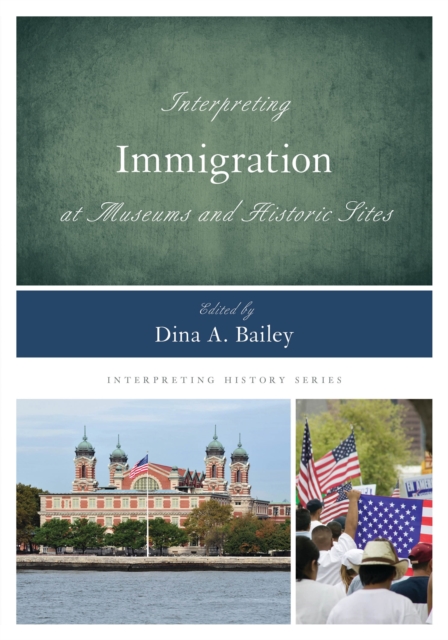
Interpreting immigration at museums and historic sites
Interpreting Immigration at Museums and Historic Sites draws from the collective learning of the forty museums and historic sites that make up the Immigration and Civil Rights Network of the International Coalition of Sites of Conscience. Members of the Network have developed interpretive approaches that tap the power of place and history to open new dialogue on difficult subjects in a wide variety of contexts. The title considers the questions: How can museums use their collections and key stories as starting points for audience engagement around immigration past and present? How can museums move beyond the \"we are a nation of immigrants\" narrative - a narrative that does not resonate for all audiences? How can museums make opportunities for safe, open dialogue on immigration accessible to all stakeholders including both new immigrants and receiving communities?
eBook

“The Great White Mother”: Harriet Maxwell Converse, the Indian Colony of New York City, and the Media, 1885–1903
This article reveals the history of the unstudied “Indian Colony” of Gilded Age New York City through the life of its founder and governor, Harriet Maxwell Converse. Converse was a white woman adopted by the Senecas and a salvage ethnographer, a potent combination of Indigenous “authenticity” and scholarly authority that made her an object of fascination to white New Yorkers who read about her in extensive newspaper coverage. The Colony itself was composed of boarding houses, Converse’s own townhouse-turned-museum, and was connected to the New York Police Department. It provided housing and support to resident and visiting Native Americans who found work in the city’s “Indian trade” and booming entertainment industry. By highlighting the extensive newspaper coverage of Converse and her Colony, this article reveals a hidden history of the Indigenous people who lived and worked in the city. It also pushes the periodization of the earliest urban Indian communities backward in time by more than a decade and shows how the media fused the daily life of Converse and the Colonists with popular stereotypes of “savage” and “vanished” Indians, immigrant stereotypes, assimilation, gendered expectations, and the predatory academic desires of museums and salvage ethnographers.
Journal Article

Global British Jewish History: YIVO in Britain, 1937–71
The Yidisher Visnshaftlekher Institut (Yiddish Scientific Institute, or YIVO) established a British section which operated from 1937-71. It collected materials for YIVO's headquarters, first in Vilna, and then in New York, and publicized YIVO activities. YIVO's British section also pursued its own aims, recording the history of Jews in Britain and centering the experience of working-class Yiddish-speaking immigrant Jews. Among other things, it organized an exhibition and an autobiography competition and it published a volume of Yiddish historical research about Jews in Britain. However, British YIVO later sent the archive it had built to the headquarters in New York, thereby dispossessing the British Jewish community of its historical record. YIVO's struggles to maintain itself in Britain reflect the institutional and ideological challenges of global history making. In this article, I use the case of YIVO to contribute to a growing critical literature on the \"global\" in modern Jewish history and archival construction.
Journal Article

Korovainytsia from Seventh East Street: Re-creation of the Tradition of Korovai Baking in New York: A Case Study
This study investigates the re-creation of the korovai baking tradition within the Ukrainian diaspora in New York, offering a detailed case study of how the cultural practice has been adapted and revitalized in a new environment. Although korovai, a traditional Ukrainian wedding bread, is deeply rooted in the culinary practices of Ukraine, its continuation in the diaspora reflects a dynamic process of cultural adaptation. The research explores the establishment and operation of korovai baking classes in The Ukrainian Museum in New York and the personal baking practices of Mrs. Larysa Zielyk, demonstrating how these efforts contribute to the ongoing re-creation and transmission of the tradition. Through oral history interviews and focused analysis, the study highlights how korovai baking in New York serves both as a link to Ukrainian heritage and as a living tradition that evolves to meet the needs of the community, ensuring cultural continuity between Ukrainian immigrants and their descendants.
Journal Article
Into Tibet: An Early Pliocene Dispersal of Fossil Zokor (Rodentia: Spalacidae) from Mongolian Plateau to the Hinterland of Tibetan Plateau
This paper reports the fossil zokors (Myospalacinae) collected from the lower Pliocene (~4.4 Ma) of Zanda Basin, southwestern Tibet, which is the first record in the hinterland of Tibetan Plateau within the Himalayan Range. Materials include 29 isolated molars belonging to Prosiphneus eriksoni (Schlosser, 1924) by having characters including large size, highly fused roots, upper molars of orthomegodont type, m1 anterior cap small and centrally located, and first pair of m1 reentrants on opposing sides, high crowns, and high value of dentine tract parameters. Based on the cladistics analysis, all seven species of Prosiphneus and P. eriksoni of Zanda form a monophyletic clade. P. eriksoni from Zanda, on the other hand, is nearly the terminal taxon of this clade. The appearance of P. eriksoni in Zanda represents a significant dispersal in the early Pliocene from its center of origin in north China and Mongolian Plateau, possibly via the Hol Xil-Qiangtang hinterland in northern Tibet. The fast evolving zokors are highly adapted to open terrains at a time when regional climates had become increasingly drier in the desert zones north of Tibetan Plateau during the late Miocene to Pliocene. The occurrence of this zokor in Tibet thus suggests a rather open steppe environment. Based on fossils of large mammals, we have formulated an \"out of Tibet\" hypothesis that suggests earlier and more primitive large mammals from the Pliocene of Tibet giving rise to the Ice Age megafauna. However, fossil records for large mammals are still too poor to evaluate whether they have evolved from lineages endemic to the Tibetan Plateau or were immigrants from outside. The superior record of small mammals is in a better position to address this question. With relatively dense age intervals and numerous localities in much of northern Asia, fossil zokors provide the first example of an \"into Tibet\" scenario--earlier and more primitive taxa originated from outside of the Tibetan Plateau and the later the lineage became extinct in southwestern Tibet.
Journal Article